Category Archives: Numeracy

Gross Motor and Fine Motor Maths Fun:

Maths Concepts: Counting, number recognition, sorting, colour recognition, one-to-one correspondence and number formation.
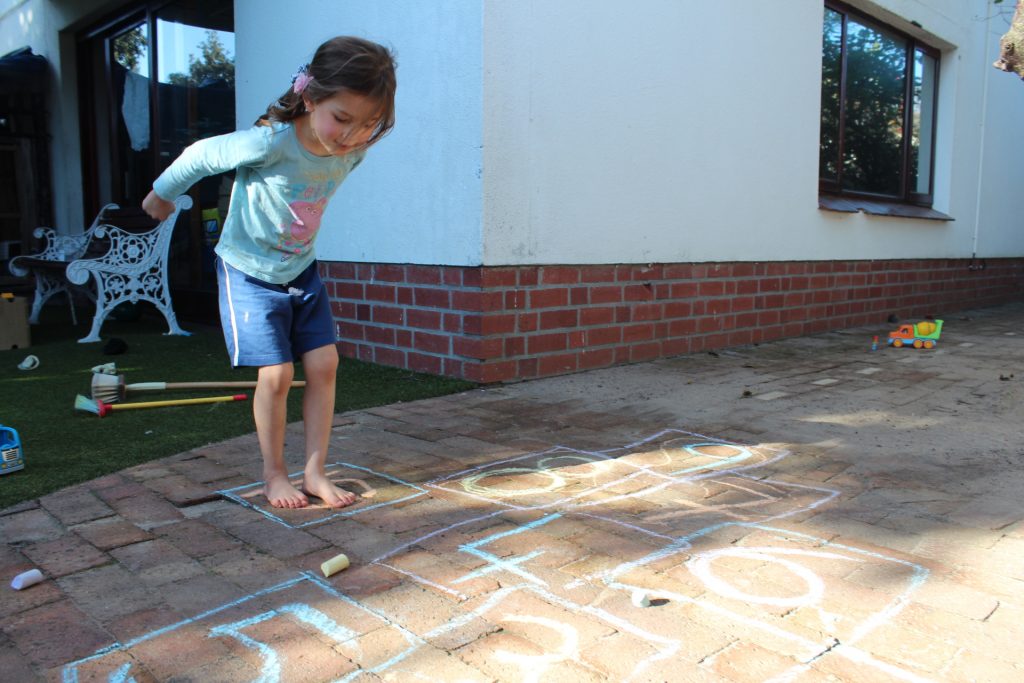
Activities that allow a child to learn with the whole body are essential in preschool! Here’s a wonderful gross motor game that will help with counting, number identification, and can be turned into a sorting game and also work on fine-motor skills and number formation.

All children are different, but your child should start to be able to identify the symbols of most numbers from 1-10 between the ages of 3 and 4 years and will often identify their own age number even earlier than this.

Directions:

Step 1 – Draw big numbers along your driveway with chalk.
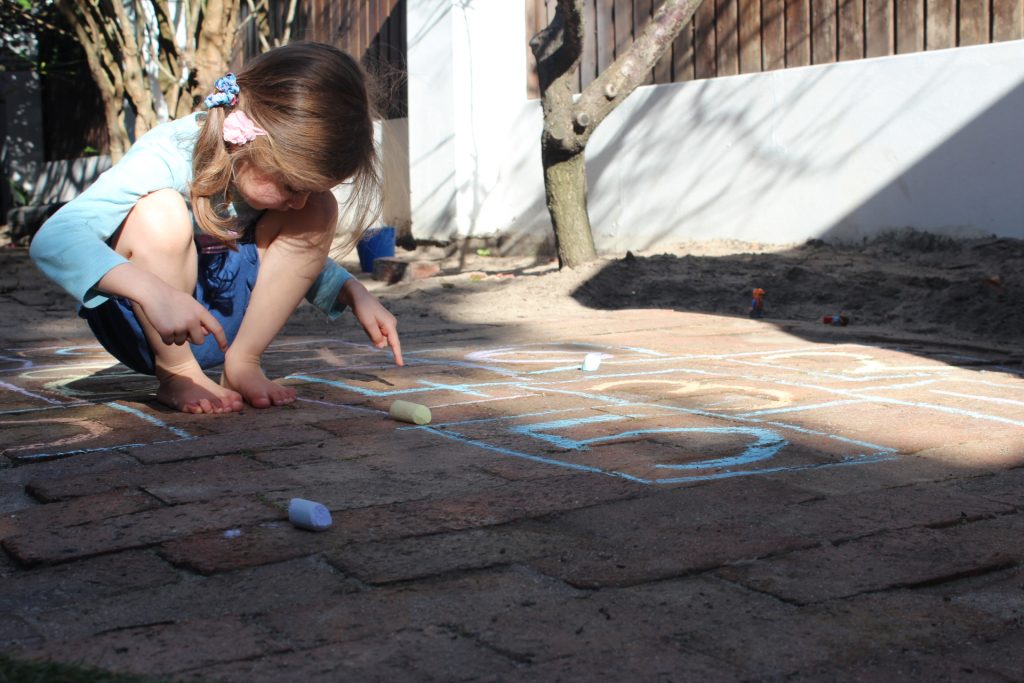
Step 2 – Invite your child to play the number game either by jumping on the number you call out, or if they are not so familiar with numbers you can ask them to jump on any number and then you can call out, “You jumped on number 8”. Kamali enjoyed counting as she jumped from 1 to 2 to 3 etc and then played the game backwards from 10 to 9 to 8 etc (see video below)

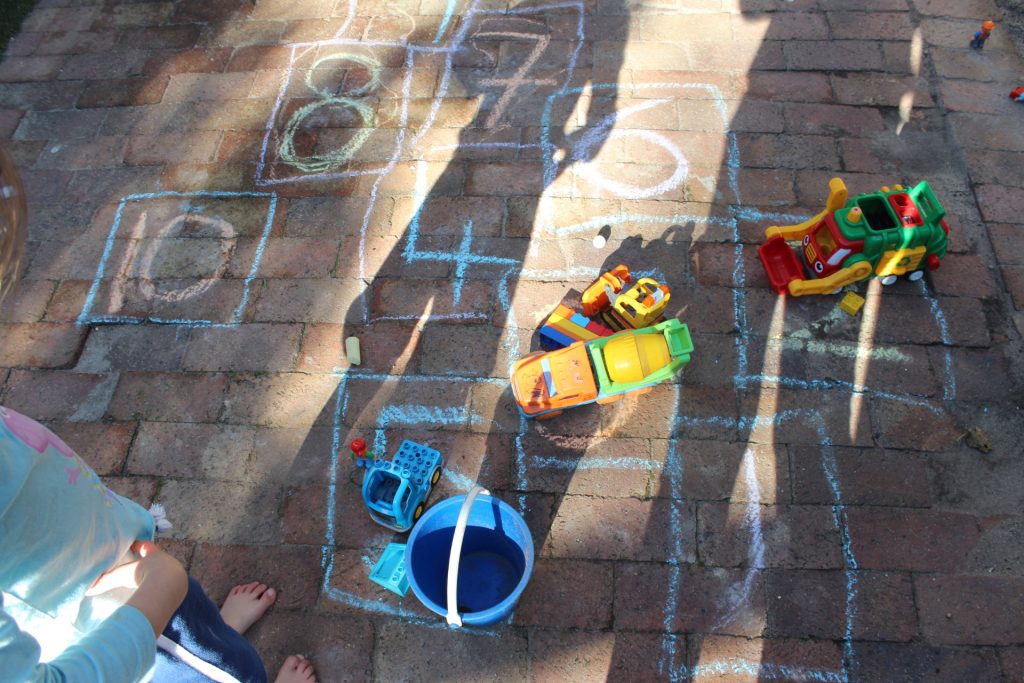
Step 3 – Once you’ve had fun number jumping you can turn it into a sorting and colour recognition game by getting your child to find 3 red things to put on 3, 2 blue things to put on blue, etc. This activity is important in helping with the understanding that a specific number is a symbol and that symbol stands for a set of specific items. Here your child will also be working on one-to-one correspondence as they count each object to make up the correct number for each symbol.
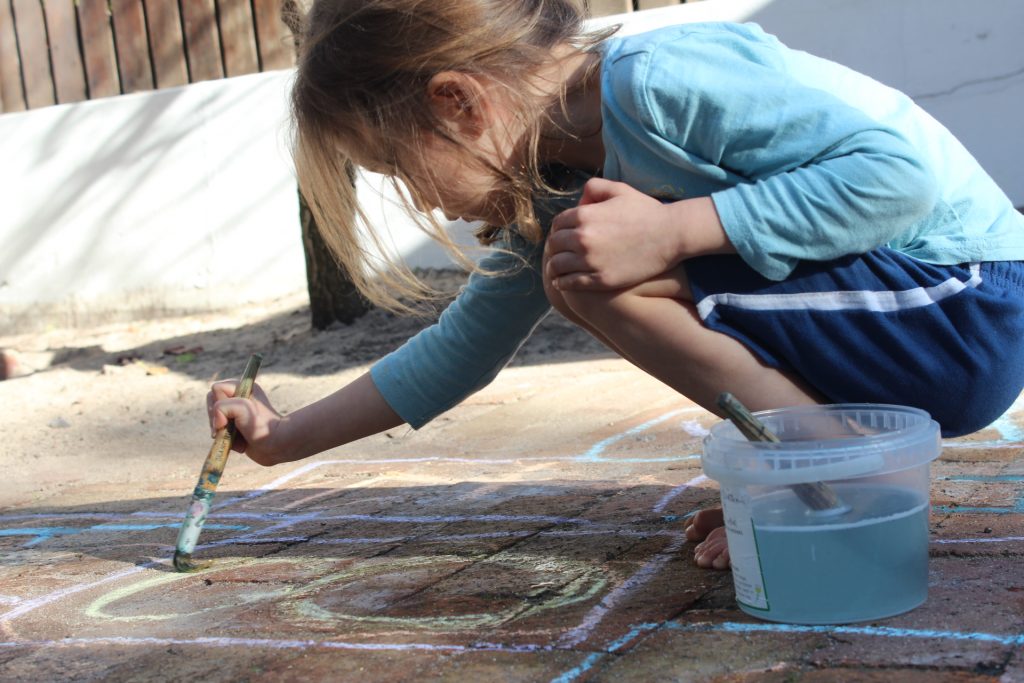
Step 4 – These numbers are also perfect to work on some fine-motor and number formation skills. Give your child some water and a thick paintbrush or sponge and invite them to play the “number disappearing game” by painting over the numbers with water to make them disappear.
Exploring Maths – Winter Theme

Next week we are going to delve deeper into the 3rd “R” “Arithmetic” and share with you some of the Math foundations we are working on. For this week let’s have some Winter Maths fun with this Number Matching Mitten print out:

Directions: Cut out each mittens and invite your child to match the mittens with the corresponding number of snowflakes.


Benefits include: Developing visual discrimination, number recognition, counting, matching skills and one-to-one correspondence

Early Maths and fine motor work: Sorting Colours

Did you know….sorting is an important foundational maths skill? Whist sorting may seem a simple enough concept it can take a while for young children to fully grasp this skill.

For this activity you will need:

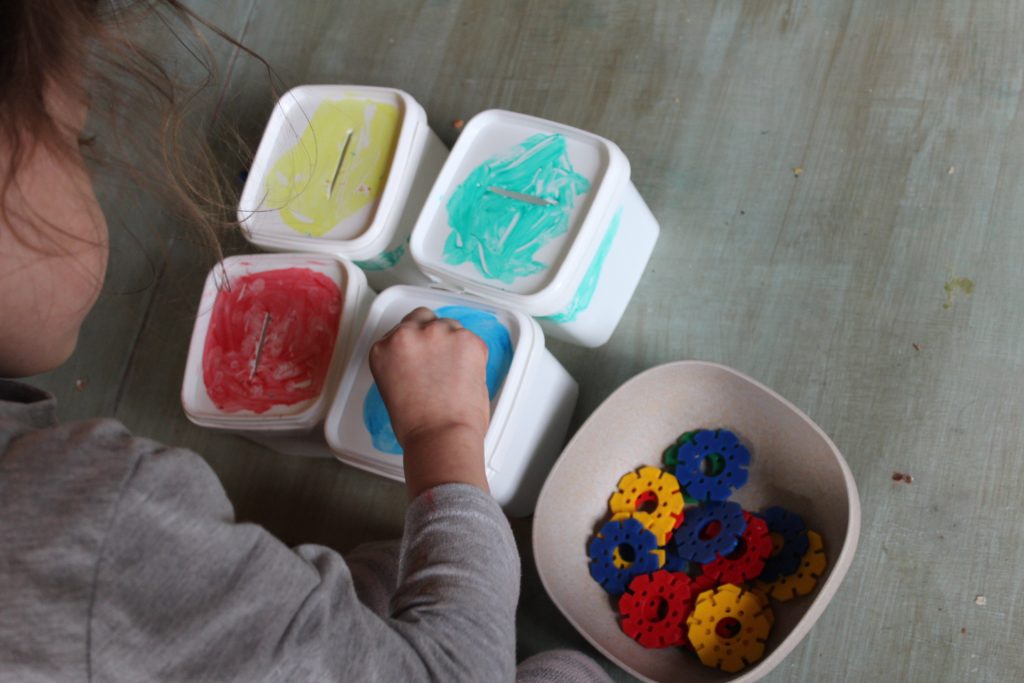
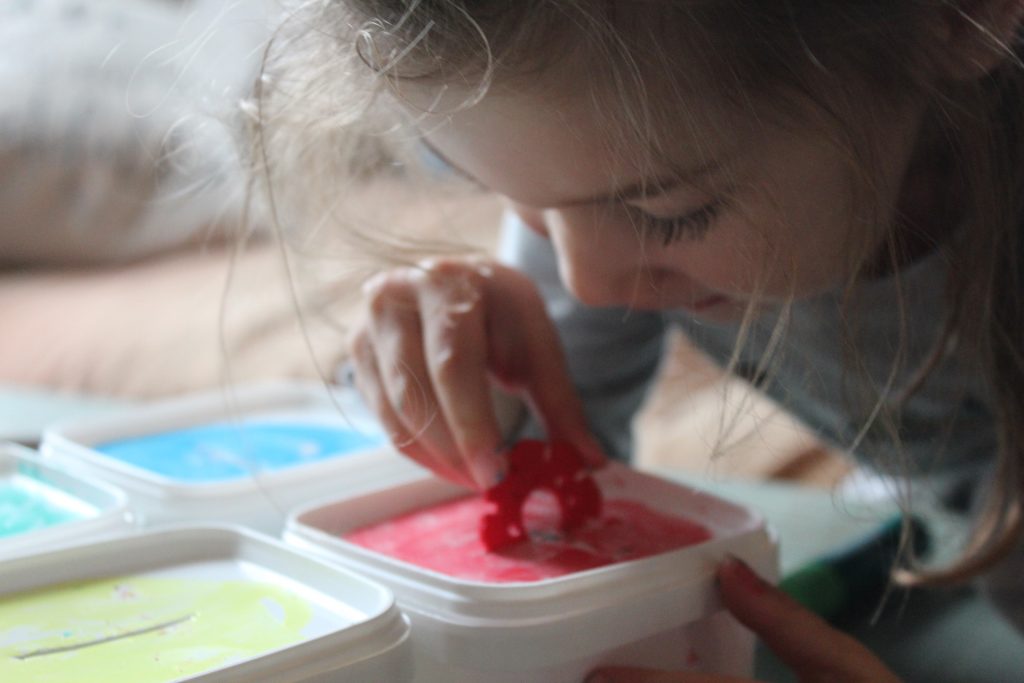
Coloured containers to sort into. We made slits in the lids so that we could add an extra fine-motor element here, but depending on what kind of colour objects you are sorting, you may prefer open containers.

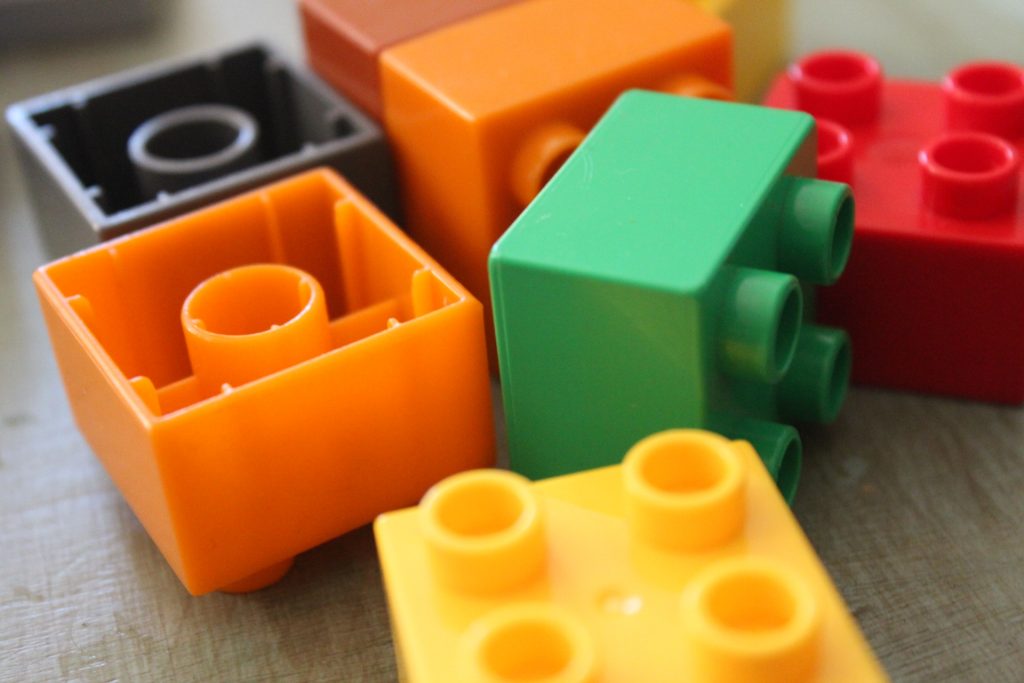
Use any small coloured objects such as pompoms, buttons, crayons, lego, etc for your child to sort.

You can also use tongs or tweezers to sort with, which adds another wonderful fine-motor element.

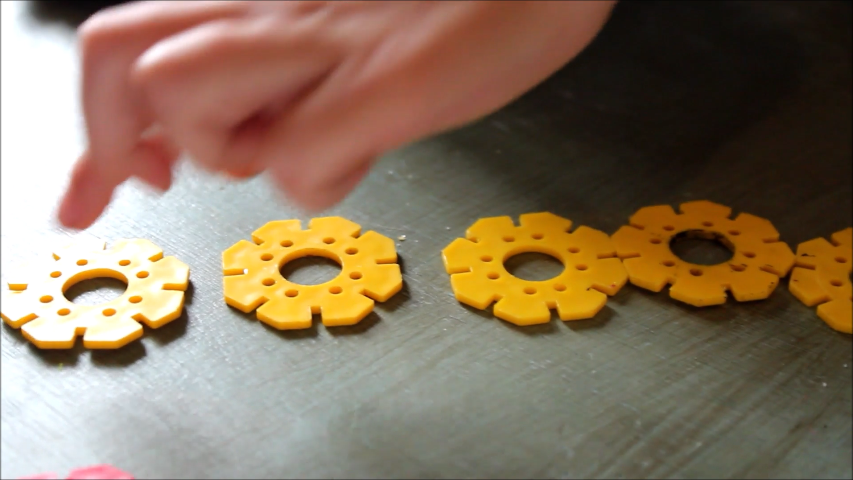
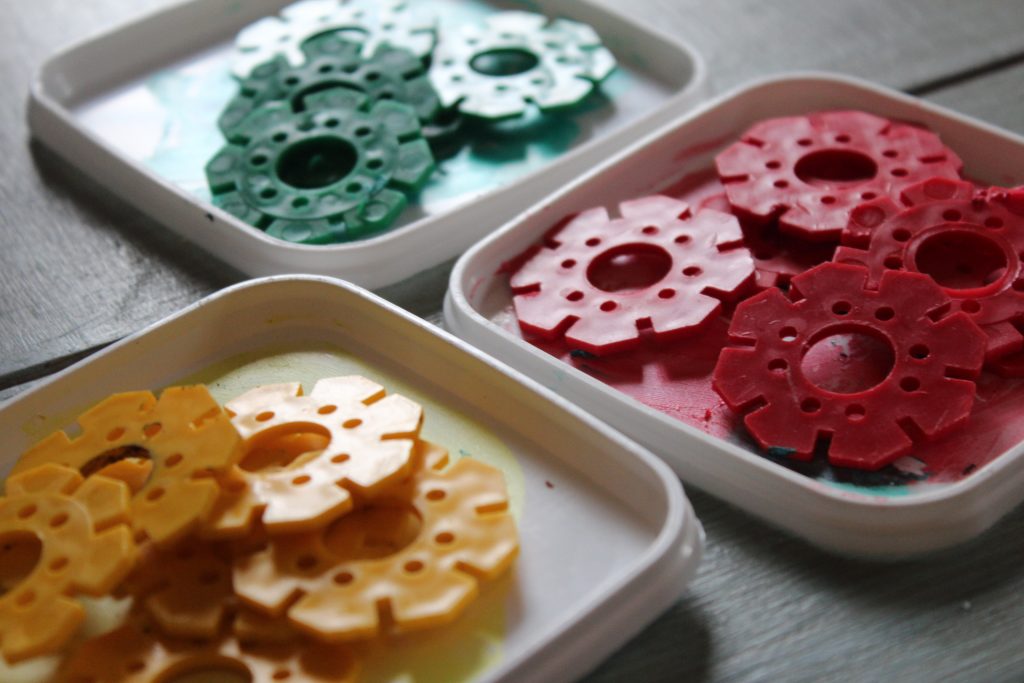
After sorting the colours into the boxes, Kamali decided to make rows and counted them to see which colour had the most – developing one-to-one correspondence and quantity comparisons. She has also started to actively explore the concept of addition as seen in the video below.

video

Then she piled them into their coloured piles on top of the lids, slotted them back into their boxes and then played a trick by sorting the colours into different colour boxes and asking us to guess which colour was inside…..needless to say this activity has many ways to explore and develop early maths skills!

If your child is under 3 you can use bigger containers such as buckets and larger objects to sort such as balls or bean bags.

Early Maths: Measuring our Hippos and other things:

This week we are introducing another important early maths concept – measurement.

Learning about sizes and how to measure and compare different objects is a wonderful early maths activity. Introduce language like big and small, tall and short, wide and narrow.

Whist measuring is usually done with a ruler or tape measure. It is also important to introduce other non-standard units of measurement. Like blocks, beads, pompoms or counters.
This is wonderful counting practice too.

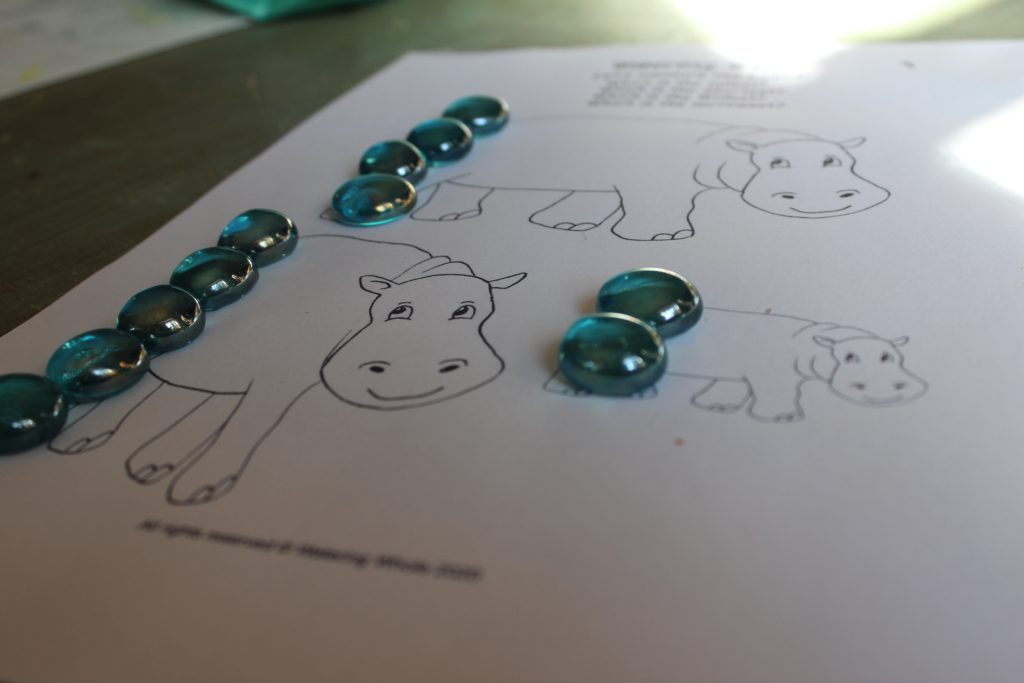
Have some fun measuring at home this week! How many blocks tall is your couch? What about the chair leg?

We have also created this hippo measurement printable for you to work on some measuring skills:

Early Maths: Egg Counting Activity

Counting, recognising numbers and one-to-one correspondence are all important skills needed for maths readiness.

For younger children having fun reciting numbers aloud through songs and play is the best way to start laying the foundation for maths readiness.

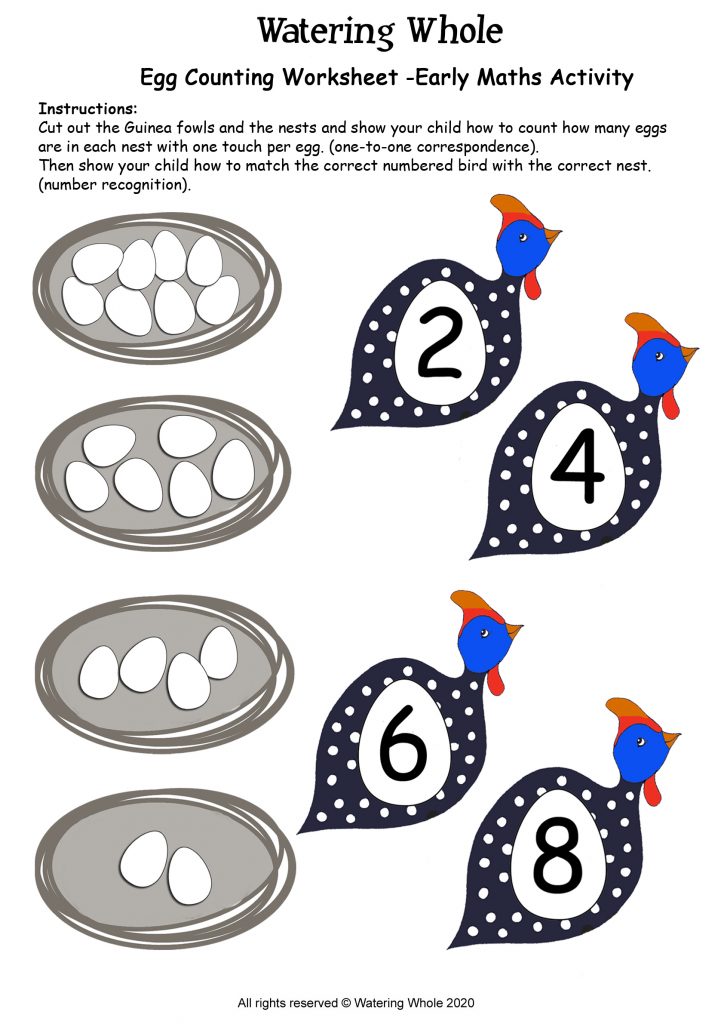
For older children, this week, we have created a fun printable for matching the number of eggs in a nest to the corresponding numeral.

Directions:

Print out the nests and birds from the printable provided for you on the resource page.
Cut out the birds and the nests and show your child how to count how many eggs are in each nest with one touch (one-to-one correspondence).

Show your child how to match the correct numbered bird with the correct nest (number recognition).

For older children you can see if they can figure out the object of the game on their own by saying, “I see birds with numbers on them and I see nests with different amounts of eggs in them…I wonder how we are supposed to play this game?”

video

3D Art, early Maths and fine motor work – Five Little Speckled Frogs:

Five little speckled frogs sat on a speckled log
Eating the most delicious bugs — YUM YUM!
One jumped into the pool, where it was nice and cool
Then there were four green, speckled frogs.
Ribbit! Ribbit!

video

Did you know…..? Counting rhymes like this one help to develop a solid foundation in early maths skills such as counting, addition, subtraction and one-to-one correspondence skills which involve counting each object in a set only once, with one touch per object.

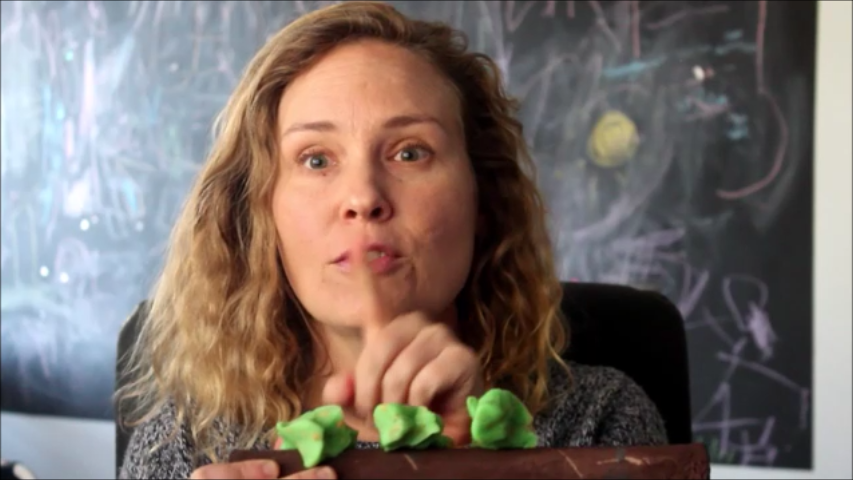
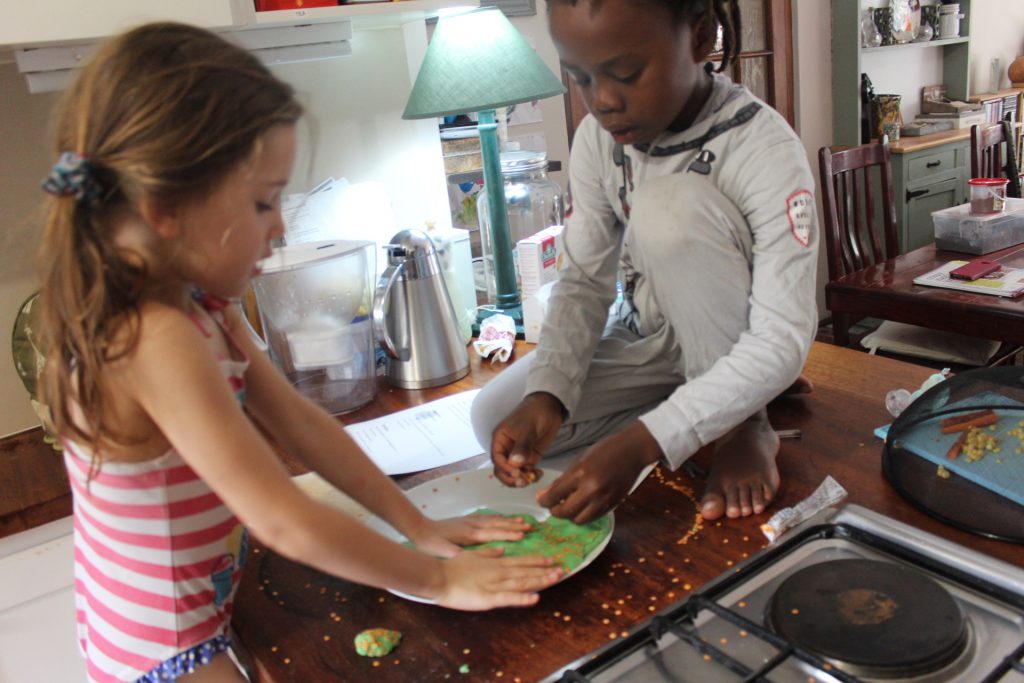
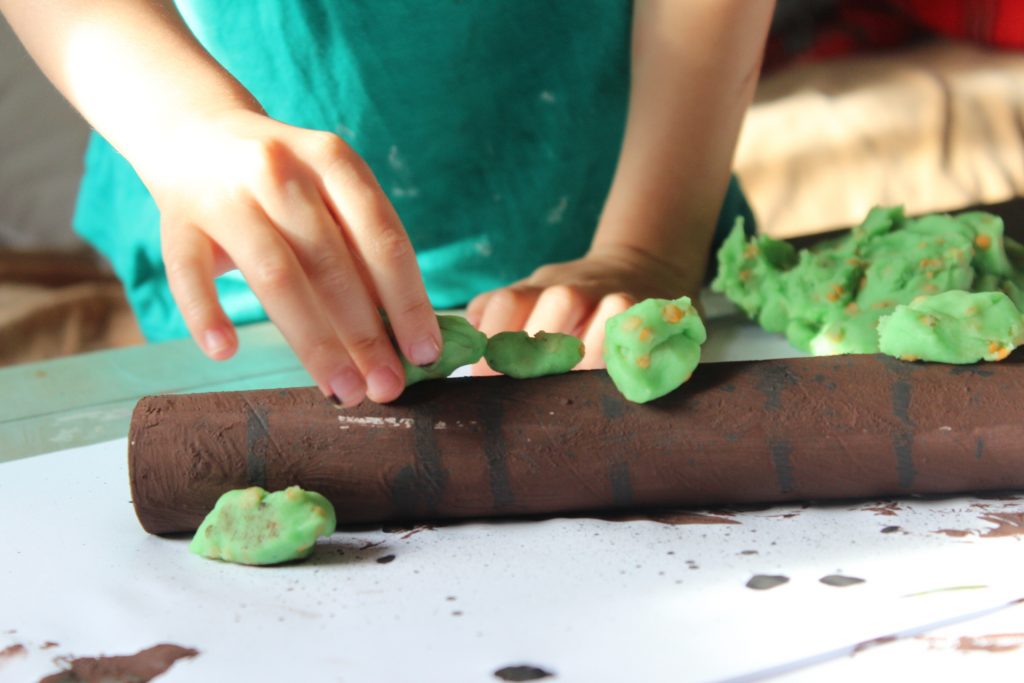
When children have opportunities to touch and manipulate objects as they learn, they will create meaningful connections in their brains that stick…Let’s have some hands on learning fun by creating some of our own speckled frogs. Manipulating dough is also absolutely wonderful for working all the muscles in your child’s hands and fingers important for writing skills later on.

Materials needed:

1 Cup Plain Flour
½ Cup Salt
2 Teaspoons Cream of Tartar
1 Tablespoon Oil
1 Cup warm water
2 Tablespoons Green Food Colouring
¼ Cup red lentils


1.Pour all dry ingredients, flour, salt and cream of tartar together in a saucepan.
2.Add water, oil and food colouring to dry ingredients.
3.Whisk before heating to remove any lumps.
4.Cook over medium heat, constantly stirring until it becomes a thick blob.
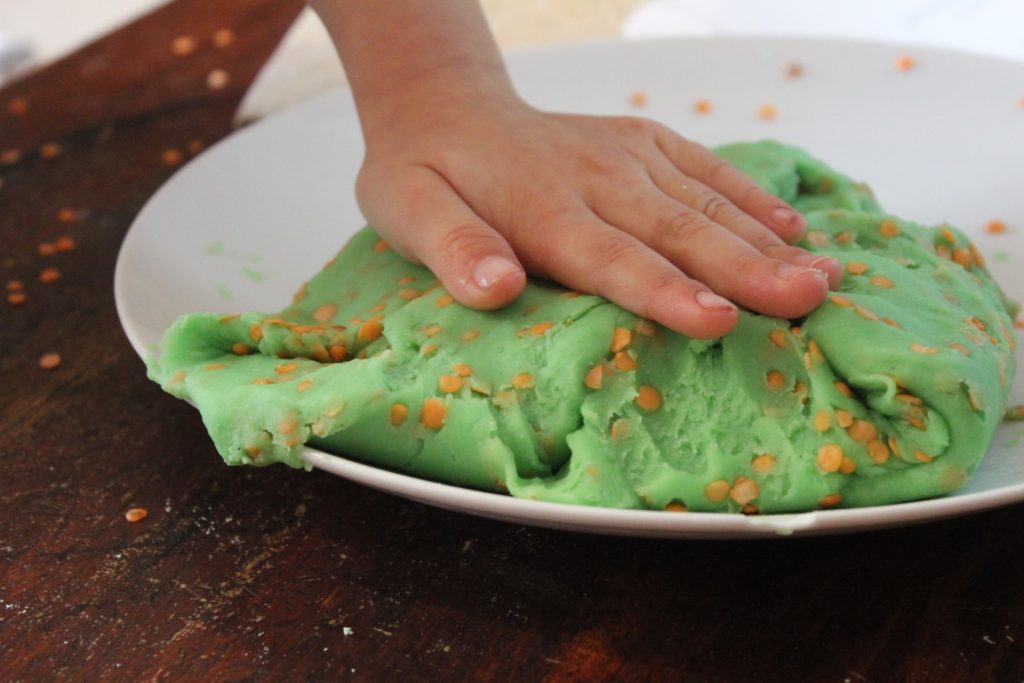
5.Then turn out onto a clean surface and knead into a smooth ball. Be careful the play dough will be very hot! Use a little bit of flour if the play dough is sticky.
6.When the play dough has cooled, gradually fold and knead in the yellow split peas/lentils
7.Store in a plastic zip lock bag or air tight container.

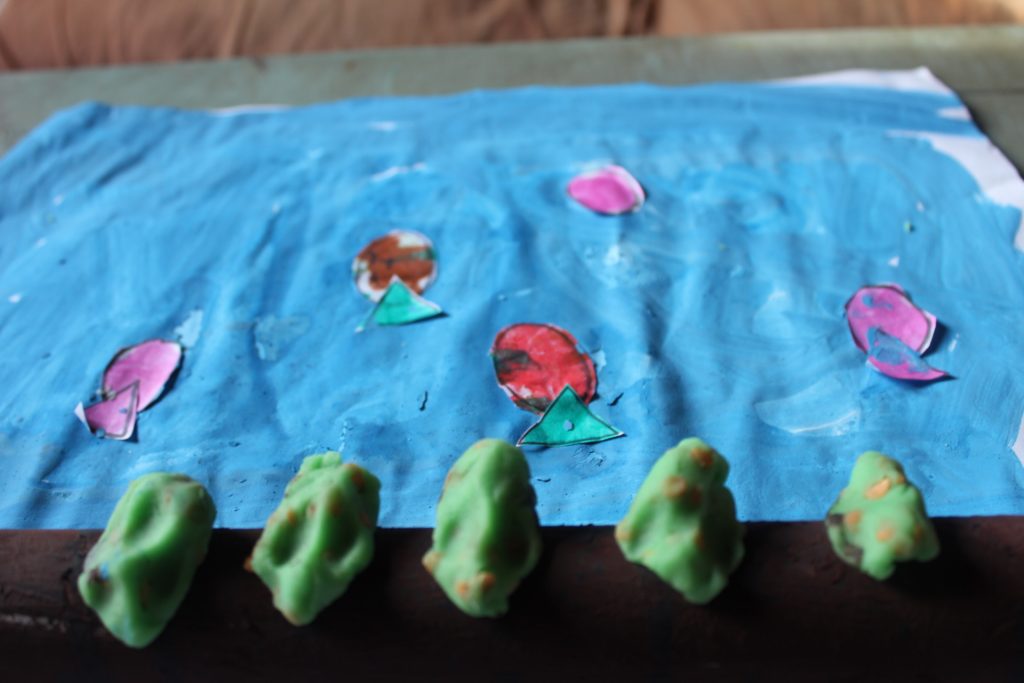
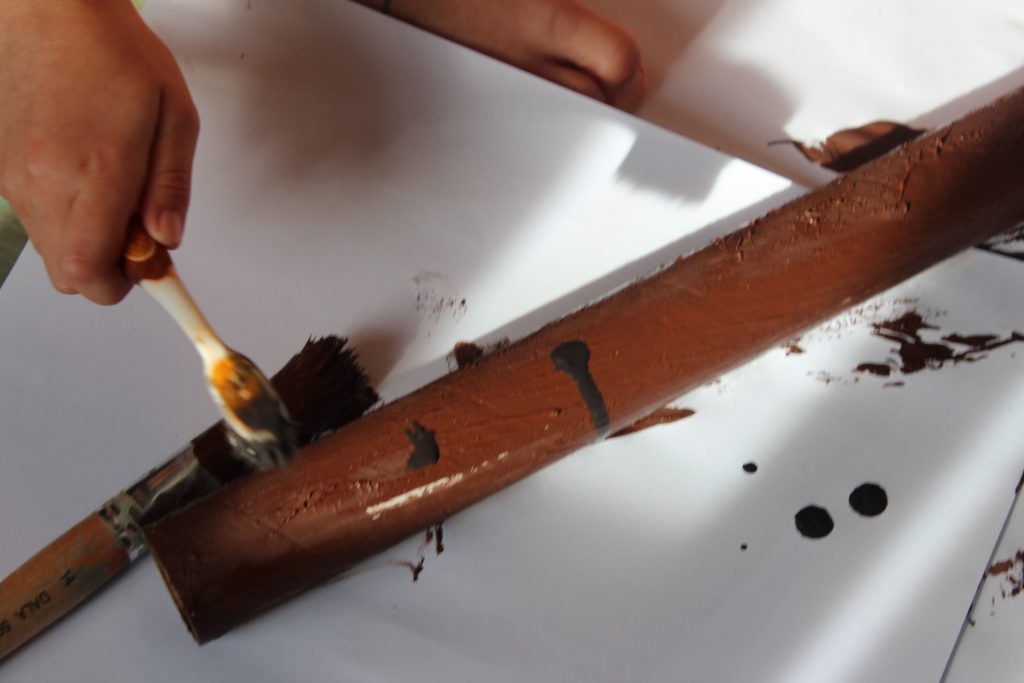
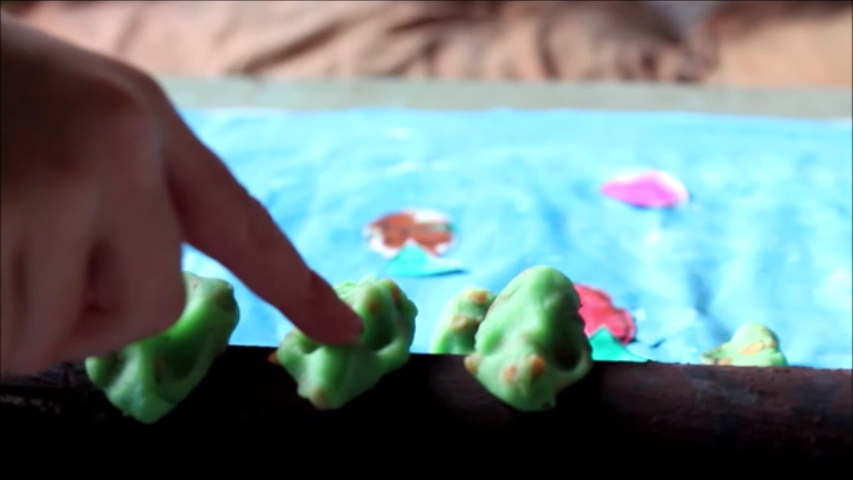
Now create your scene. We painted a brown paper towel roll as our log and we used the blue fishy painting from our week 4 curriculum as our pond!

Mold your frogs into little balls and even add googly eyes if you have some!
Have fun playing, singing and counting with your child as you explore together.

video

Early Maths: How much does an elephant weigh?

Did you know an African elephant can weigh between 2000 to 6000kgs…making them the largest land animals.

Here is a fun experiment you can do with your whole family:

Weigh each member of your family and calculate your total weight…can you work out how many of your family’s total weight would make up the same weight as one elephant?

Or alternatively how many of your child’s weight would make up the same weight as one elephant?

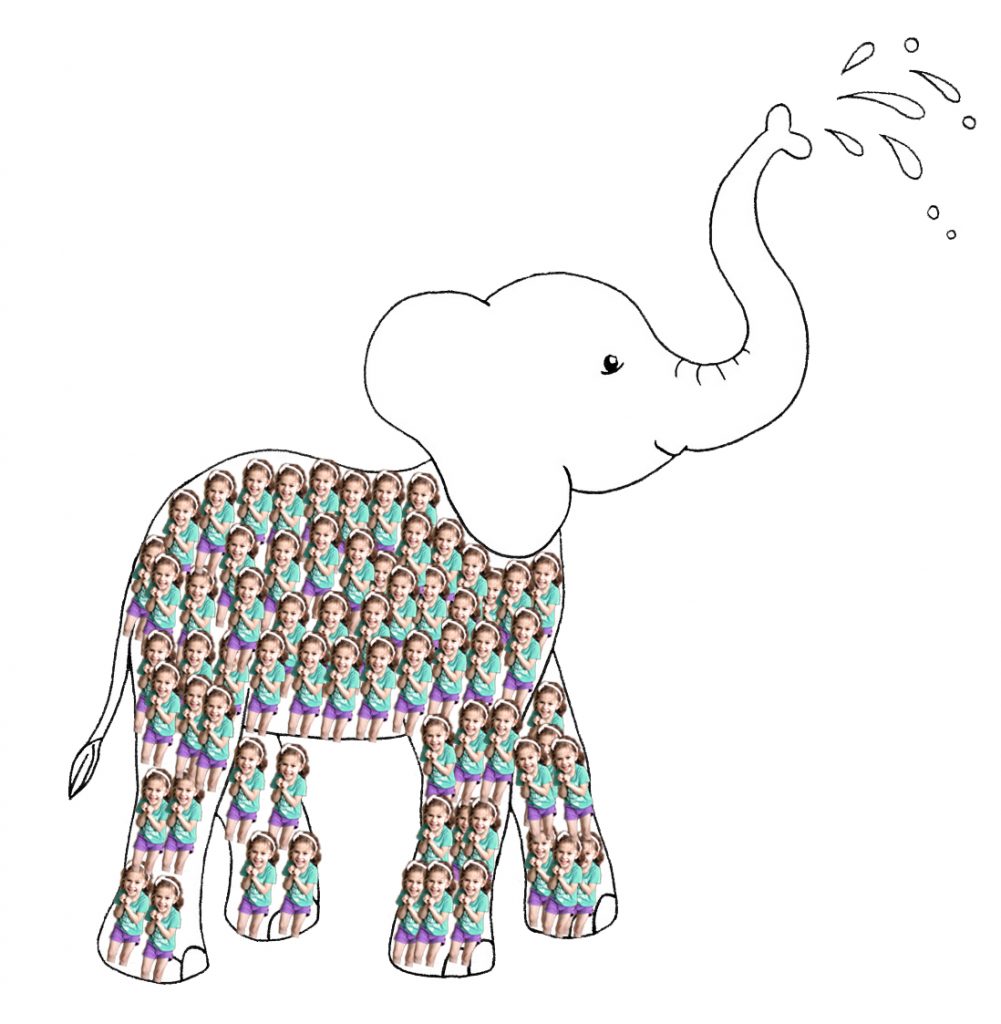
We worked out that it would take 133 Kamalis to make up a 2000kg elephant 400 Kamalis to make up the weight of one 6000kg elephant!!!

Early Maths: Sorting, matching and numeracy worksheets

Watering Whole @Home Curriculum Week 5

We have been working with our illustrator on some wonderful ocean themed sorting, matching and number activities for this week.


Benefits include: helping children develop visual acuity and have a better understanding of comparisons/differences and patterns which are an important foundation for both language and maths.
 

Please download the the ocean themed worksheets below:

WWHP OCEAN ADVENTURE PAIRING ACTIVITY WORKSHEET

WWHP OCEAN ADVENTURE SHADOW MATCHING ACTIVITY

WWHP OCEAN ADVENTURE ACTIVITY WORKSHEET

Numeracy: Sorting, matching and counting using our 3 primary colours.

Watering Whole @Home Curriculum Week 4

Sorting, matching and counting activities are important for early cognitive development. It helps your child to notice differences and similarities between different objects and develops early literacy and numeracy skills.

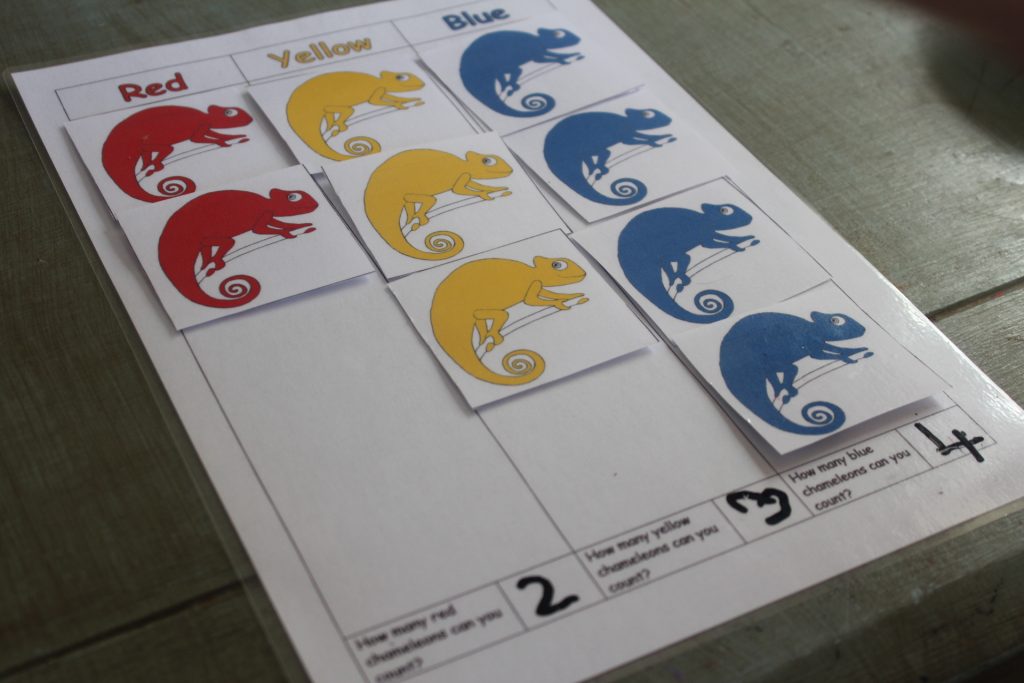
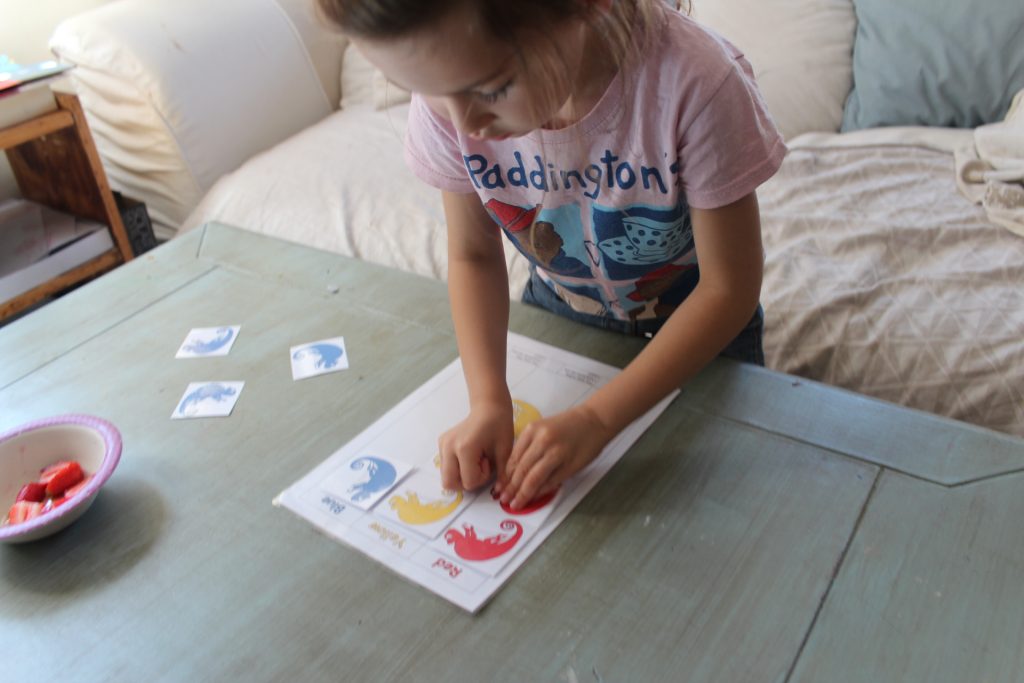
In this activity we will sort our 3 primary coloured Chameleons using the printable below:

Chameleon colour matching and sorting printout

Instructions:

  • Print both pages and cut out the coloured chameleons from page 2.
  • Stick some prestick on the back of each chameleon
  • Invite your child to match the colour of the chameleon to the colour words in the table provided on page one.
  • For older children ask them to count the different chameleons in each colour group and help them write the answer in the blocks provided.

Arts and Crafts, Fine Motor and Numeracy: Counting lady birds

Watering Whole @Home Curriculum Week 2

Here is a simple craft activity that links in beautifully with our concept focus (the colour red), and our Nature focus (bugs) and can be used for a fun counting activity too.

For this activity, you will need ten ladybirds made out of an egg carton. Invite your child to paint the egg carton red like a ladybird and when it is dry cut out your lady birds and stick on/draw googly eyes.

You will then draw one black spot on the first one, two spots on the next one, three spots on the next one, and continue this pattern up to the number 10.


The goal of the activity is for your child to count the ladybug spots and then put the ladybugs in sequential order from 1-10.


Additional ideas: 

You can also put the corresponding number inside of each egg carton for your child to check their counting. 

You can also give the child dried beans to count out and put the correct number in each egg cup.