All posts by admin

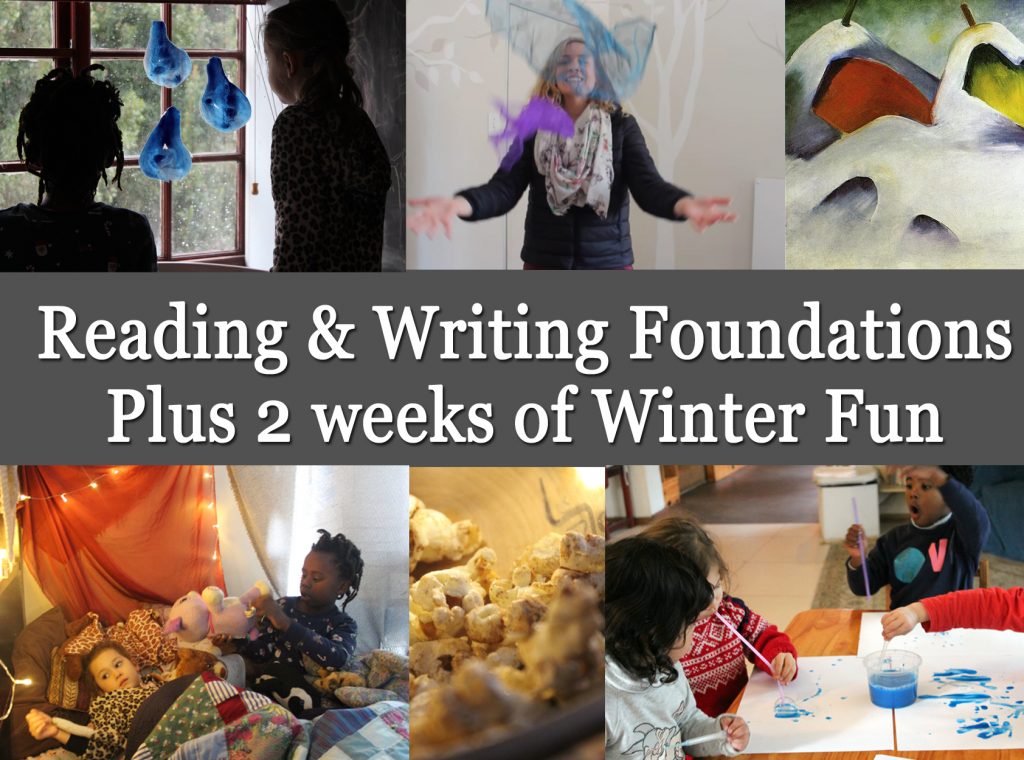
Reading & Writing Foundations. Plus 2 Weeks of Winter Fun

The philosophy behind the Watering Whole is based on my 11 years of teaching and the collective research and education both Inger and myself have received up until this point. It is focused on the understanding that:

  • Every child is unique and different and should be treated as such.
  • Children learn through relationships and need be respected, loved and feel safe in order to learn and grow optimally.
  • Children learn through imitation and from absorbing from their environment, so will watch and imitate the adults/people and things going on around them.
  • Children learn through play and hands-on, sensory rich, interactive experiences where they move and explore using their whole body.
  • Children do not learn in a linear fashion, but rather through repeated exposure over time.
  • The primary focus of these foundational years should be on the richness of the soil and strength of the roots not the size or aesthetics of the plant…In other words these preschool years are focused on building that strong foundation which is the base on which all other learning in years to come will build upon.

So what exactly are all those foundational concepts we are working on in our curriculum?

For the next few weeks will will start to explore what may be considered three main formal learning areas that are covered in education. You may have heard the term the 3Rs (reading, writing and arithmetic) introduced back in the 1800’s by Sir William Curtis as the basis of education; and whilst a lot has evolved in education since then it is still very clear that these 3 skills are all incredibly important basics in education from which many other skills are learnt. During these early years a lot of this learning is done through experiences that provide indirect subconscious preparation, as the foundation is being laid for these skills to later develop.

We hope you enjoy our Winter Themed curriculum as we share with you some thoughts and ideas on how to lay a solid foundation for reading and writing skills to develop in your little one…
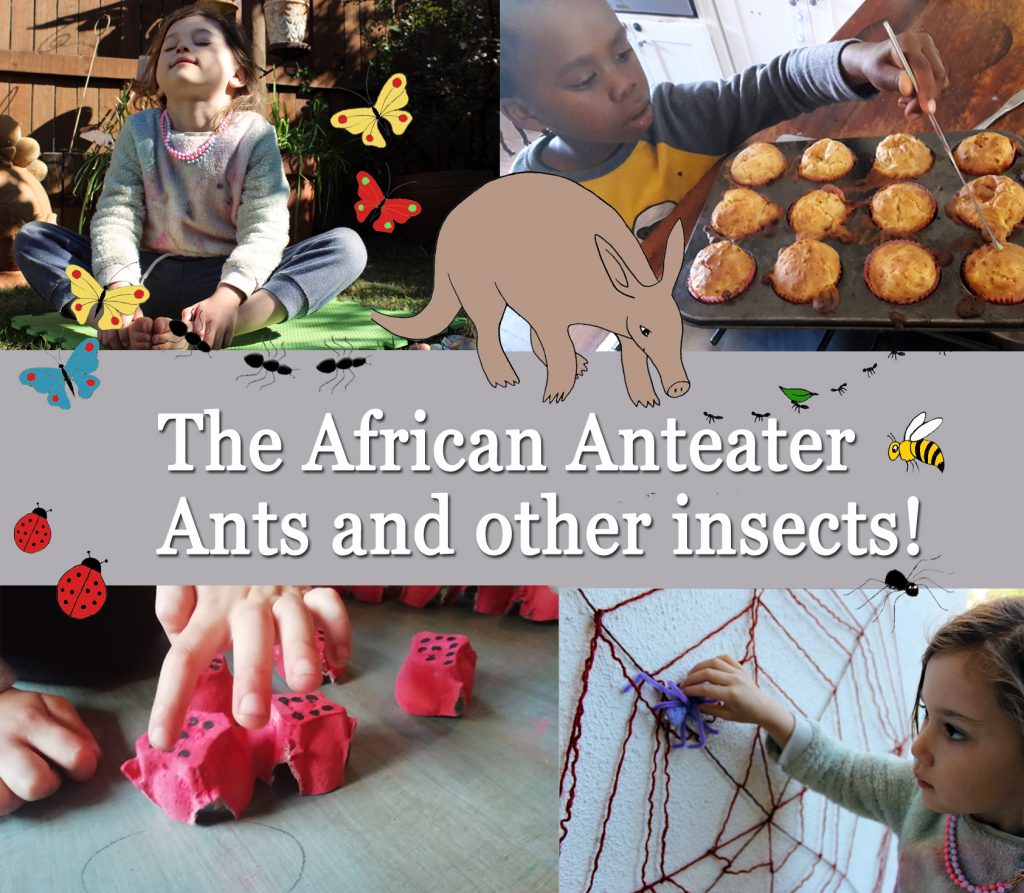
The African Anteater, Ants and other Insects

Children have always been fascinated by insects! It really is such a magical world of wonder and it’s right there… in our gardens and in the park and all around us!


This week we will learn to count with ladybirds, find a place of calm with the butterflies, build our arm muscles whilst digging for ants like anteaters and work on our focus and fine motor skills as we spin webs like spiders. We will learn songs, hear stories, explore and investigate this magical world together.

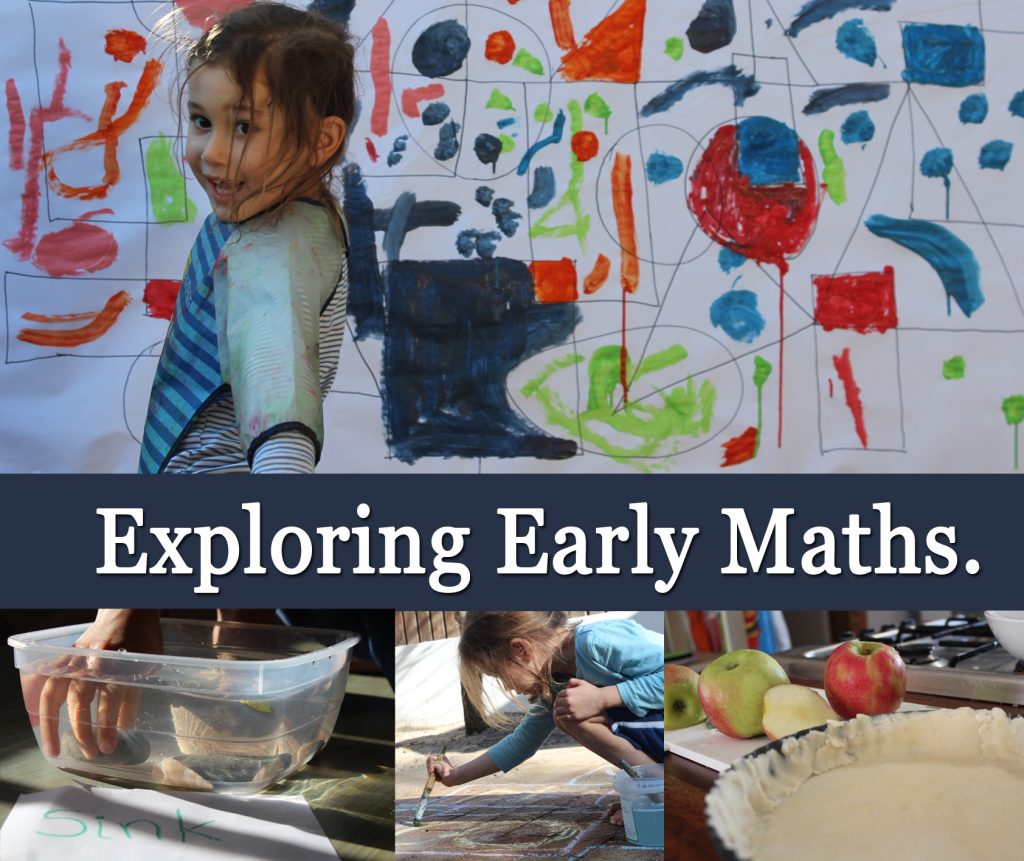
EXPLORING EARLY MATHS

Have you noticed as adults there is almost an extreme reaction to the idea of maths? You either absolutely LOVE maths or want to run away at the thought of it! Rudolf Steinar believes that the way a subject is introduced to a child will either create a bridge to learning or a complete aversion to it!

By helping children build a solid foundation in understanding basic maths concepts in playful and interactive ways, we will create better confidence and abilities in maths later on!

“In 2012, the Australian Council for Educational Research (ACER) began the Longitudinal Literacy and Numeracy Study: Transitions from Preschool to School (LLANS:TPS). … Two significant findings from the LLANS research informed the current study.

First, even when children start their first year at school, there is a significant range of achievement in children’s literacy and numeracy skills.

Second, the range of achievement between lower and higher performing students tends to increase during primary school rather than diminish.

Fostering Understanding of Early Numeracy Development Children’s experiences in the early years establish a sound foundation for learning throughout primary schooling and beyond.” Kate Reid & Nicola Andrews

This topic of maths is in fact such an important one that we have decided to put off diving into our African Alphabet for one more week whist we utilise every aspect of our weekly curriculum from art, to music, to baking to explore maths together! We hope this will give you the confidence and tools to help you develop a strong foundation and love of maths in your child from an early age!

The main foundational maths areas we focus on in preschool are:

  • Number Sense – this includes: counting (being able to say numbers 1-20), one-to-one correspondence (touching each object in a group once whist counting quantity), reading and writing number symbols (for oldest children), understanding the connections between quantities, more, less, etc.
  • Shapes – (also known as geometry)
  • Sorting, Graphing and Data Analysis
  • Patterns (also known as algebra)
  • Measurement (such as comparing sizes, lengths and weights)

We will explore all of these main focus areas in different ways in our “Exploring Early Maths Curriculum this week!”

Connecting Maths and Literacy:

Working on number sense: Counting and Number Songs and Rhymes

Maths Concepts: Counting up, counting down, patterns in rhythm and songs, simple addition, subtraction and division

Songs and rhymes are a perfect way to start introducing early maths skills to your child. Even as a baby you can sing these songs to them and start to develop early maths skills.

We have created a wonderful Songs and Rhymes PDF Pack for you to download here which includes 19 different Songs and Rhymes, directions for actions and a video link to each one. We also have also created a fun Baa Baa Black Sheep extension activity at the end of pack for you to work on sharing and division skills at home.

You can also access the full playlist here:

Gross Motor and Fine Motor Maths Fun:

Maths Concepts: Counting, number recognition, sorting, colour recognition, one-to-one correspondence and number formation.

Activities that allow a child to learn with the whole body are essential in preschool! Here’s a wonderful gross motor game that will help with counting, number identification, and can be turned into a sorting game and also work on fine-motor skills and number formation.

All children are different, but your child should start to be able to identify the symbols of most numbers from 1-10 between the ages of 3 and 4 years and will often identify their own age number even earlier than this.

Directions:

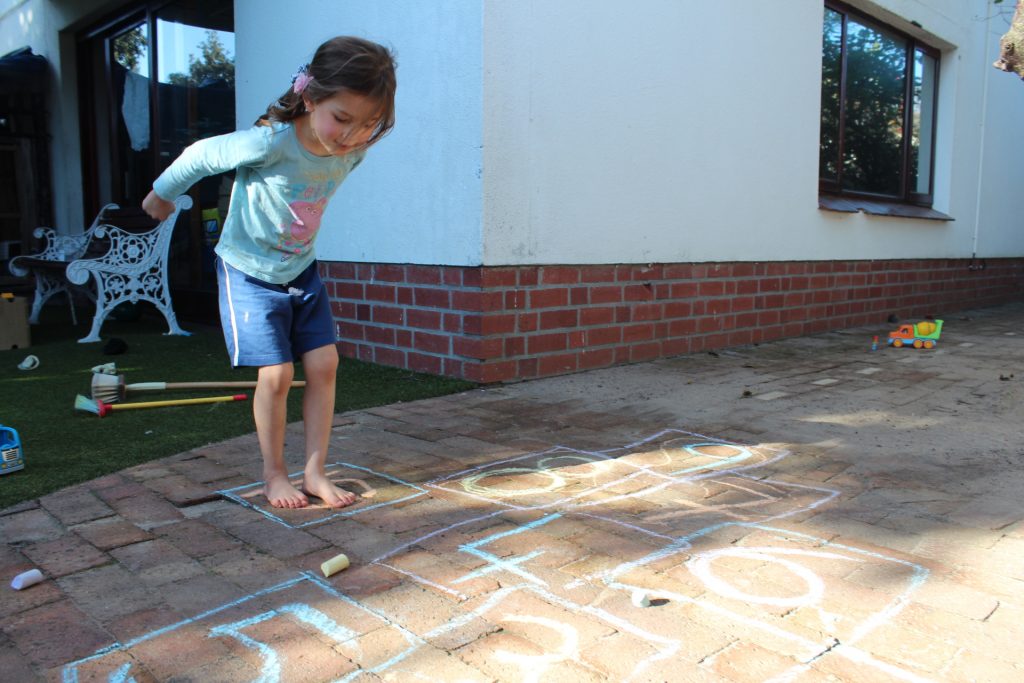
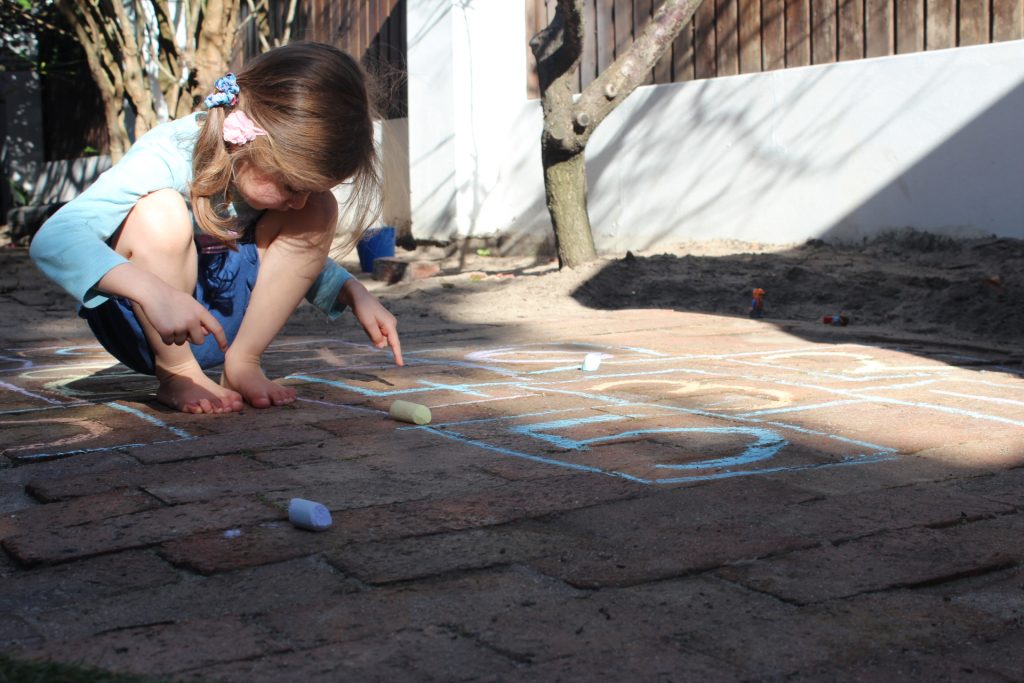
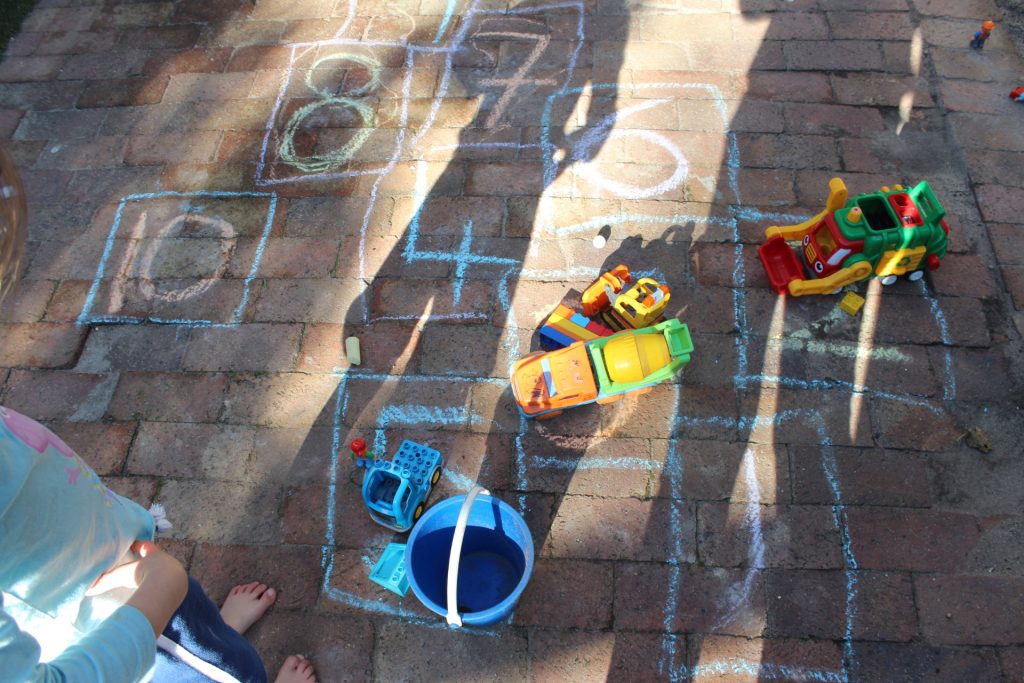
Step 1 – Draw big numbers along your driveway with chalk.

Step 2 – Invite your child to play the number game either by jumping on the number you call out, or if they are not so familiar with numbers you can ask them to jump on any number and then you can call out, “You jumped on number 8”. Kamali enjoyed counting as she jumped from 1 to 2 to 3 etc and then played the game backwards from 10 to 9 to 8 etc (see video below)

Step 3 – Once you’ve had fun number jumping you can turn it into a sorting and colour recognition game by getting your child to find 3 red things to put on 3, 2 blue things to put on blue, etc. This activity is important in helping with the understanding that a specific number is a symbol and that symbol stands for a set of specific items. Here your child will also be working on one-to-one correspondence as they count each object to make up the correct number for each symbol.

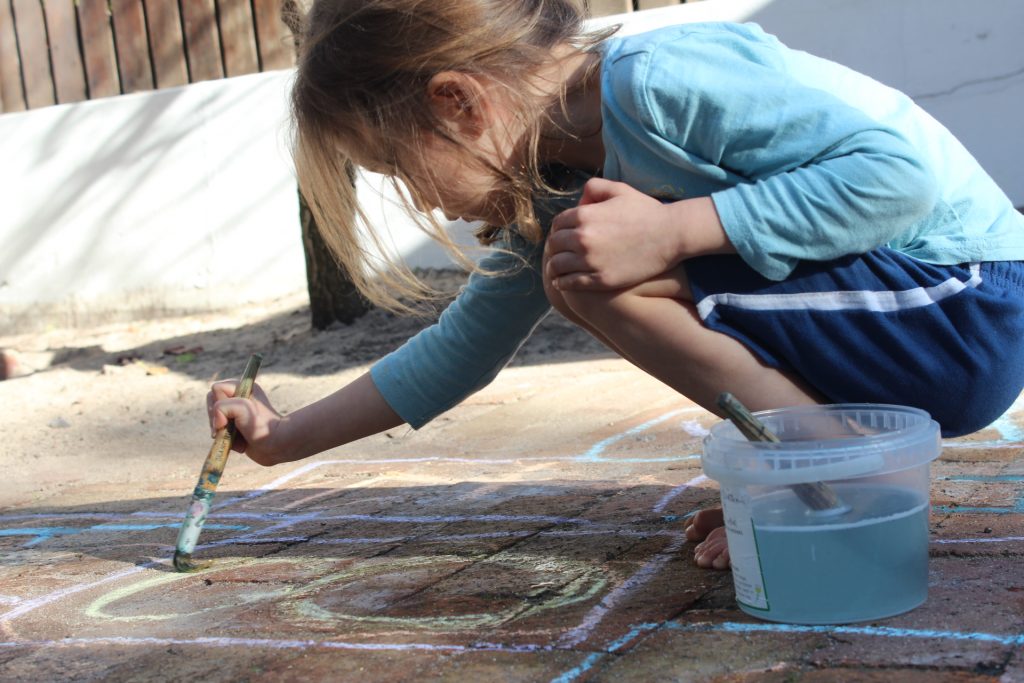
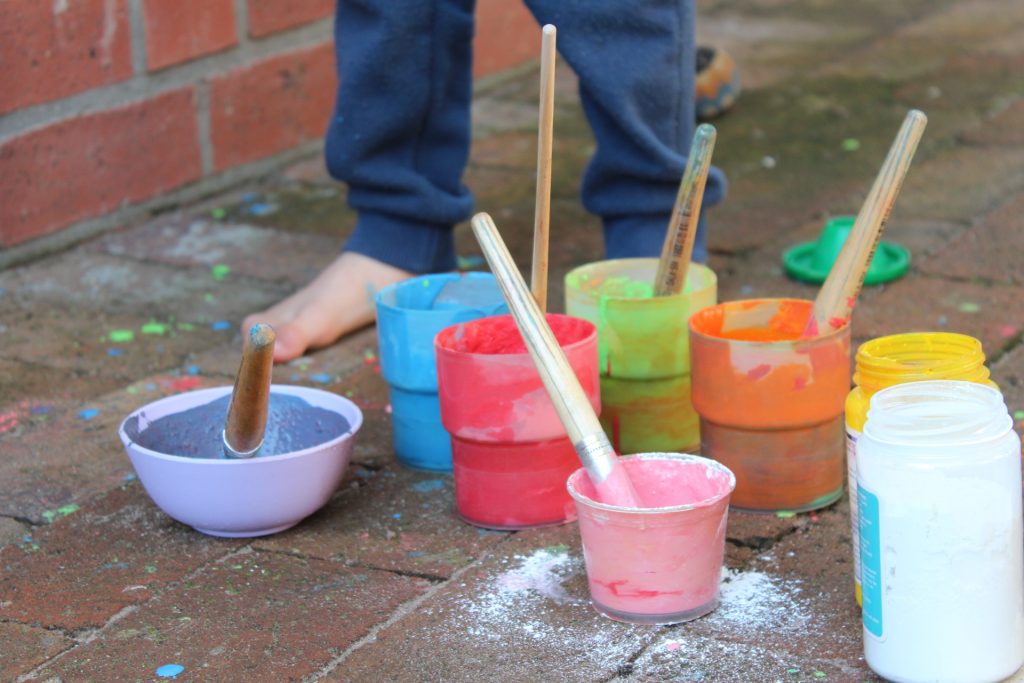
Step 4 – These numbers are also perfect to work on some fine-motor and number formation skills. Give your child some water and a thick paintbrush or sponge and invite them to play the “number disappearing game” by painting over the numbers with water to make them disappear.

Music and Dance : Learning all about Patterns

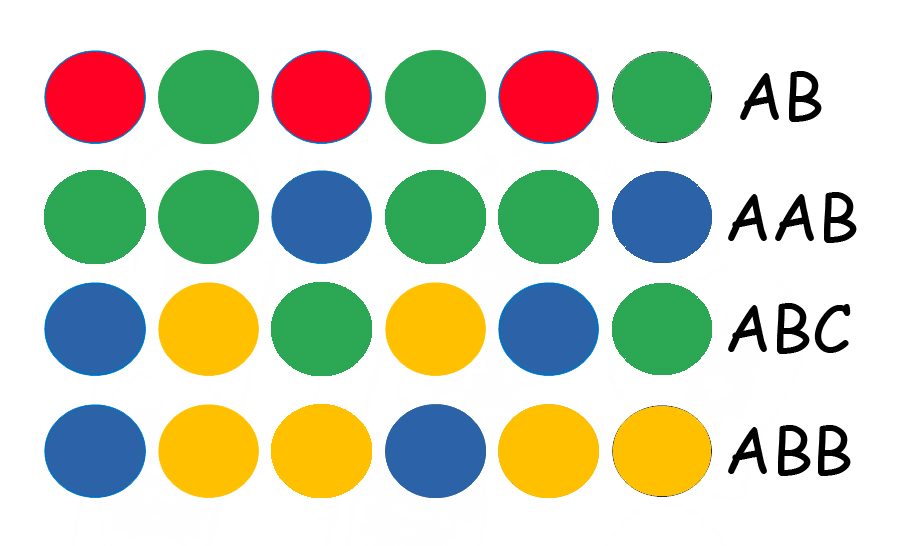
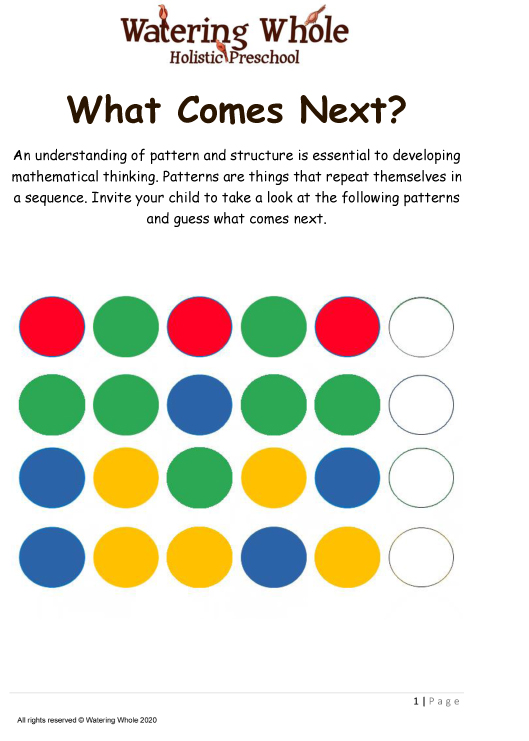
An understanding of pattern and structure is essential to developing mathematical thinking. Patterns are things that repeat themselves in a sequence.

Music and dance activities are a natural, developmentally-appropriate way to introduce the maths concept of patterns to young children.

Then, patterns can also be taught using colours and shapes.

Other natural patterns that occur around us are things like days of the week, seasons of the year, etc.

Join teacher Inger this week for music and dance classes that focus on introducing the concept of patterns!

Dance Class: Exploring Patterns, Levels and Counting

Music Class: Exploring Rhytmic Patterns, learning the Solfege Hand Signs and playing to Jazz

You can also download and print these pattern games we have created for you to do at home:

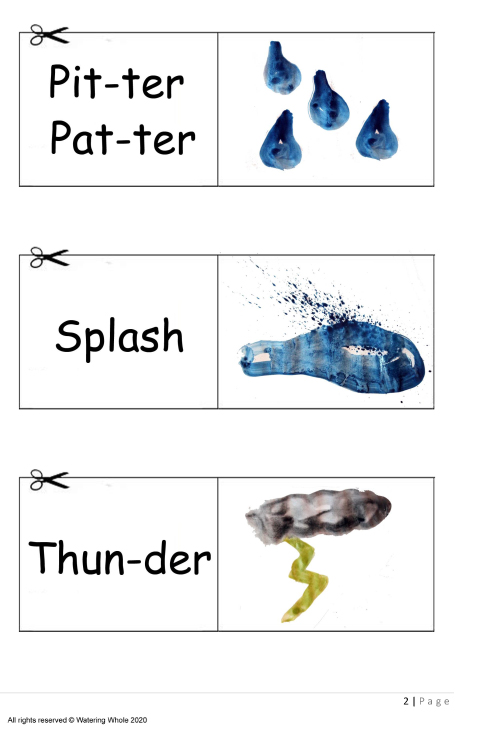
RAINDROPS AND RHYTHM GAME PDF

WHAT COMES NEXT? PDF

Science and Nature: Sink or float experiment

Maths concepts – Measurement and sorting, graphing and data analysis

This is a wonderful activity to explore comparative words such as long and short, light and heavy, float and sink etc.

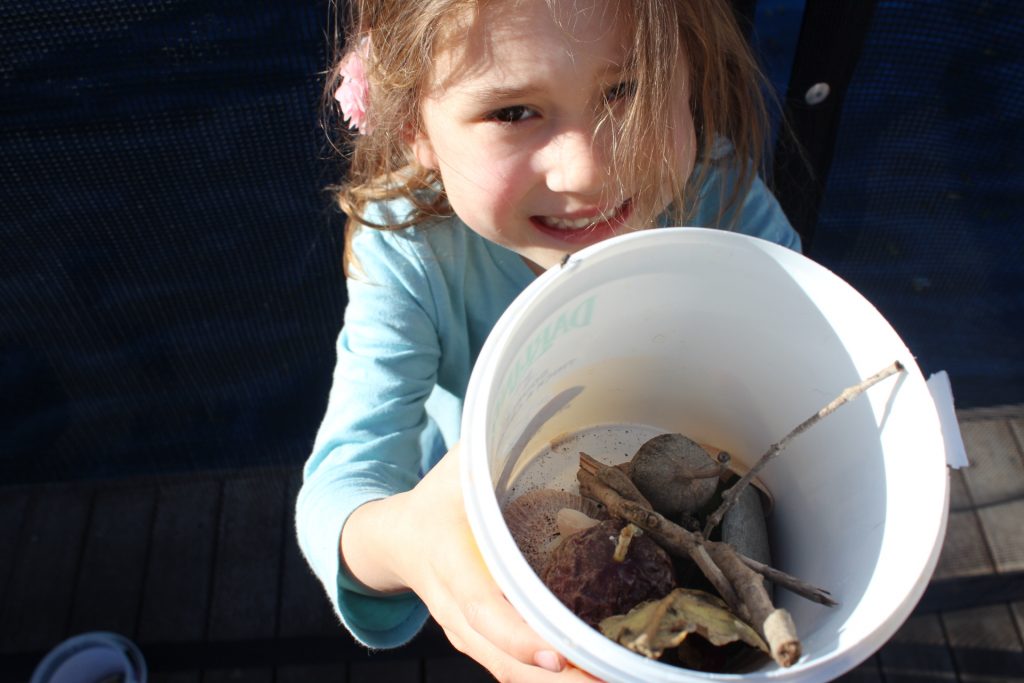
Step 1 – Go on a nature hunt and gather different objects that may sink or float such as leaves, feathers, flowers, rocks, sticks, etc.

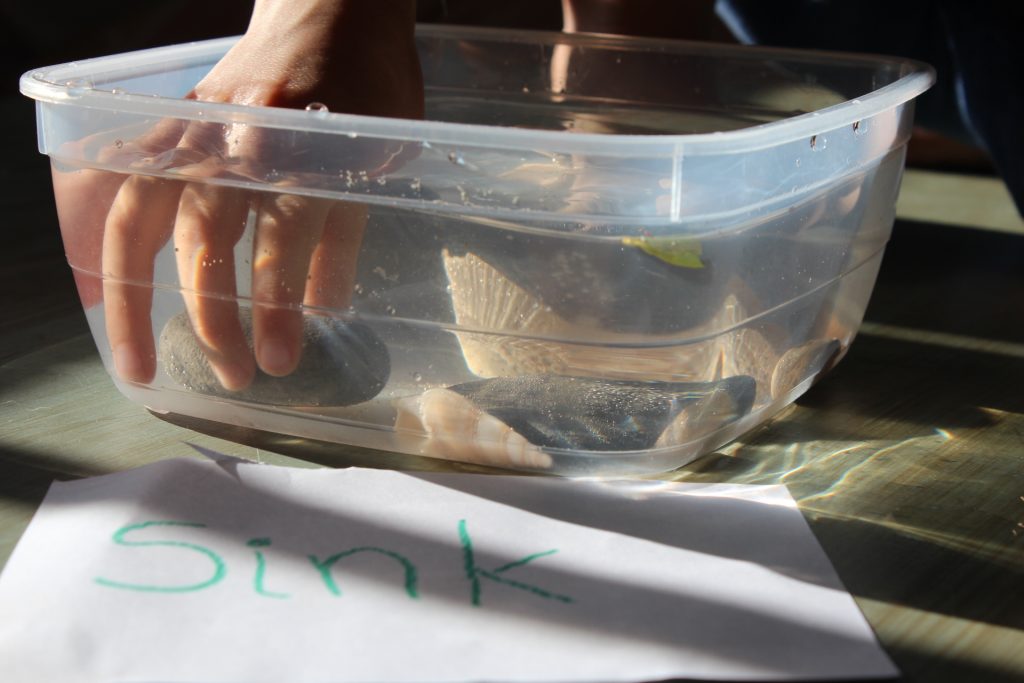
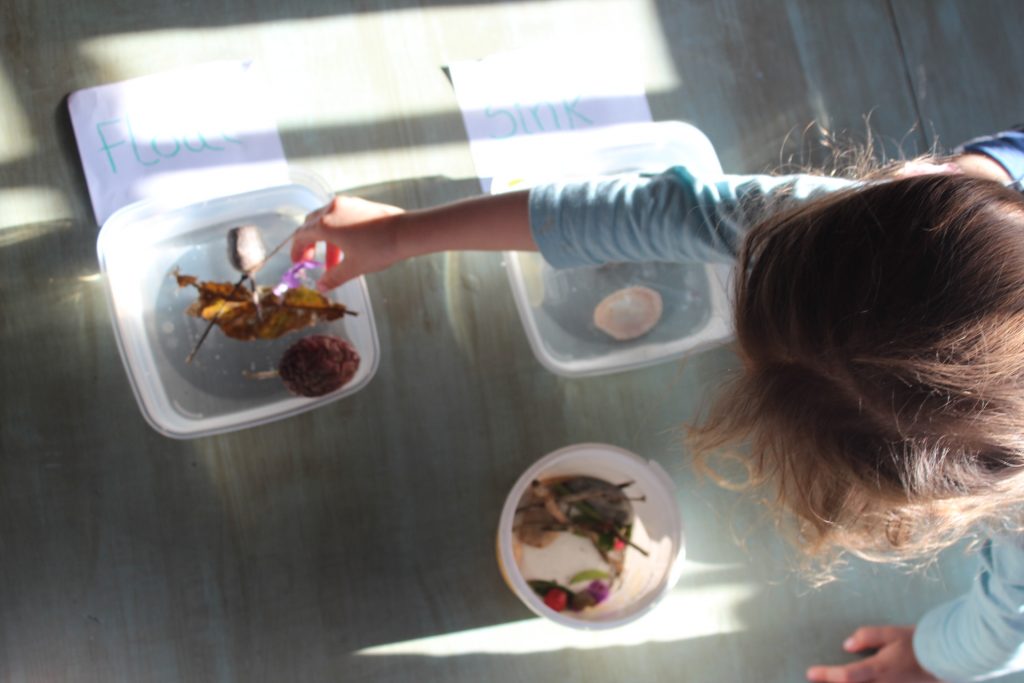
Step 2 – Fill 2 large clear containers with water and label one “Sink” and one “Float”.

Step 3 – Explain to your child that the one container is for things that are light and will float and the other container is for things that are heavy and will sink.

Step 4 – One by one allow your child to pick up each object and ask “Will this sink or float” and then choose which container to place it in.

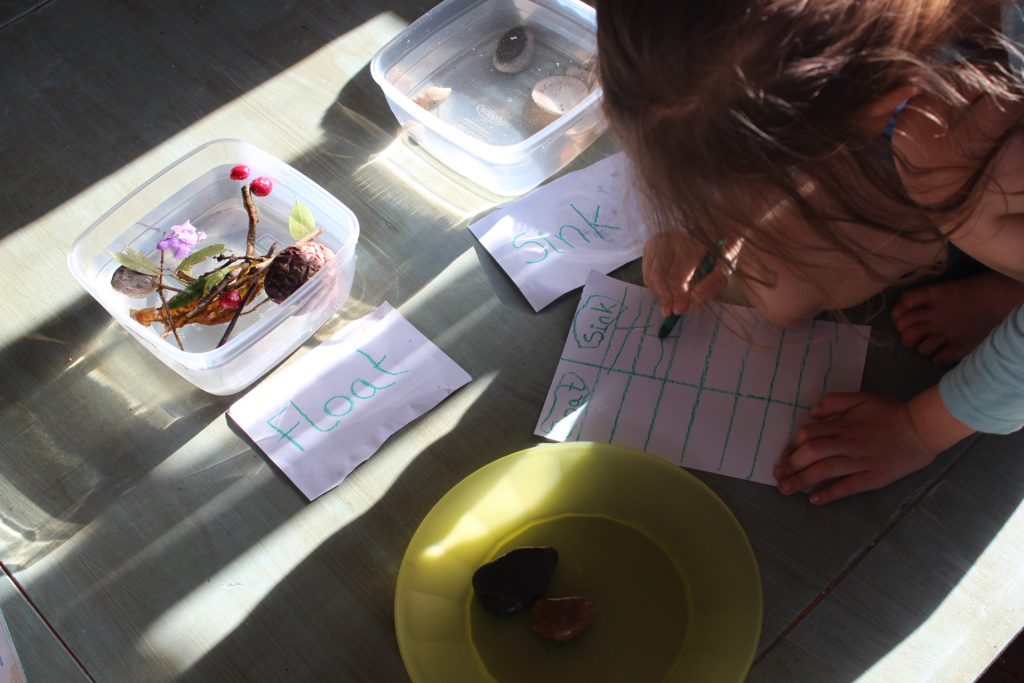
Once the objects have been sorted into the sink or float containers through some trial and error, it’s time to start graphing and analyse the data!

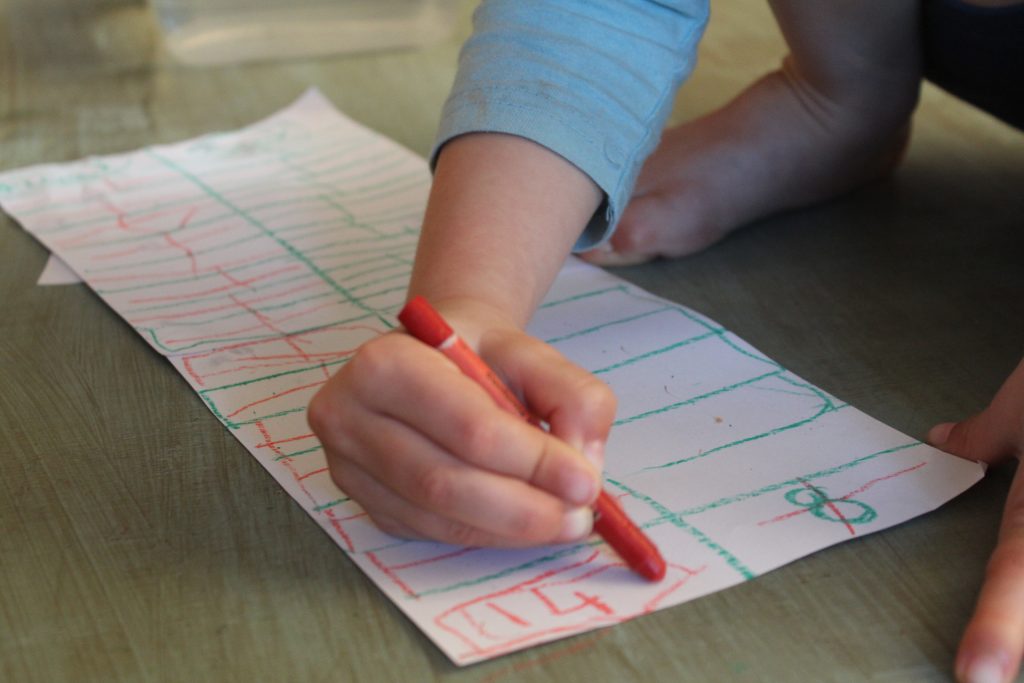
We created a simple graph together: on one side was ‘sink’ and the other side ‘float’ and as we removed each item from the sink container we crossed it off on the paper. We then counted how many objects we had in each section. Which one had more? Which one had less?

The object of the activity is not to get it all right, but to learn through the experience and hands on exposure. This is also wonderful for developing prediction and self-correction skills.

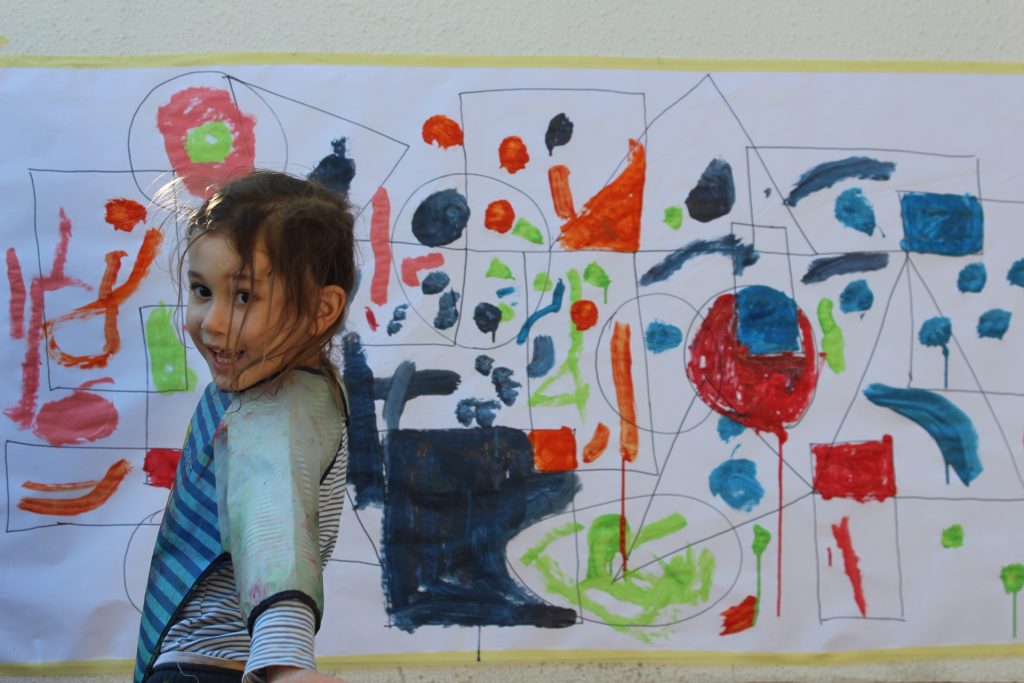
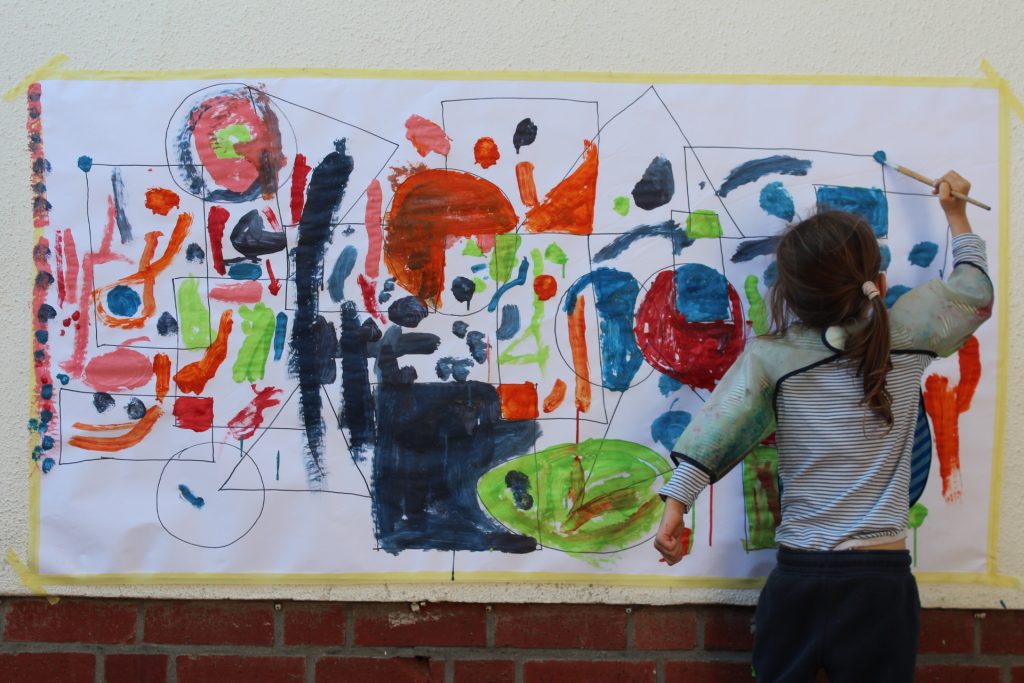
Art: Maths concept – Shapes

The study of shapes is in fact early geometry. At this age, children do not work with formulas for diameters and circumferences, but rather with identifying basic shape names and comparing, sorting, classifying and drawing them.

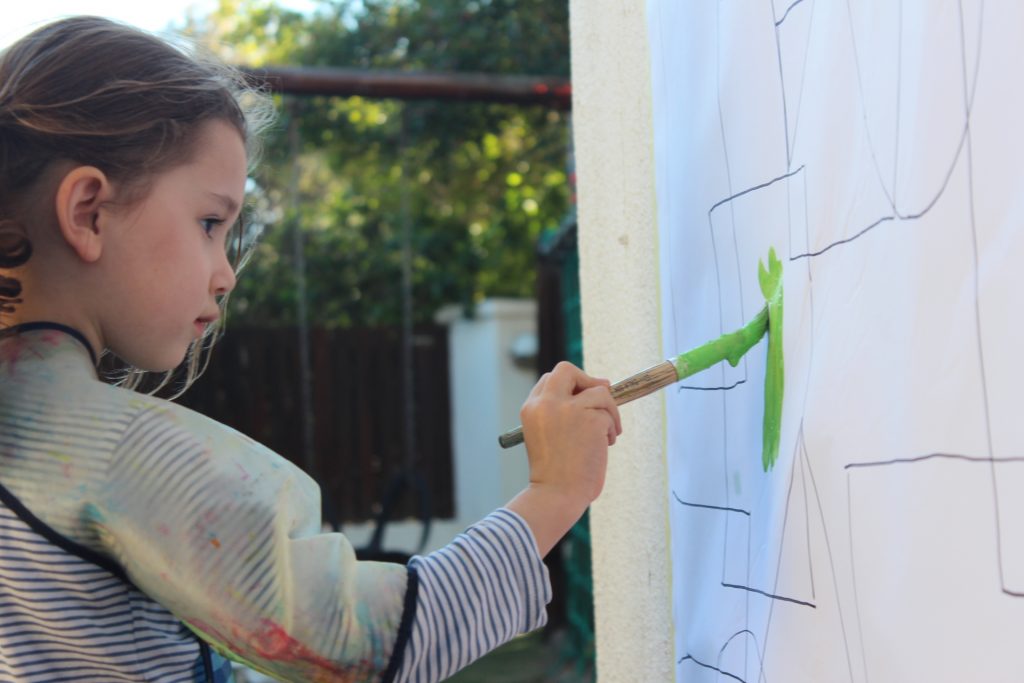
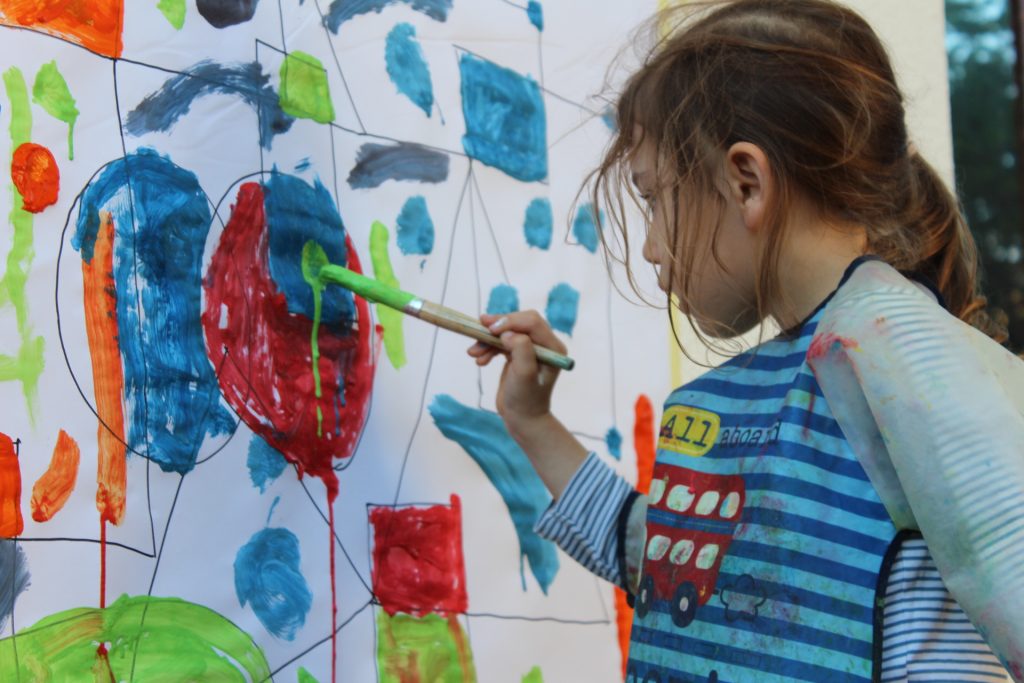
Here we are combining an art activity that uses whole arm movements (gross motor) to explore various shapes on a vertical surface.

Take a large piece of paper and draw lots of different overlapping shapes. Tape it onto a wall and invite your child to paint in the shapes in any way they would like.

This is a wonderful way to work on crossing the mid-line, developing upper arm strength, shape recognition, colour recognition and the mixing of different colours and creative expression!

Measuring and Fractions in Baking:

Maths Concepts: Counting, Measurement, sharing and fractions

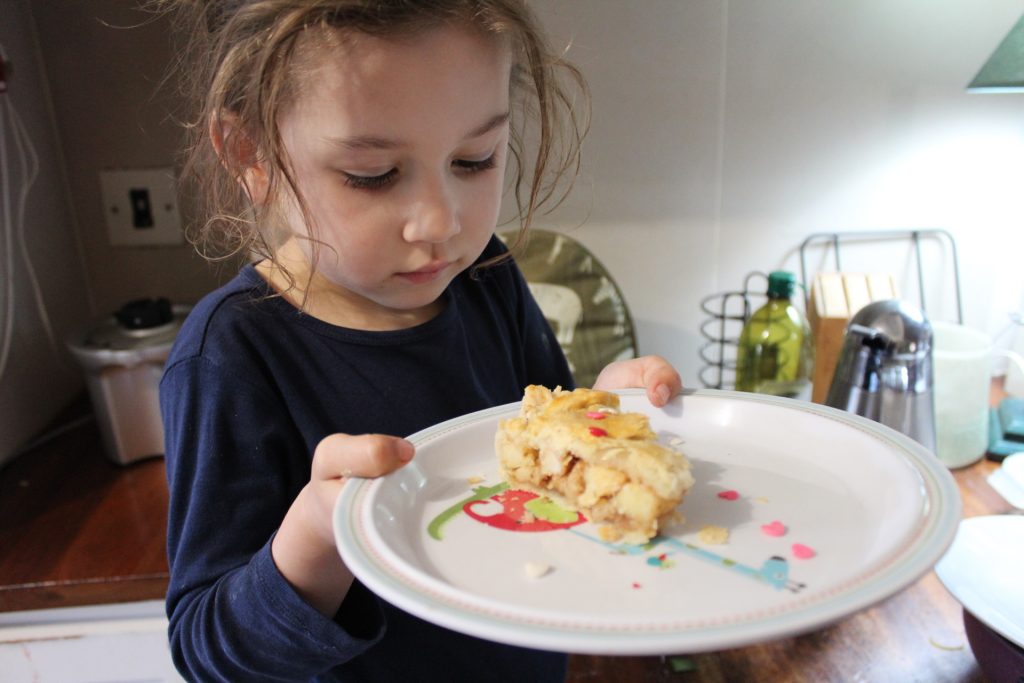
Learning about parts of a whole is an early fraction skill! Sharing out food such as an apple pie cut into pieces from the whole is the perfect way to start understanding this concept. This is also a wonderful EQ skill as children share with others!

Before we bake this week we are sharing a wonderful story called: “How to make an apple pie and see the world”

Not only do we learn about all the of the different raw ingredients that make up our apple pie (e.g. butter is made from the milk of a cow), we also take a trip to different parts of the world making it a wonderful geography lesson too!

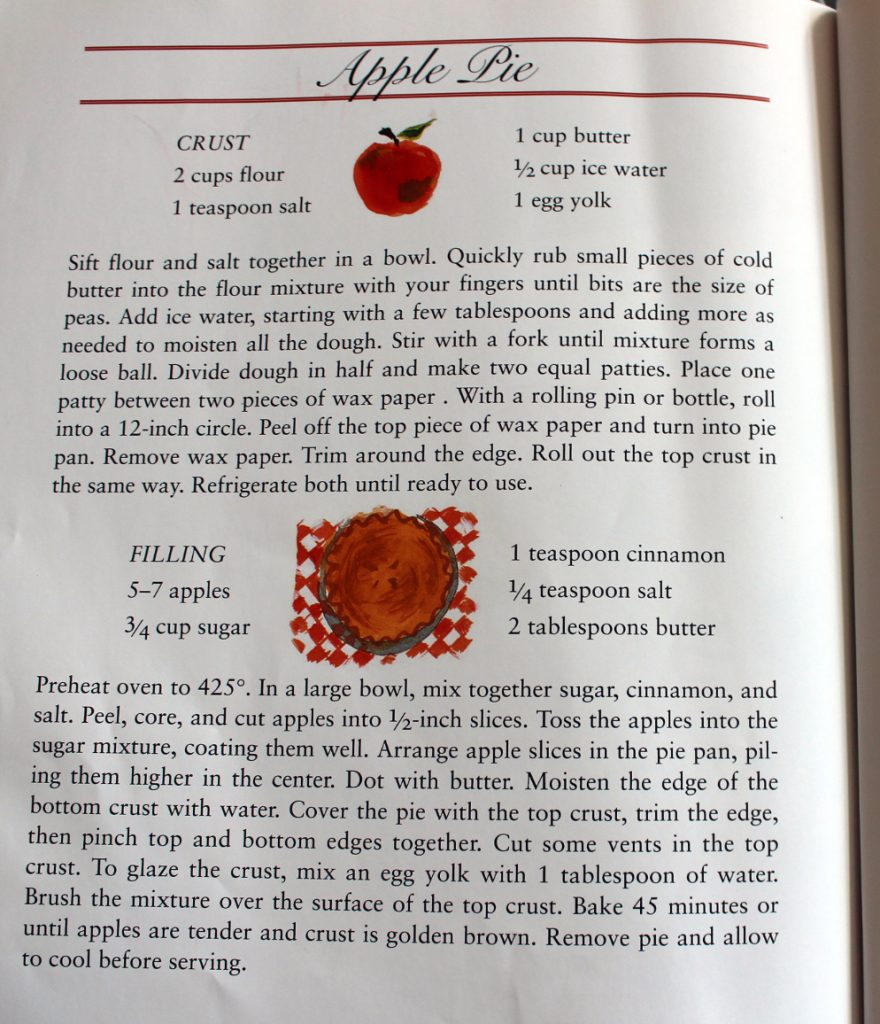
Baking is naturally full of maths! There’s measuring and counting, it’s sensory and hands on, and best of all there’s usually a delicious product at the end.

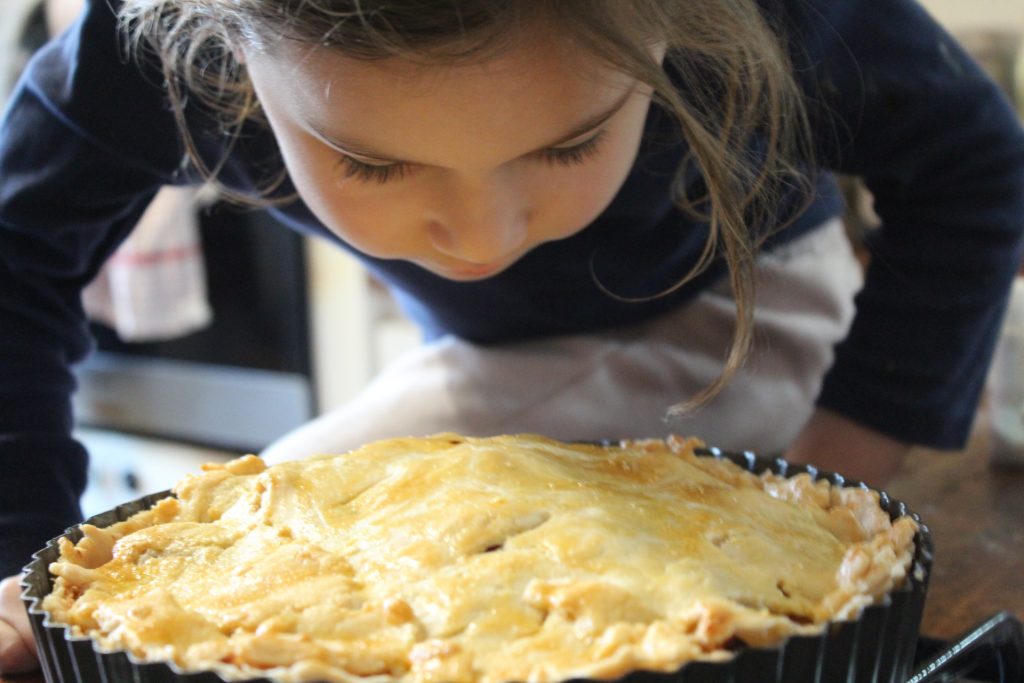
This week we are going to bake an apple pie and then we encourage you to have some fun discussing how the “whole” pie can be “divided” into pieces and “shared” out.