The philosophy behind the Watering Whole is based on my 11 years of teaching and the collective research and education both Inger and myself have received up until this point. It is focused on the understanding that:
Every child is unique and different and should be treated as such.
Children learn through relationships and need be respected, loved and feel safe in order to learn and grow optimally.
Children learn through imitation and from absorbing from their environment, so will watch and imitate the adults/people and things going on around them.
Children learn through play and hands-on, sensory rich, interactive experiences where they move and explore using their whole body.
Children do not learn in a linear fashion, but rather through repeated exposure over time.
The primary focus of these foundational years should be on the richness of the soil and strength of the roots not the size or aesthetics of the plant…In other words these preschool years are focused on building that strong foundation which is the base on which all other learning in years to come will build upon.
So what exactly are all those foundational concepts we are working on in our curriculum?
For the next few weeks will will start to explore what may be considered three main formal learning areas that are covered in education. You may have heard the term the 3Rs (reading, writing and arithmetic) introduced back in the 1800’s by Sir William Curtis as the basis of education; and whilst a lot has evolved in education since then it is still very clear that these 3 skills are all incredibly important basics in education from which many other skills are learnt. During these early years a lot of this learning is done through experiences that provide indirect subconscious preparation, as the foundation is being laid for these skills to later develop.
We hope you enjoy our Winter Themed curriculum as we share with you some thoughts and ideas on how to lay a solid foundation for reading and writing skills to develop in your little one…
When children leave the Watering Whole we are not expecting them to read yet as this is taught in Grade R and Grade 1, but without a proper foundation laid first, reading will prove an extremely difficult task.
At Watering Whole we work on creating and developing a rich foundation on which reading will flourish by focusing on the following:
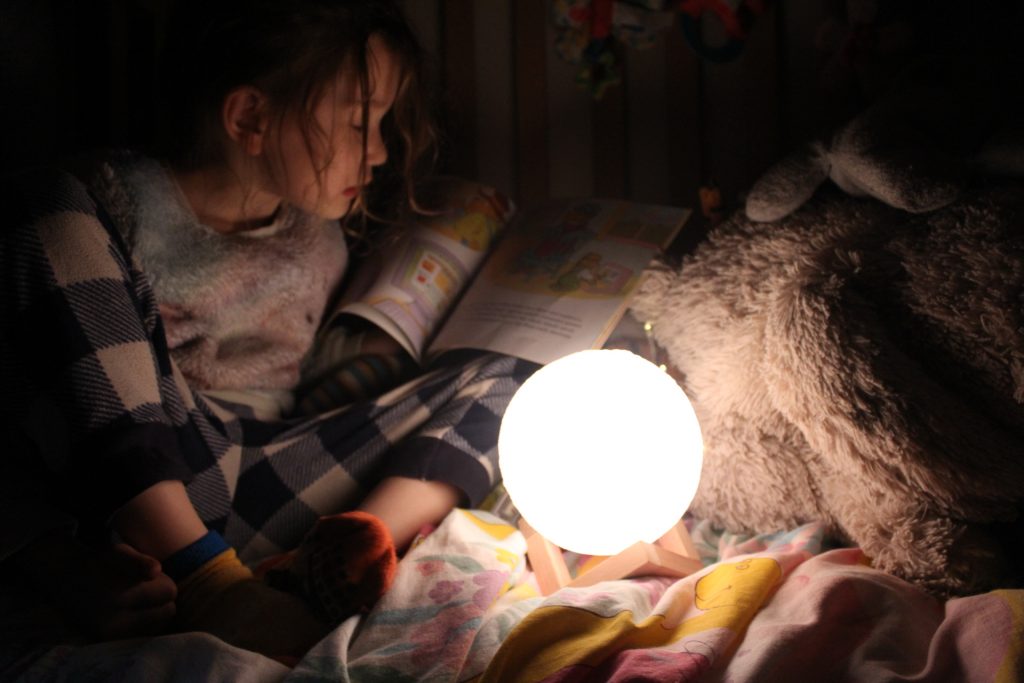
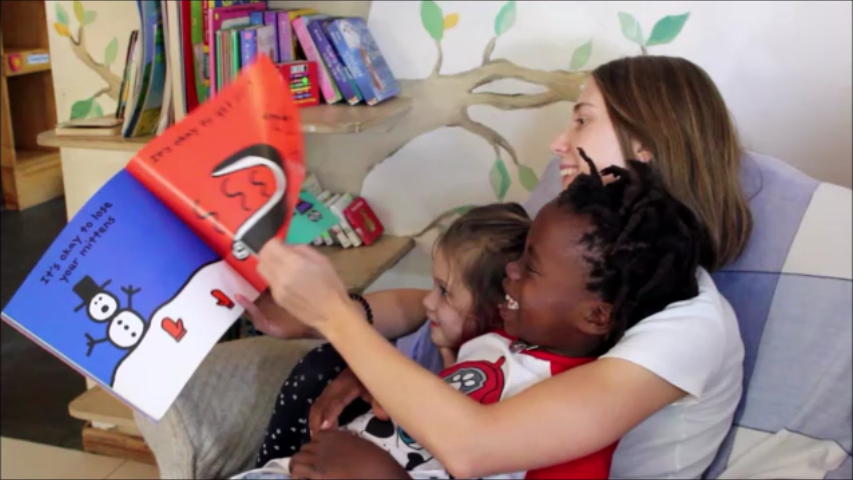
1 – Language – A child needs to have been exposed to and have developed a rich understanding of language before they can learn to read successfully and this is done through exposure to stories, poems, songs, rhymes and books daily! Reading to your child is one of the greatest gifts you can give them during these foundational years!
2 – Awareness of rhyme – All those nursery rhymes, poems, songs and books like Dr Seuss will help your child develop an ear for sound. Research shows that rhymes help children to grasp the rhythm of language and break down phrases into words and words into sounds; an important skill needed to be able to read and write. The repetitive structures used in nursery rhymes are also your child’s first introduction to early maths skills as it introduces patterns and many rhymes will often also include numbers and counting too.
3 – Syllable awareness – understanding how different sounds make a word is an important part of developing phonological awareness. Research shows that children who cannot distinguish the different sounds in words have difficulty recognising and learning the print to sound relationship needed for both reading and spelling success. To develop syllable awareness we often break up big worlds by clapping each syllable.
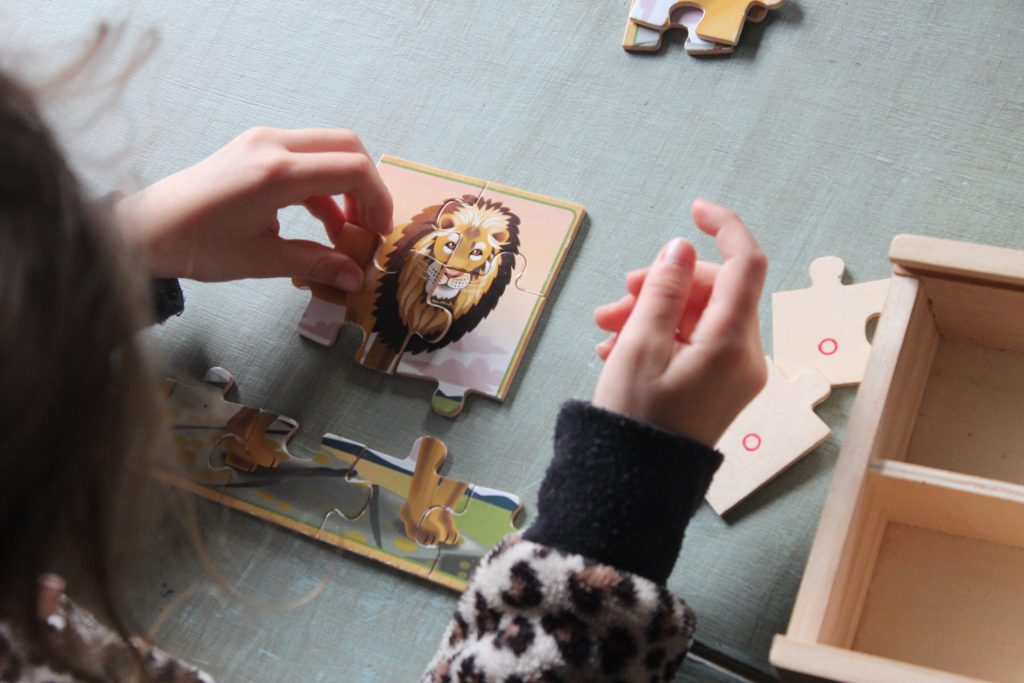
4 – Visual discrimination skills – the ability to identify differences and similarities between objects is especially important when learning reading, writing, and maths. We can develop these skills by exploring shapes and numbers in different contexts, playing different matching, sorting and spot the difference games, reading books together and activities like puzzles are also wonderful to develop this skill too.
4 – Exploring the alphabet and how letter sounds make up words – As we explore our African Alphabet together we are starting to help our children identify the first sounds in words. Whilst we are not expecting children at this age to learn and identify every letter of the alphabet at preschool, we are familiarising them with all the different sounds of the alphabet and the understanding that it is these different sounds that make up the words we read. Generally sound identification always starts with identifying the first sound in a word, then later the last sound and finally the middle sound. Playing games like eye spy is also a wonderful way to develop this.
5 – Sound Segmenting and Sound Blending – Sound segmenting is when we pull words apart, saying a word slowly so we can hear each sound that makes up a word and sound blending is when we push those sounds back together again to hear how they blend into words. This is the beginning of reading. For older children who are starting to identify different letters and are interested in written words they see on the page as you are reading them a story…this is a wonderful time to start introducing sound segmenting and sound blending to them.
READING FOUNDATIONS ….. What can you do?
•Read to your child daily •Sing and read poems, songs and nursery rhymes •Clap out the syllables in big words when you are learning something new! •Play games and do puzzles that develop visual discrimination skills •Have fun exploring the African Alphabet in our curriculum and games like eye spy •Remember to put up your child’s name in their room so they can start recognising their own name in print. •For older children who show interest, you can begin segmenting and blending simple words together.
HOW CAN WE HELP?:
Story Time with Teacher Linda – Over the years we have taken pride in researching and adding a wide array of books to our Watering Whole library. Click on this link to access our story time space. Your child can click on the cover of any of the books in our virtual library and the story video will play. (Our story time library will be added to weekly. This week we have added a Winter Themed book “The Bear Snores On”)
Rhyming Time with Teacher Inger – Join Teacher Inger in our new “Rhyming Time” virtual space here and explore the rich rhythm and rhyme of language through different stories, songs and games. Your child can click on the various video options and a different rhyme, poem or song will play.
The Bear went over the Mountain with Teacher Inger and Kamali:
Welcome to a brand new section of our curriculum that we have been creating for you! Did you know that the critical period for auditory development is before the age of 6?
Watering Whole has a very strong focus on music because we know how important it is at this critical time in each child’s development. Our focus on music not only helps to develop musicality and rhythm, but also helps each child with cognitive function, language development, emotional regulation and even helps their memory systems to work!
Our new weekly music time focuses on 3 main foundational areas:
1 – Rhythmic Development – this week raindrops (call and response) 2 – Pitch Development and Solfege hand signs – this week introducing C/DO 3 – Rich and Varied Music Exposure – this week Vivalidi’s 4 Seasons (Winter section)
Although not mandatory, if you are interested in further developing your child’s sense of pitch we would recommend you may want to consider purchasing some sort of Xylophone or Resonator Bars to play along with during music time. A lot of the musical instruments that we own can be ordered from https://polliacks.co.za/
Let’s develop those gross motor and dance skills this week with this special Winter themed Intellidance Class.
Benefits include: •Increasing co-ordination, balance, and flexibility. •Fostering rhythmic awareness and the ability to move to the beat. •Developing musicality through exploration of sensory props, songs, music and movement. •Developing spatial and body awareness. •Supporting individual creativity and expression.
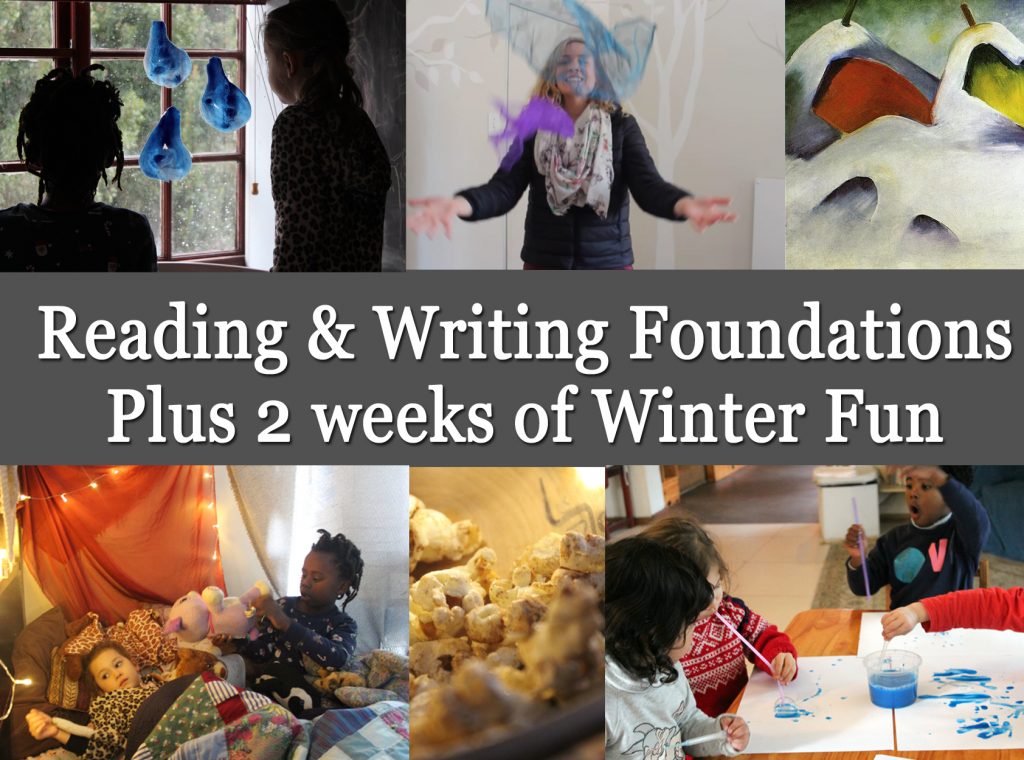
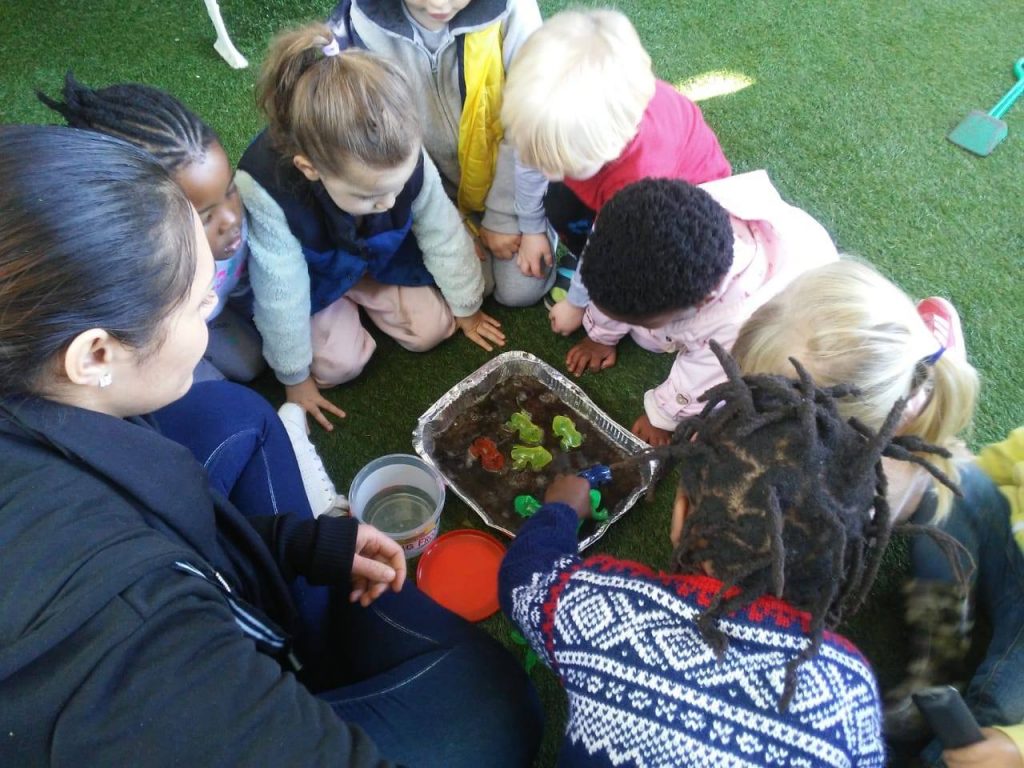
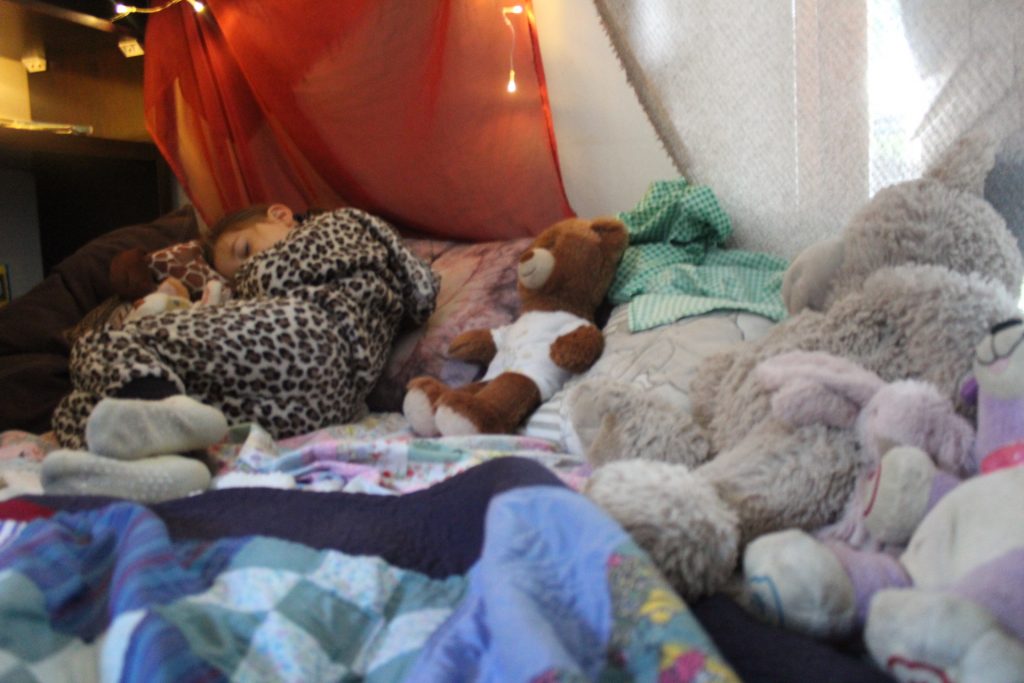
Every Winter we like to do some sort of hibernation project…in the past we have made a cave and put all our school teddy bears to sleep inside it until Spring, we have also gone to the park to collect “nuts” for our toy squirrels and stored them all up in our cardboard tree for the Winter time and last year we took turns “burrowing” our plastic frogs partially into mud. Hibernating aquatic frogs are partially buried in mud at the bottom of ponds during Winter months, making sure to keep themselves exposed to oxygen-rich water.
….and what are the children learning from this?…the experience is varied, at a basic level all the children are being opened up to the existence of the natural world around us…that nature, the weather and animals that exist, survive and thrive in quite miraculous ways!
For the older children who are interested in the actual facts behind the exercise, they are learning something new! This develops a curiosity and fascination for the world around us that inspires a true love of learning.
Have you listened to the Story “The Bear Snores On” yet? It’s Winter time so let’s put our bears to sleep.
ACTIVITY VARIATIONS:
If you have a teddy bear or 2 you can create a small cosy cave together and have your bear go to sleep for the Winter time.
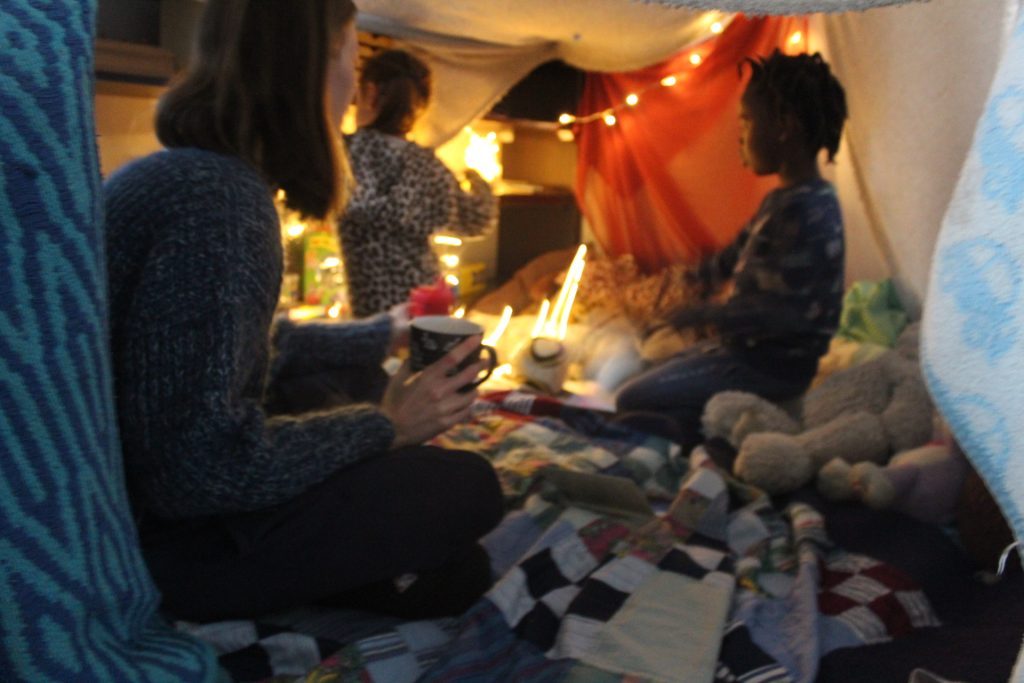
If you have the space, why not make a cosy blanket fort and pretend to be the bears yourselves. Climb inside, read books, eat cinnamon popcorn just like in the story (see this week’s recipe suggestion). We have really enjoyed spending lots of time in our blanket den today!
Today we share with you a fun little song written by “Teacher Inger” at the Watering Whole. It’s simple, it’s fun, and it teaches our children all about the Water Cycle!
This song can be done as a finger play activity or whole body exercise with children as small raindrops on the floor, who then evaporate on tippy toes and fall back down to the floor at the end….
I’m a Little Raindrop (to the tune of I’m a little Teapot) I’m a little raindrop in a lake (Start with hands and fingers on floor in our “lake”) When I get hot I evaporate (Wiggle fingers upwards) Up into the sky I form a cloud (Interlace fingers above head) Then I fall back to the ground (Wiggle fingers downwards like rain and “splash” onto floor)
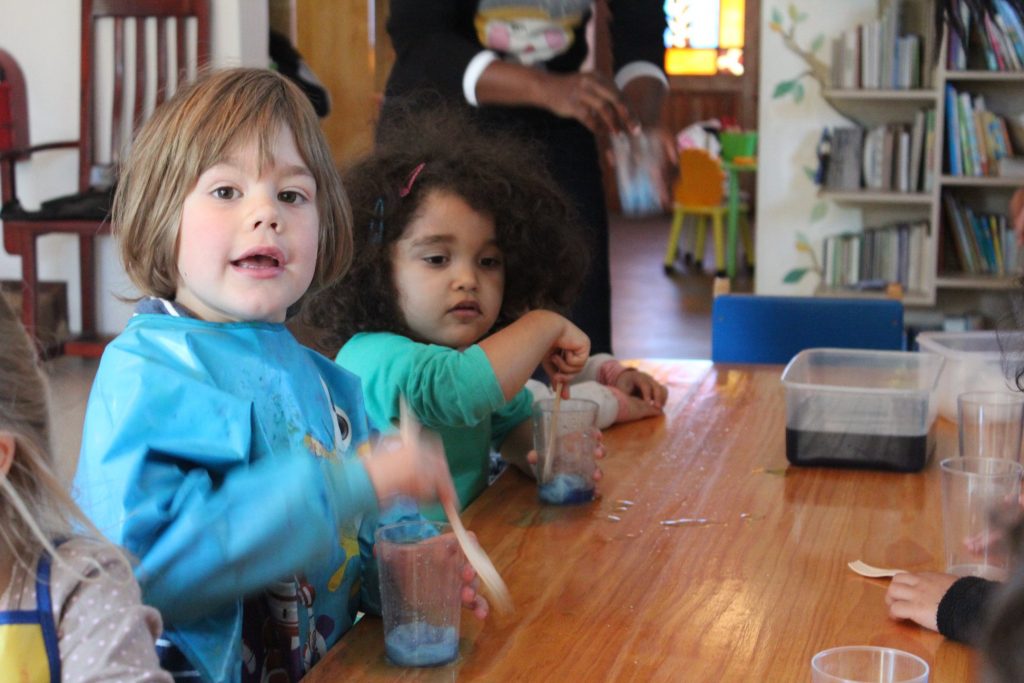
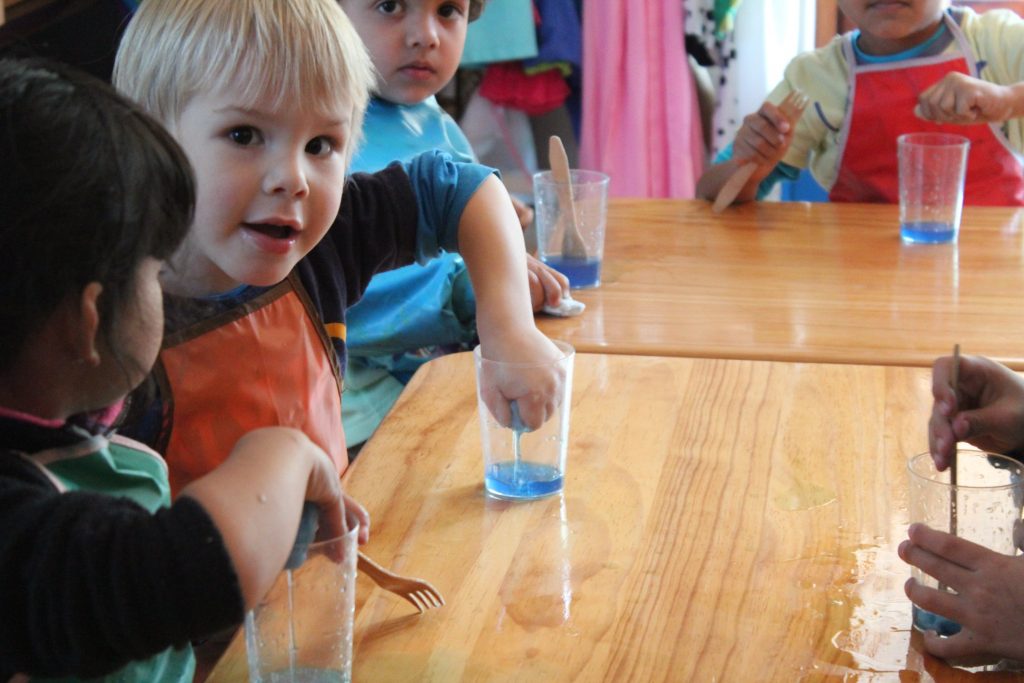
Here is a fun and simple activity we have used in the past whilst learning all about the water cycle, rainfall and how clouds form! Get the children to dip cotton wool into blue coloured water and then let them squeeze out the water to make rain!
But why are these sensory and exploratory experiences so important?….Decades of research show the importance of active learning in early childhood – Children have to move, use their senses, experience, explore, interact with others, create and invent in order to grow and learn.
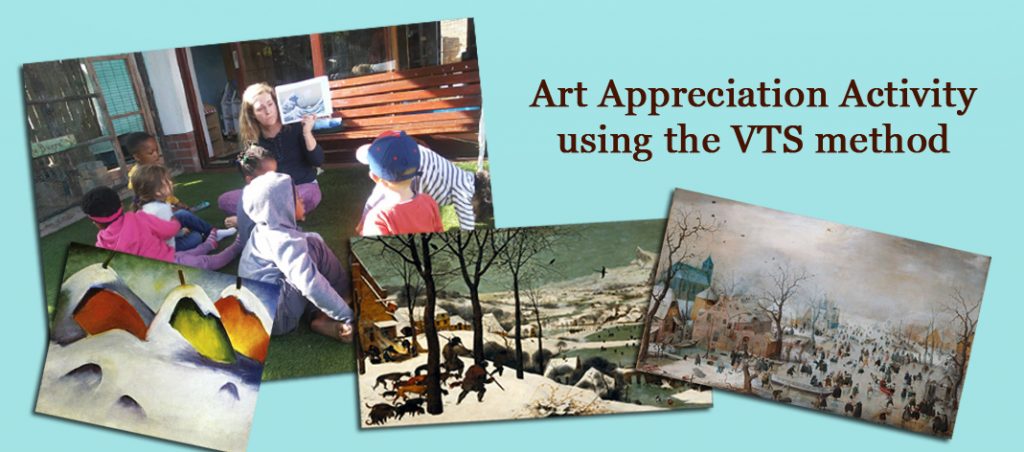
Art appreciation forms an important part of many early childhood curriculum guidelines as a way to inspire and stimulate interest and understanding in a variety of art forms as well develop a visual vocabulary.
For this week’s Winter Themed curriculum we encourage you to snuggle up with your child one of these wintery days and take some time to develop those visual discriminatory and language skills, observing and discussing art using the VTS method described below.
VTS METHOD Utilising the “visual thinking method” developed by VTS (Visual Thinking Strategies) ask your child 3 simple questions:
1 -“What’s going on in this picture?” 2- “What do you see that makes you say that?” 3- “What more can we find?”
This amazing method develops observation skills, critical thinking skills, language skills and visual literacy skills. When we have utilised this method here in the preschool, even the 2 year olds had something to say about the art we were discussing!
Vocabulary is then also further developed as the teacher/parent repeats and elaborates on the child’s observations.
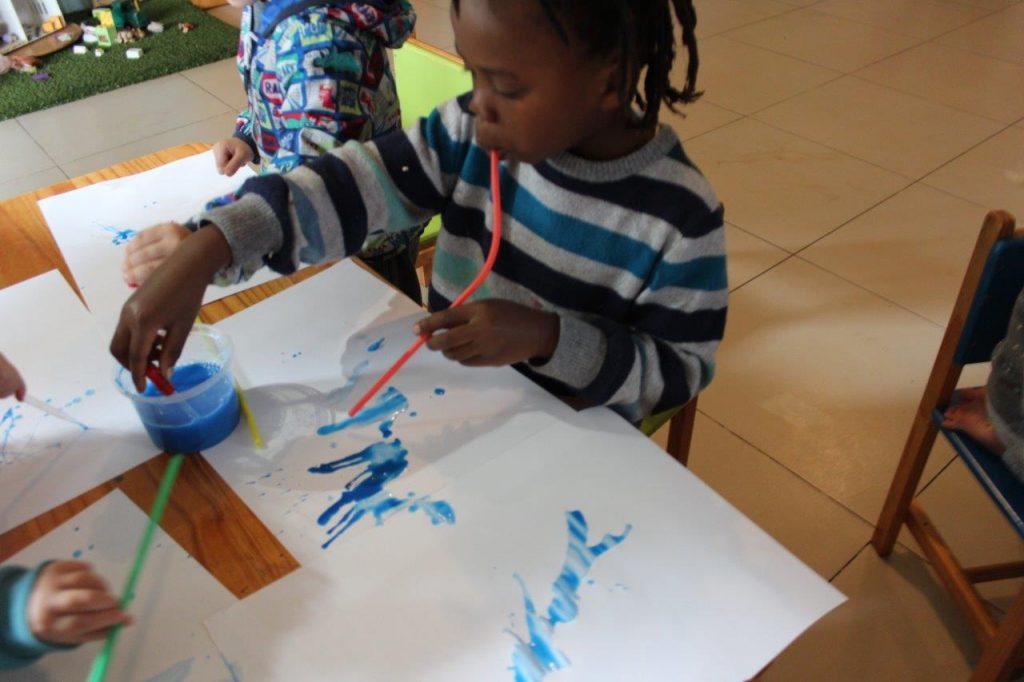
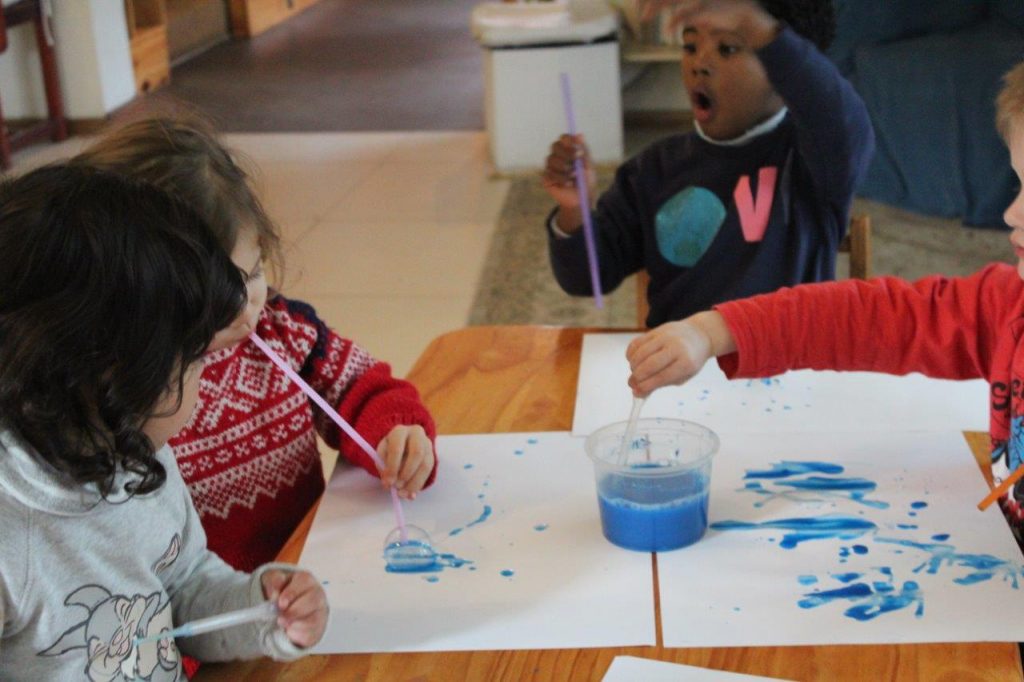
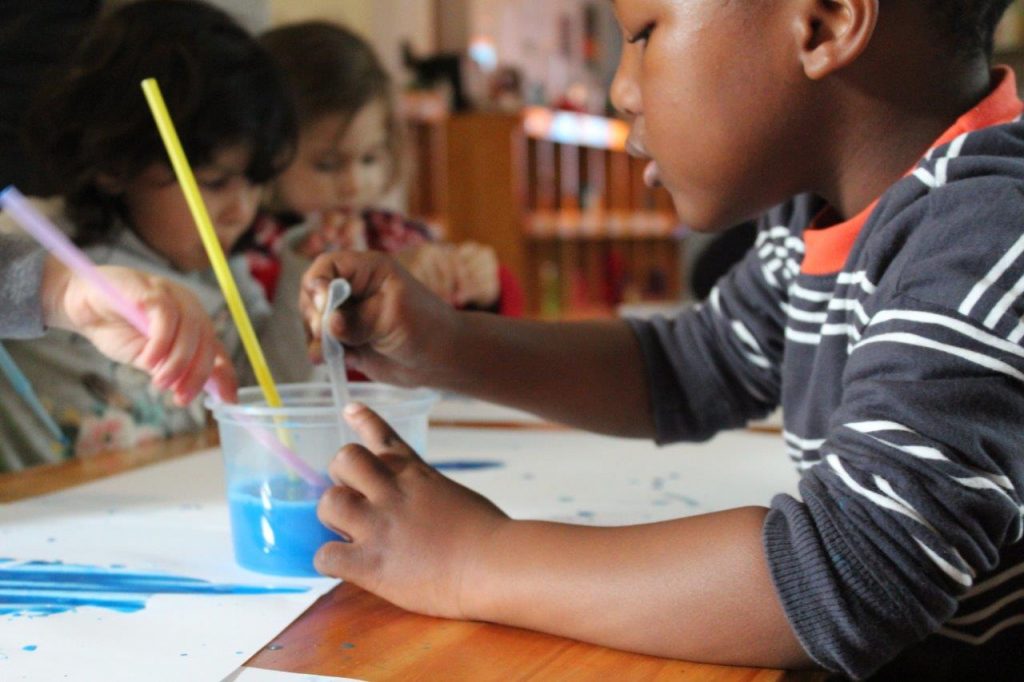
Here is a really fun rain and wind activity that we have done at the Watering Whole in the past. This art project is process based! Meaning that it is all about the EXPERIENCE of creating rather than the end product!
Needless to say we had a lot of fun creating raindrops with our droppers (great for fine motor development) and making wind with our straws (great for breath work).
All you need is some paper, thin blue paint, droppers and straws…the kids will do the rest!!
Next week we are going to delve deeper into the 3rd “R” “Arithmetic” and share with you some of the Math foundations we are working on. For this week let’s have some Winter Maths fun with this Number Matching Mitten print out: