Category Archives: Science and Nature

Science and Nature: Sink or float experiment

Maths concepts – Measurement and sorting, graphing and data analysis
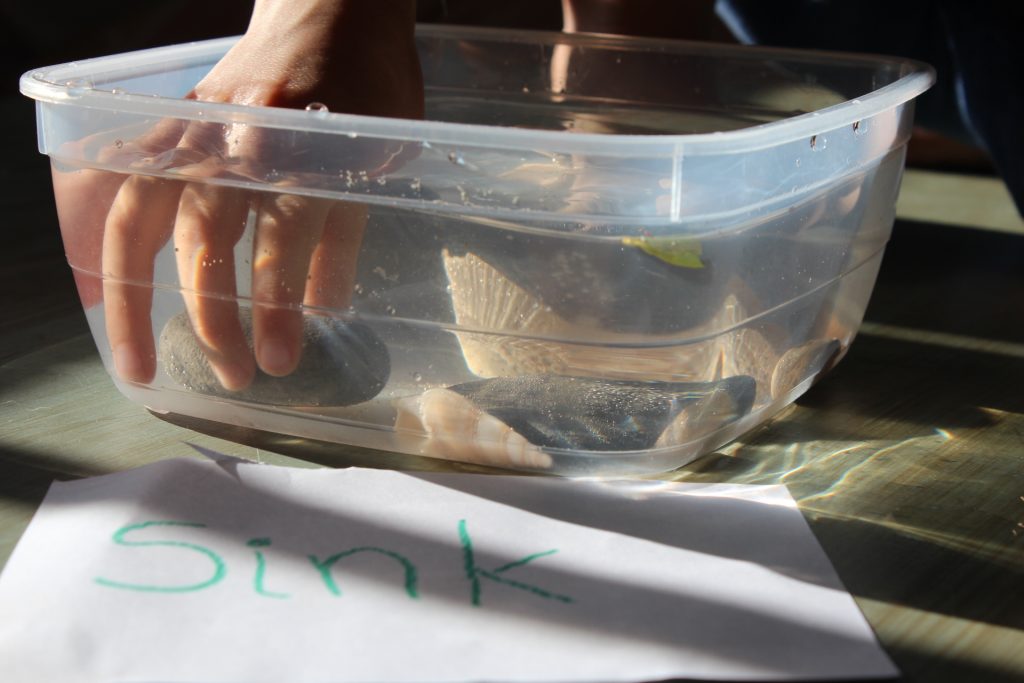
This is a wonderful activity to explore comparative words such as long and short, light and heavy, float and sink etc.

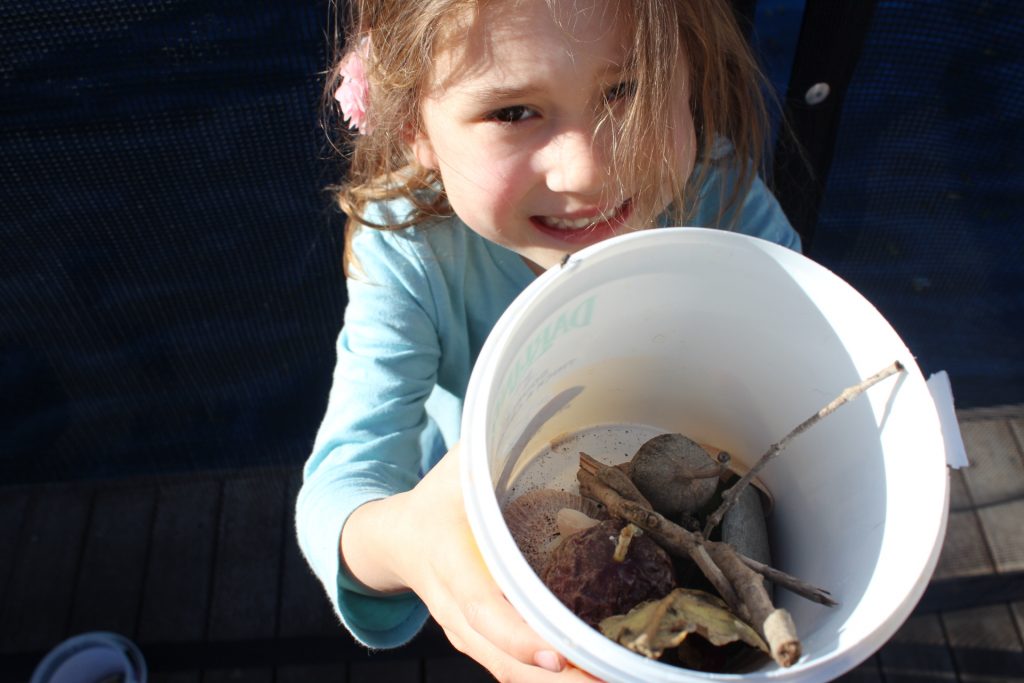
Step 1 – Go on a nature hunt and gather different objects that may sink or float such as leaves, feathers, flowers, rocks, sticks, etc.
Step 2 – Fill 2 large clear containers with water and label one “Sink” and one “Float”.

Step 3 – Explain to your child that the one container is for things that are light and will float and the other container is for things that are heavy and will sink.

Step 4 – One by one allow your child to pick up each object and ask “Will this sink or float” and then choose which container to place it in.
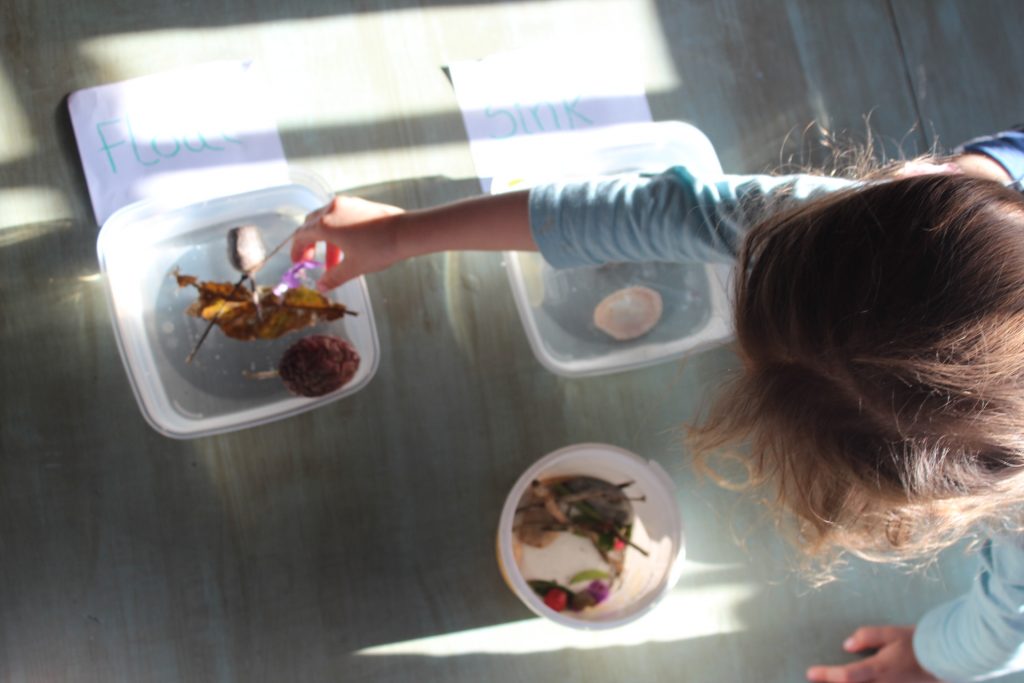
Once the objects have been sorted into the sink or float containers through some trial and error, it’s time to start graphing and analyse the data!
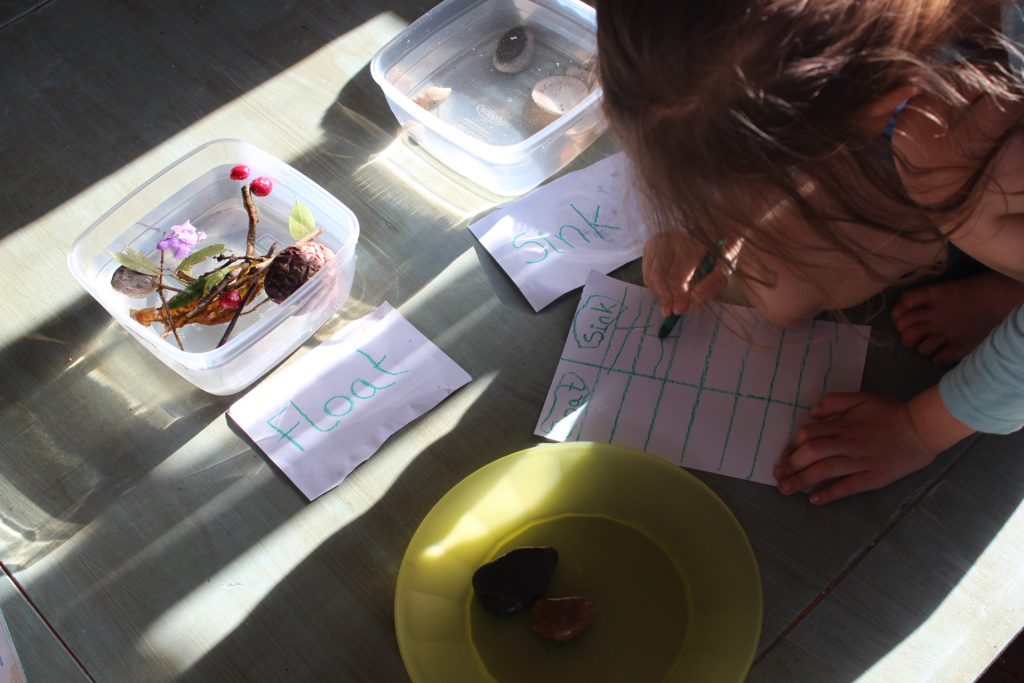
We created a simple graph together: on one side was ‘sink’ and the other side ‘float’ and as we removed each item from the sink container we crossed it off on the paper. We then counted how many objects we had in each section. Which one had more? Which one had less?
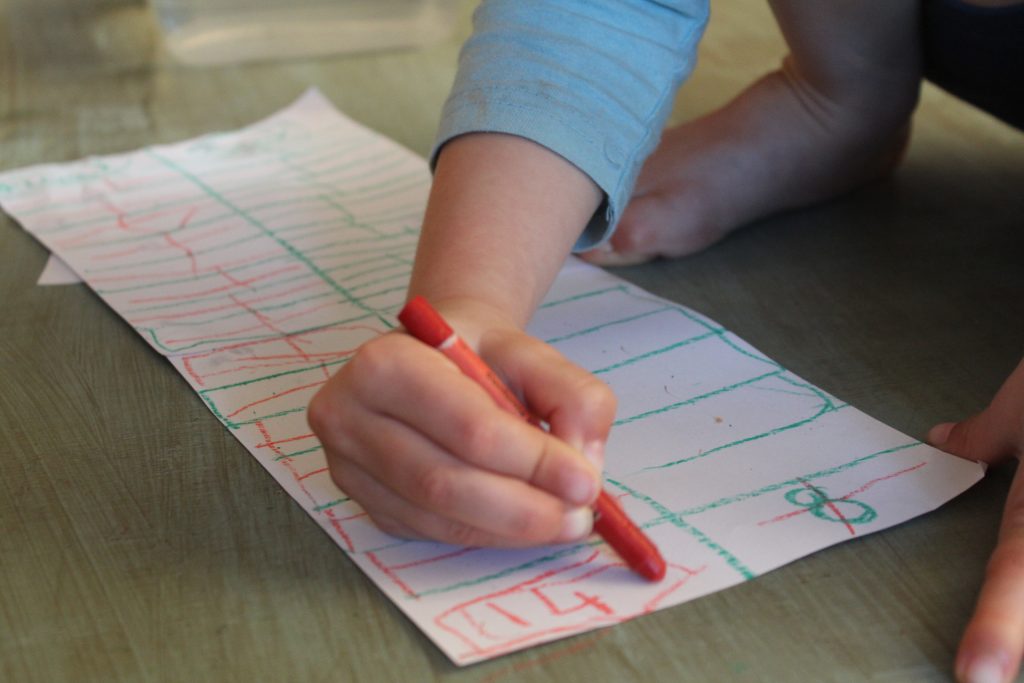
The object of the activity is not to get it all right, but to learn through the experience and hands on exposure. This is also wonderful for developing prediction and self-correction skills.
Science and Nature Activity 1: Learning about hibernation

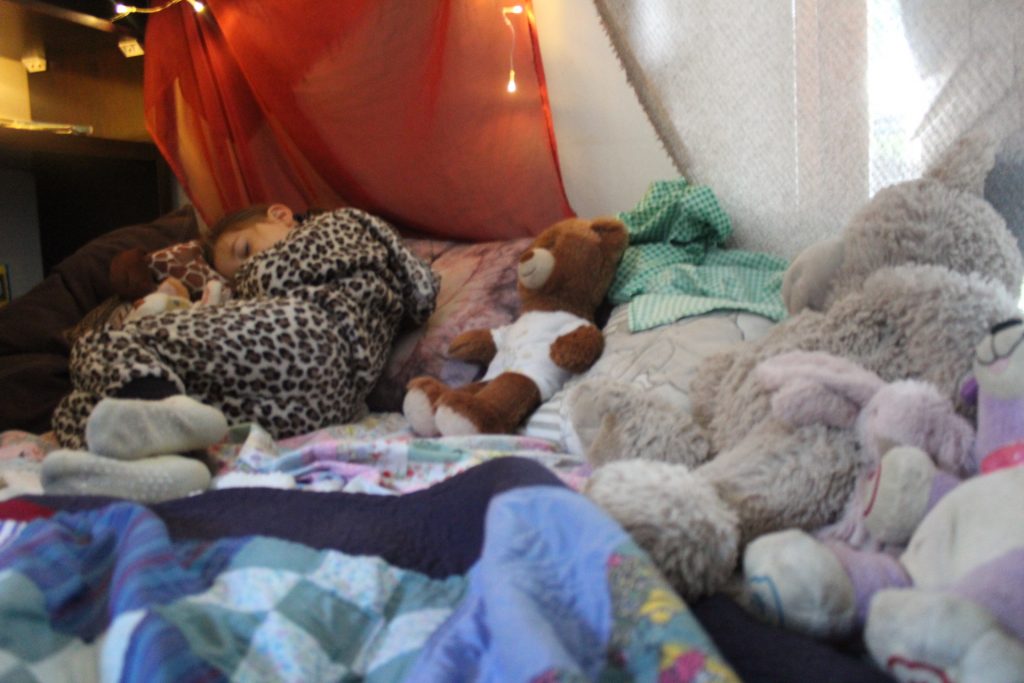
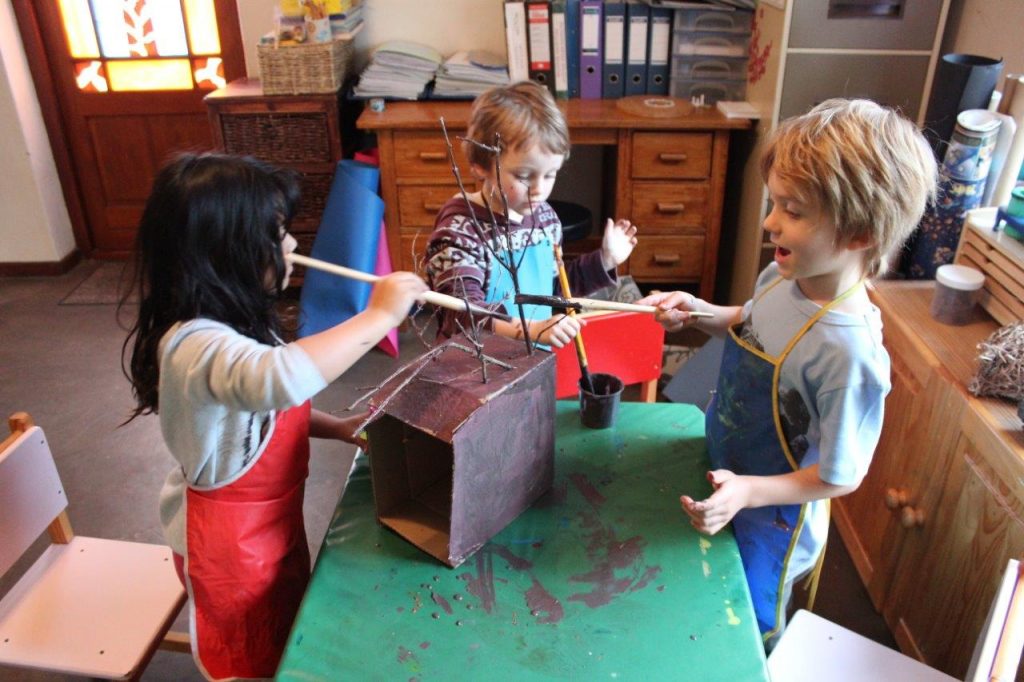
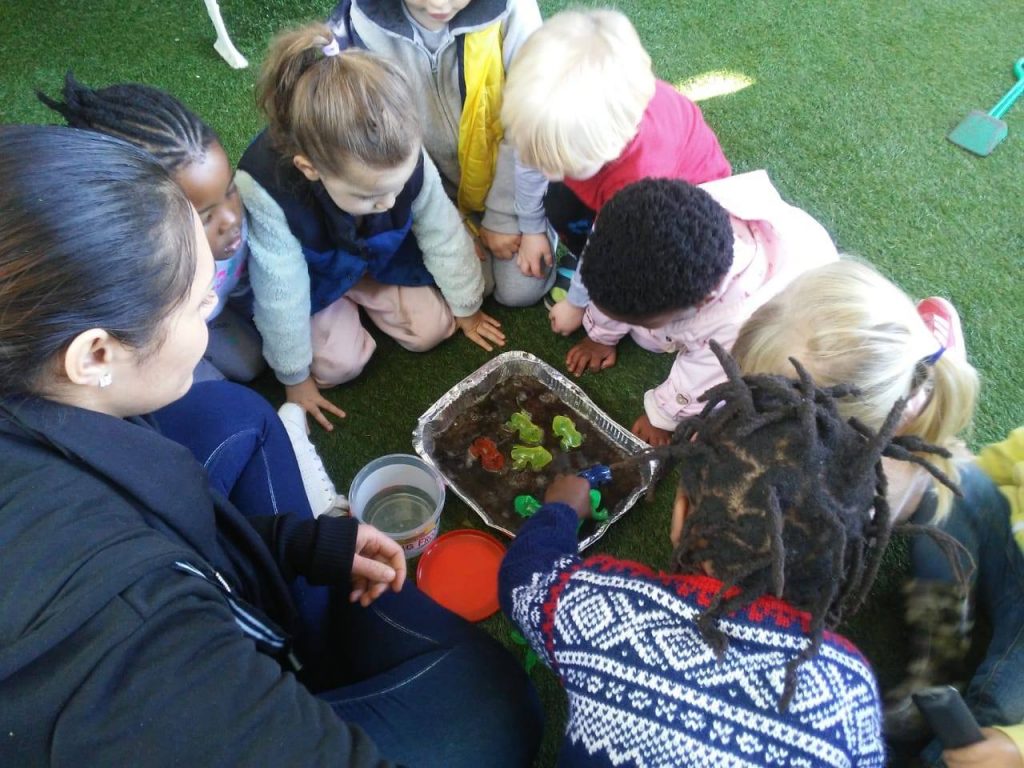
Every Winter we like to do some sort of hibernation project…in the past we have made a cave and put all our school teddy bears to sleep inside it until Spring, we have also gone to the park to collect “nuts” for our toy squirrels and stored them all up in our cardboard tree for the Winter time and last year we took turns “burrowing” our plastic frogs partially into mud. Hibernating aquatic frogs are partially buried in mud at the bottom of ponds during Winter months, making sure to keep themselves exposed to oxygen-rich water.

….and what are the children learning from this?…the experience is varied, at a basic level all the children are being opened up to the existence of the natural world around us…that nature, the weather and animals that exist, survive and thrive in quite miraculous ways!

For the older children who are interested in the actual facts behind the exercise, they are learning something new! This develops a curiosity and fascination for the world around us that inspires a true love of learning.

Have you listened to the Story “The Bear Snores On” yet? It’s Winter time so let’s put our bears to sleep.

ACTIVITY VARIATIONS:

If you have a teddy bear or 2 you can create a small cosy cave together and have your bear go to sleep for the Winter time.

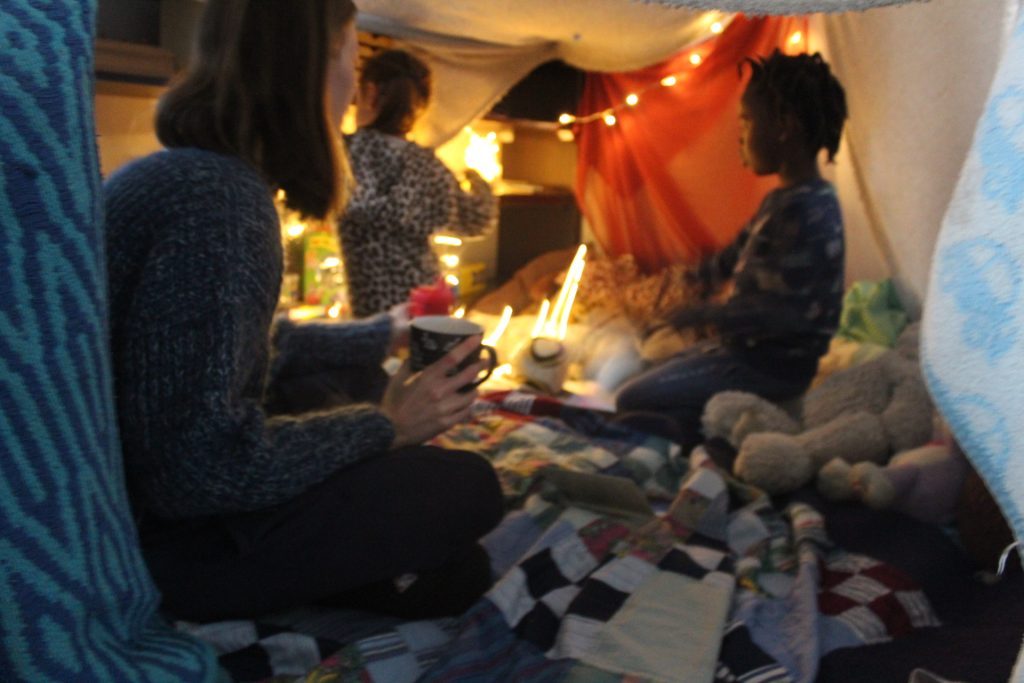
If you have the space, why not make a cosy blanket fort and pretend to be the bears yourselves. Climb inside, read books, eat cinnamon popcorn just like in the story (see this week’s recipe suggestion). We have really enjoyed spending lots of time in our blanket den today!

Science and Nature Activity 2: Learning about the Water Cycle

Today we share with you a fun little song written by “Teacher Inger” at the Watering Whole. It’s simple, it’s fun, and it teaches our children all about the Water Cycle!

This song can be done as a finger play activity or whole body exercise with children as small raindrops on the floor, who then evaporate on tippy toes and fall back down to the floor at the end….

I’m a Little Raindrop
(to the tune of I’m a little Teapot)
I’m a little raindrop in a lake
(Start with hands and fingers on floor in our “lake”)
When I get hot I evaporate
(Wiggle fingers upwards)
Up into the sky I form a cloud
(Interlace fingers above head)
Then I fall back to the ground
(Wiggle fingers downwards like rain and “splash” onto floor)

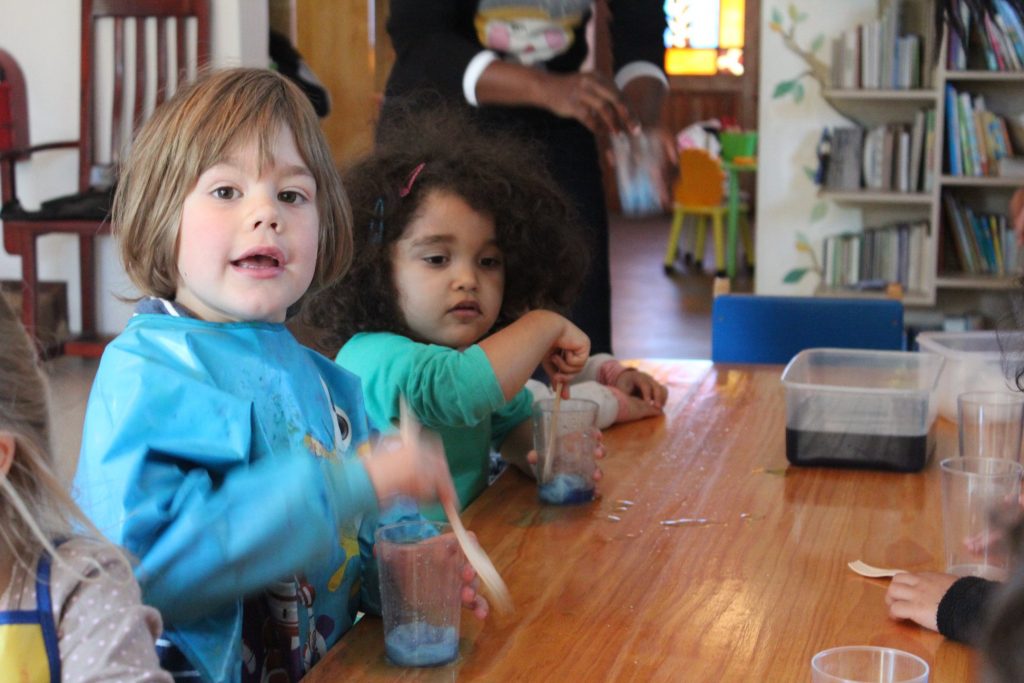
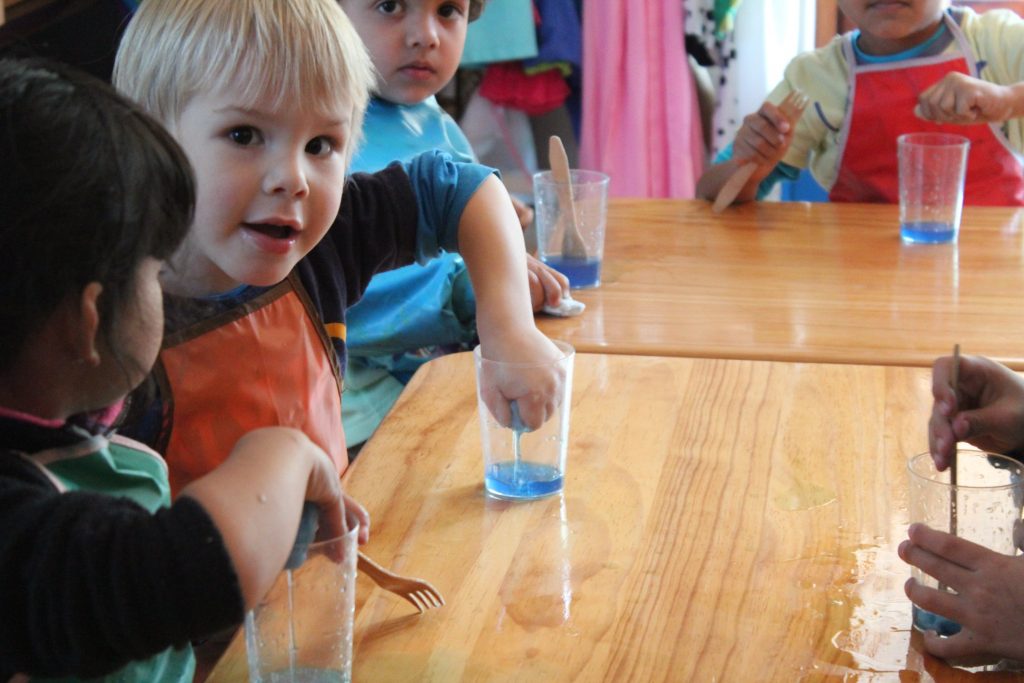
Here is a fun and simple activity we have used in the past whilst learning all about the water cycle, rainfall and how clouds form! Get the children to dip cotton wool into blue coloured water and then let them squeeze out the water to make rain!

But why are these sensory and exploratory experiences so important?….Decades of research show the importance of active learning in early childhood – Children have to move, use their senses, experience, explore, interact with others, create and invent in order to grow and learn.

Science and Art: Fizzing Rainbows.

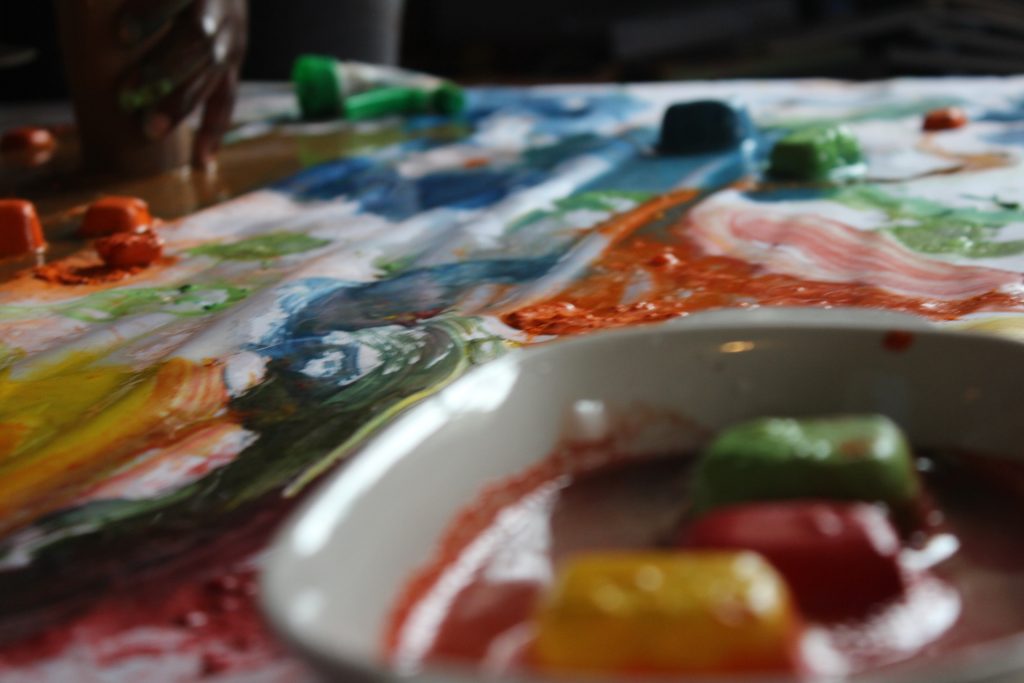
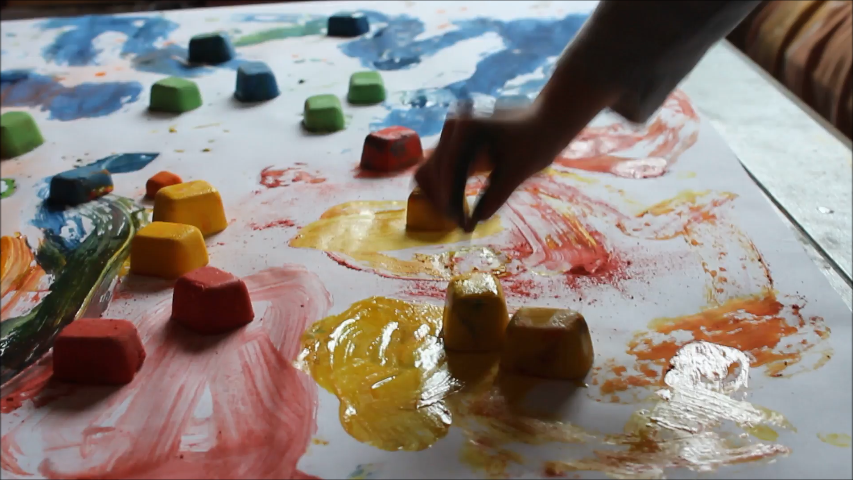
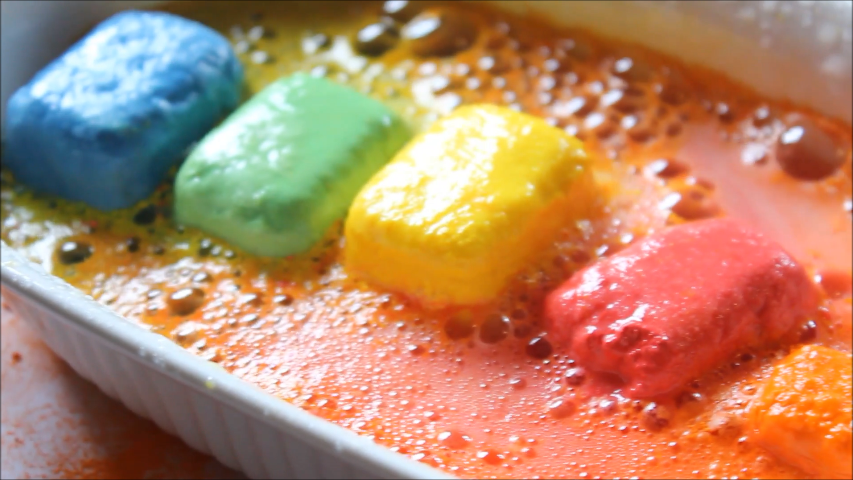
Where would preschool science be without bicarb and vinegar! Here is a wonderful science and art experiment that will: teach your child about all the colours of the rainbow, help them learn about colour mixing and learn about chemical reactions (i.e. when bicarb and vinegar mix they create the gas carbon dioxide which makes a bubbling and fizzing reaction). It is wonderful for developing observation skills and is sensory rich as the children see, smell, touch and hear the fizzing of the rainbow….and it makes a beautiful rainbow painting too!

Directions:

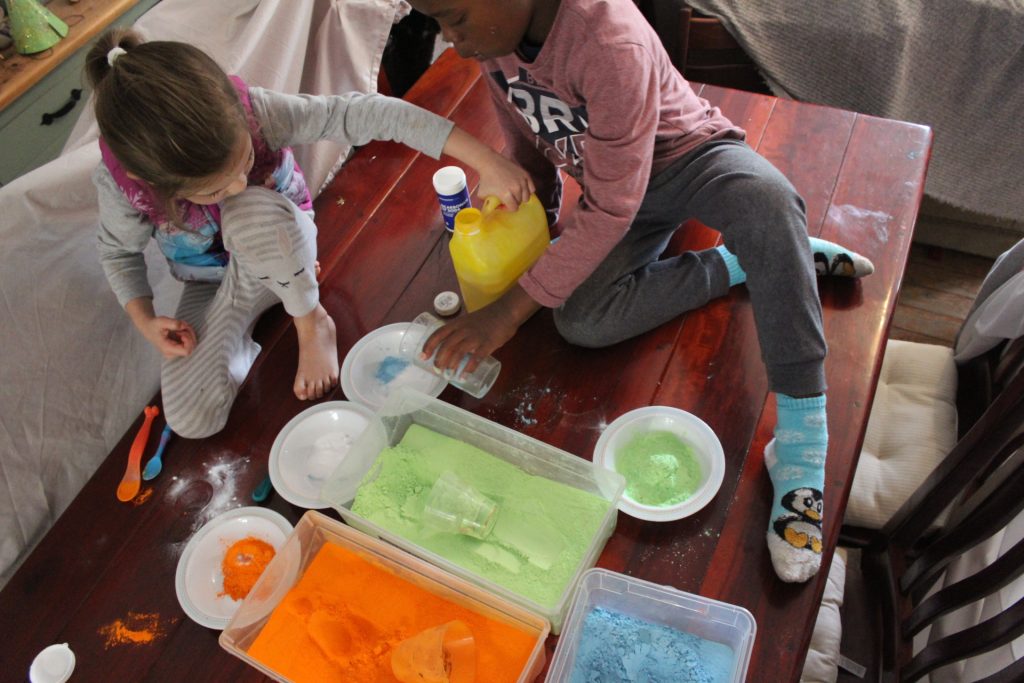
Mix together: 3 tablespoons of bicarb, 4 tablespoons powdered paint (each separately: red, orange, yellow, green, blue, purple), add some water so it becomes a liquid paint. If you don’t have powdered paint you can just use liquid paint and mix in a few tablespoons of bicarb.

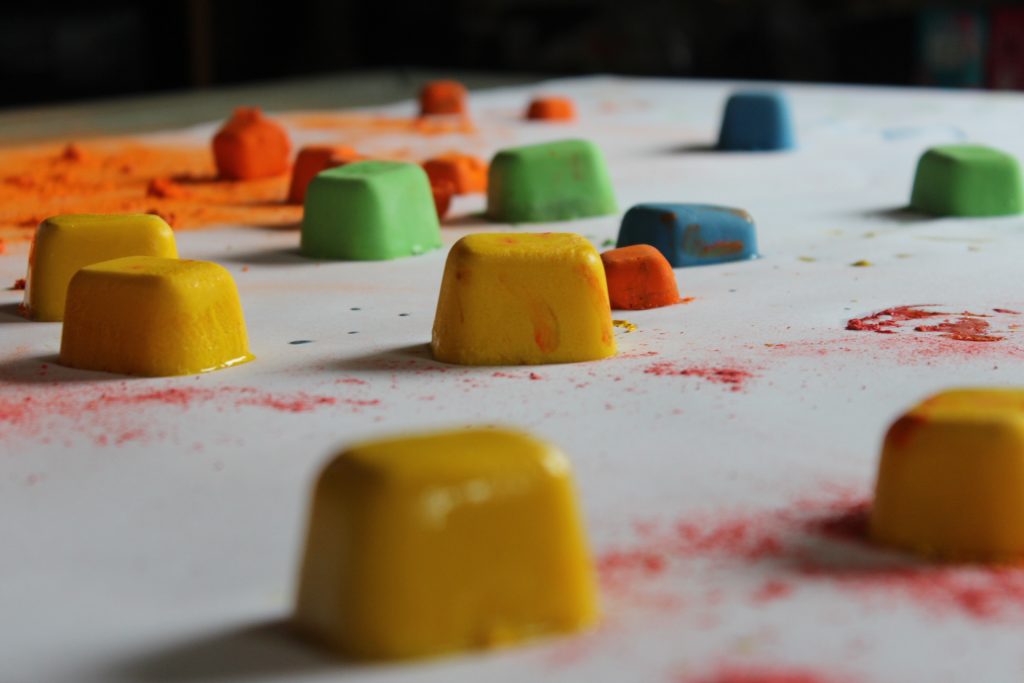
Freeze the coloured water bicarb mixture in an ice cube tray

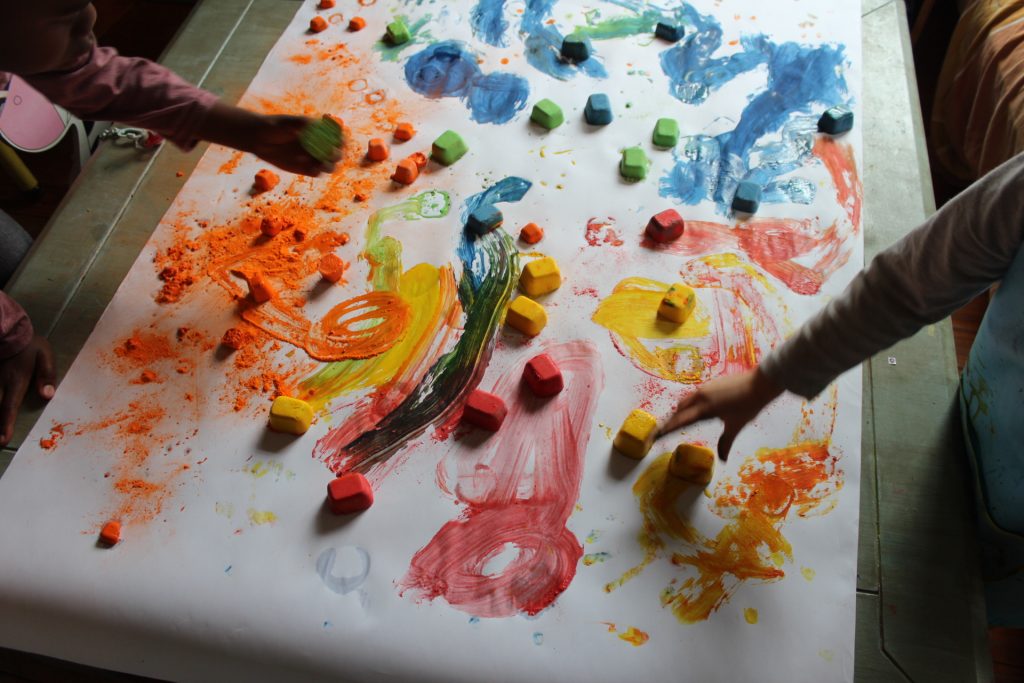
Once frozen, bring out the coloured cubes and lay them on a large sheet of paper.

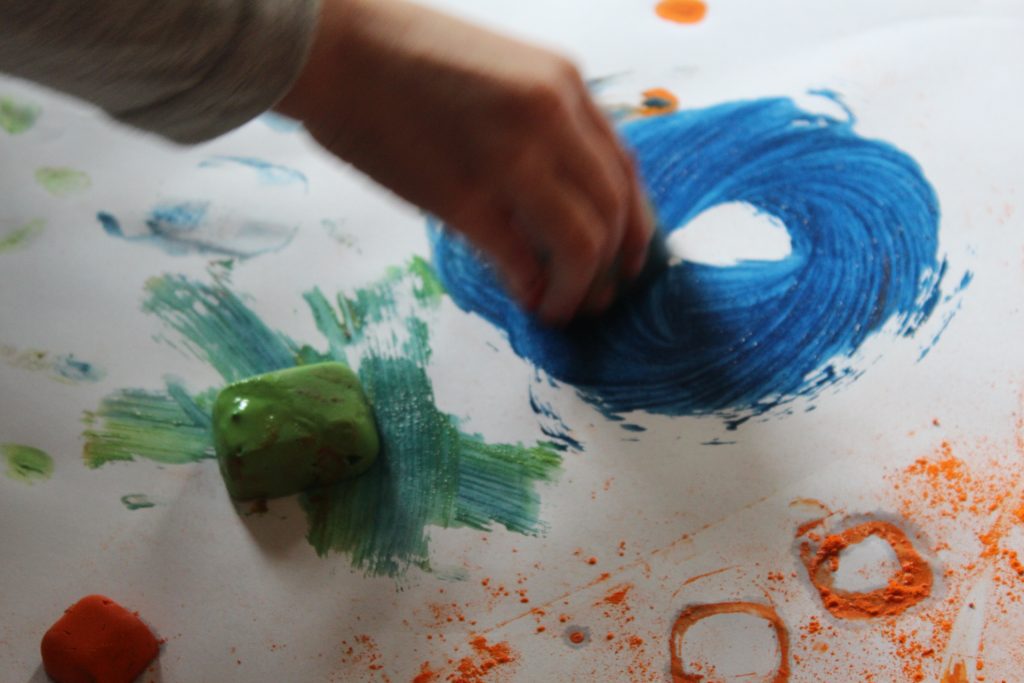
Invite your child to paint with the ice cubes as they start to melt and make beautiful colours on the paper. We put on some rainbow themed music too.

video

Next put a row of your ice cubes in a shallow dish and invite your child to spray and squirt vinegar onto the ice cubes and watch them fizz….

video

Ask them about the colours they see, what they smell and hear, how the ice cubes feel, what they think will happen, etc, so you can help them to develop observation, prediction and language skills.

Art and Science (oil and water paintings):

Did you know Hippopotamus comes from the Ancient Greek ‘river horse’?
The hippopotamus is semi-aquatic, inhabiting rivers and lakes. They will remain in the water and mud throughout the day to keep cool and at dusk they will emerge to graze on grass.

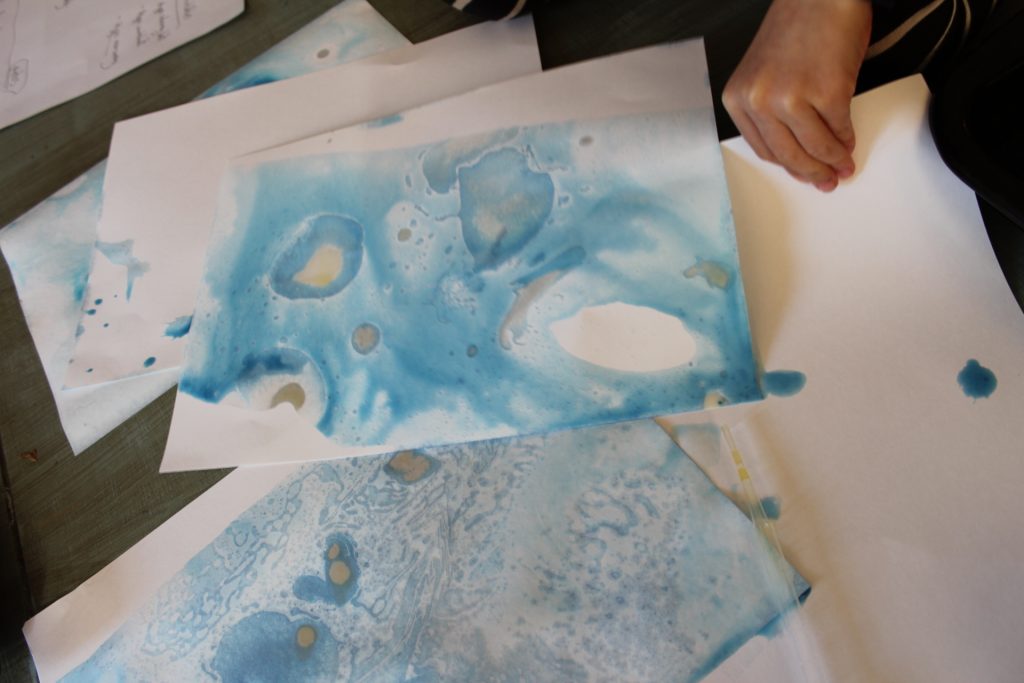
This week we are combining art and science to create beautiful oil and water paintings.

You will need:
• shallow baking dish with a layer of coloured water (use a few drops of food colouring)
• cooking oil in a small bowl
• heavy paper or card
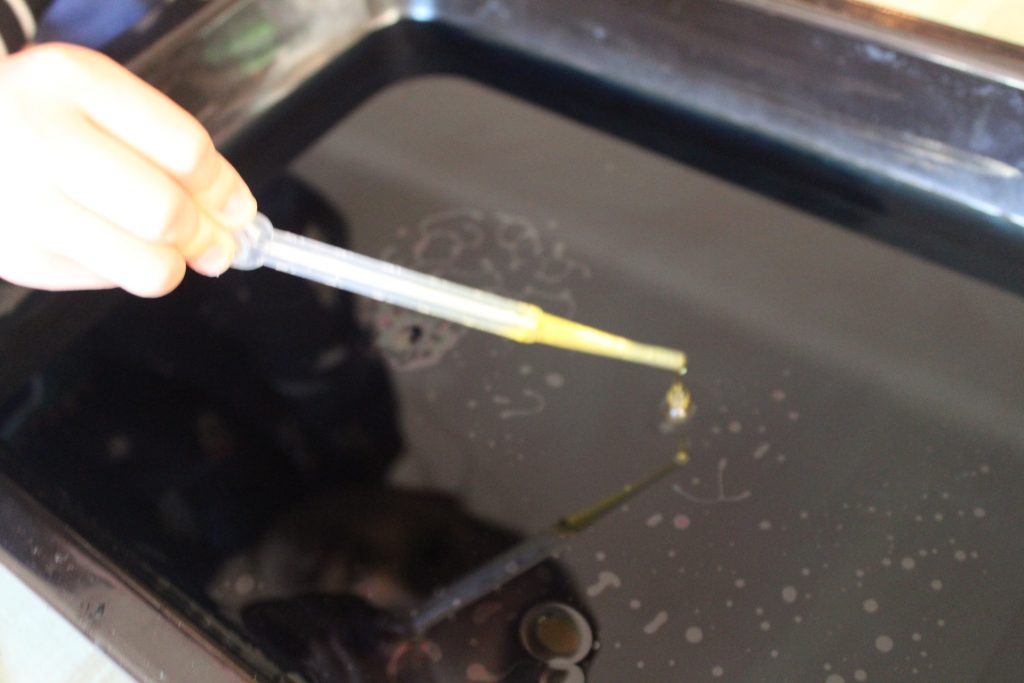
• eye droppers/pipettes – wonderful for some fine motor work.

Directions:
Invite your child to make a few drops of oil in the water using an eye dropper/pippette

Gently lay a sheet of paper on top just for a moment and then remove to dry.

The effect… a beautiful marble-like picture. The science…. Oil and water don’t mix because water molecules are polar and oil molecules are non-polar. In the baking dish you will notice that the water molecules will pull towards one another and the oil the same. Oil is also less dense than water so it will float on the surface of the water.

Science, Nature and EQ: Bird Watching

Let’s spend some time sitting outdoors in our garden this week listening to and watching birds together. For those who don’t have a garden, try to find a window for your little one to be able to watch out and listen for birds from.

Take this moment as a contraction/breathing out and going inward together. Learning to pause and be still is a wonderful tool for self-regulation and focus that takes time to develop.

Being fully present outdoors/in nature is also a wonderful way to regulate the body and mind.

You can start off by explaining that birds can be hard to see, but are much easier to hear. Close your eyes together and listen. Where is the sound coming from? …and what different kinds of birds can you hear?

By teaching children to listen to and differentiate between different bird songs you will help to develop their hearing and focused listening skills.

Can we imitate the songs of different birds? This is wonderful for language development and expressive communication skills.
Now let’s count how many different kinds of birds we can see; we can also look for birds’ nests in our trees and even look out for bird poop!

We have been seeing so many birds in our garden since lock-down, including an eagle flying overhead!… And Go-Away birds eating our granadilla leaves! I am amazed how much the children have been enjoying learning about birds and their ability to differentiate between different birds and bird sounds.

Now, every day we spend time in the garden we are listening to bird song and spotting different birds around us.

If your child gets really invested in birdwatching you may consider purchasing a poster like the one featured below and learn the names of all of the different birds too:

https://www.penguinrandomhouse.co.za/book/poster-birds-southern-africa/9781775843795

We can learn all about birds with this fun video too:

Science and Nature: Life Cycle of a Frog

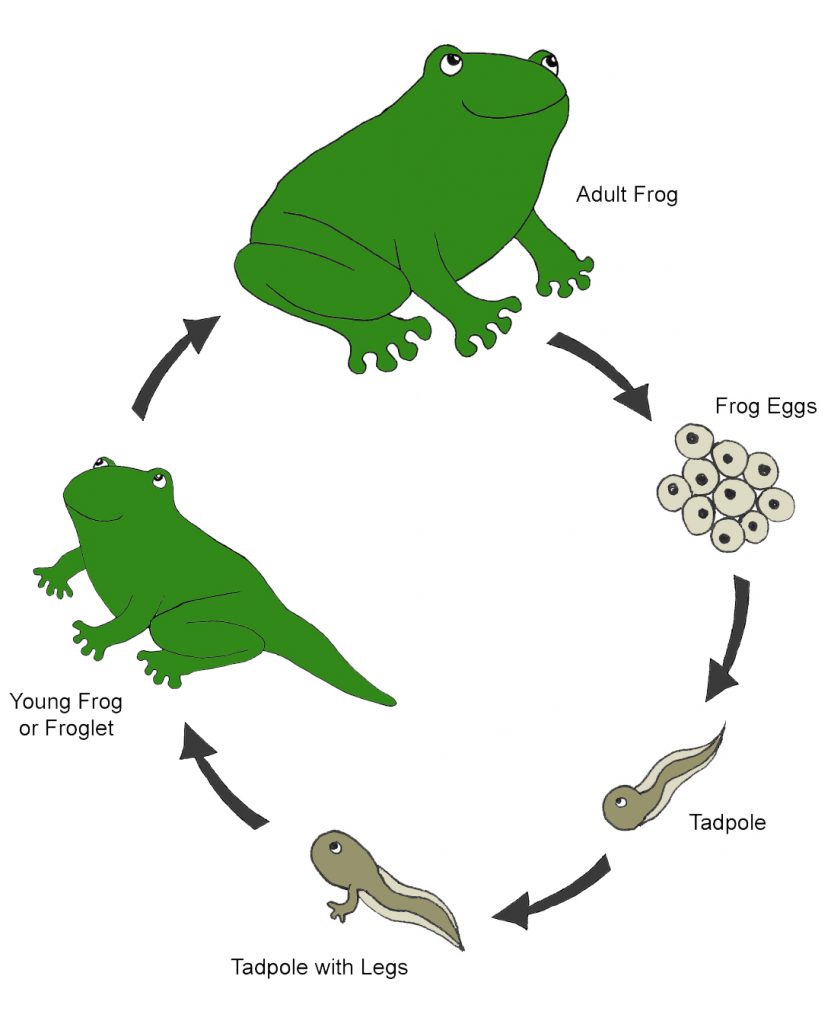
Learning about life cycles is an important part of any early childhood curriculum. It helps children to better understand the world around them and start to understand important life concepts such as birth, growth, change and eventually death.

Frogs are a wonderful way to start to teach the concept of the life cycle and the wonder of change through metamorphosis.

Starting as an egg in the water, then hatching into a tiny tadpole, sprouting legs, and turning into a frog that will in turn lay more eggs starting the cycle all over again.

Let’s explore a frog’s life cycle together by utilising the resources below:

Here is a particularly fun video we found all about Metamorphosis!

Science, Nature and Art: Making Pet Rocks

Watering Whole @Home Curriculum Week 6

In this week’s story Eddy Elephant really wants a pet and Peter Puppy shows Eddy some of his wonderful pet rocks! This week we invite our Watering Whole families to create some pet rocks of their own.

Pet rocks are a wonderful way to teach responsibility as well as ignite the imagination and cultivate creativity.

Step 1:

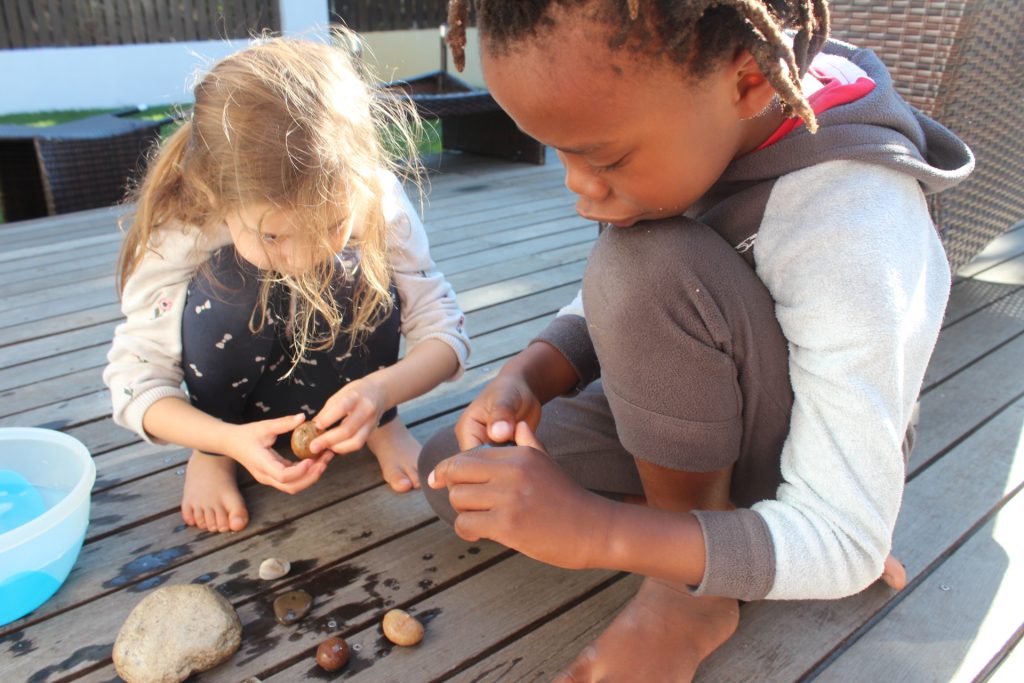
Spend some time in your garden searching for the perfect rocks that would make wonderful pets. Learn all about size, shape, texture and colour as you explore!

Step 2:

Clean and dry your rocks before you start to paint them. Sort the rocks in different categories…which ones are smooth, which ones are rough, which one is the biggest, which one is the smallest etc.

Benefits include helping children develop visual acuity and have a better understanding of comparisons/differences and patterns which are an important foundation for both language and maths.

Step 3:

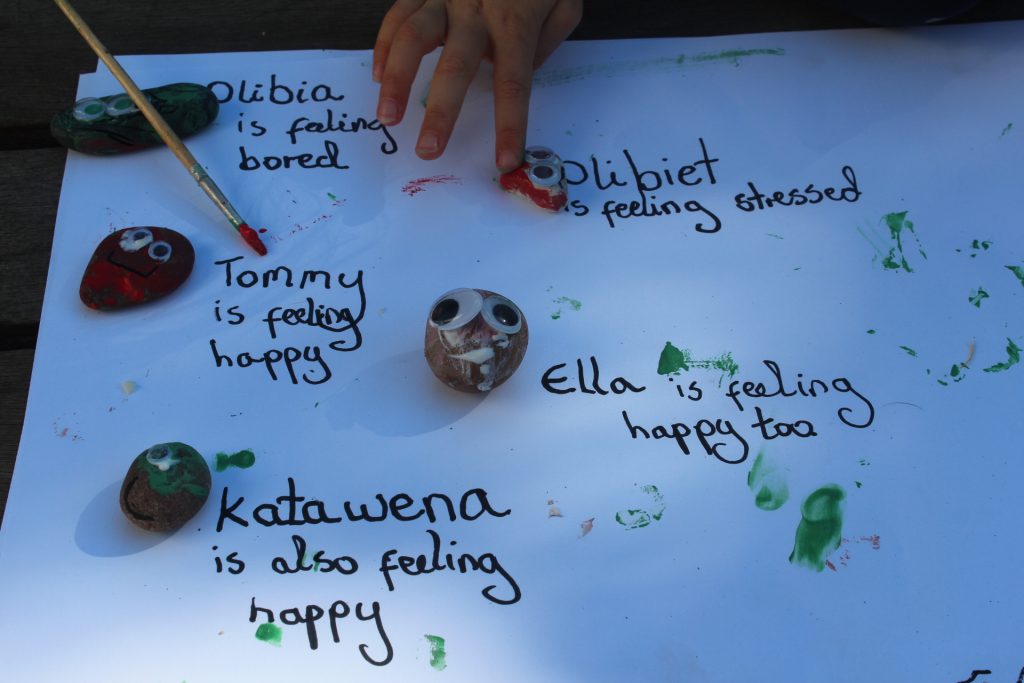
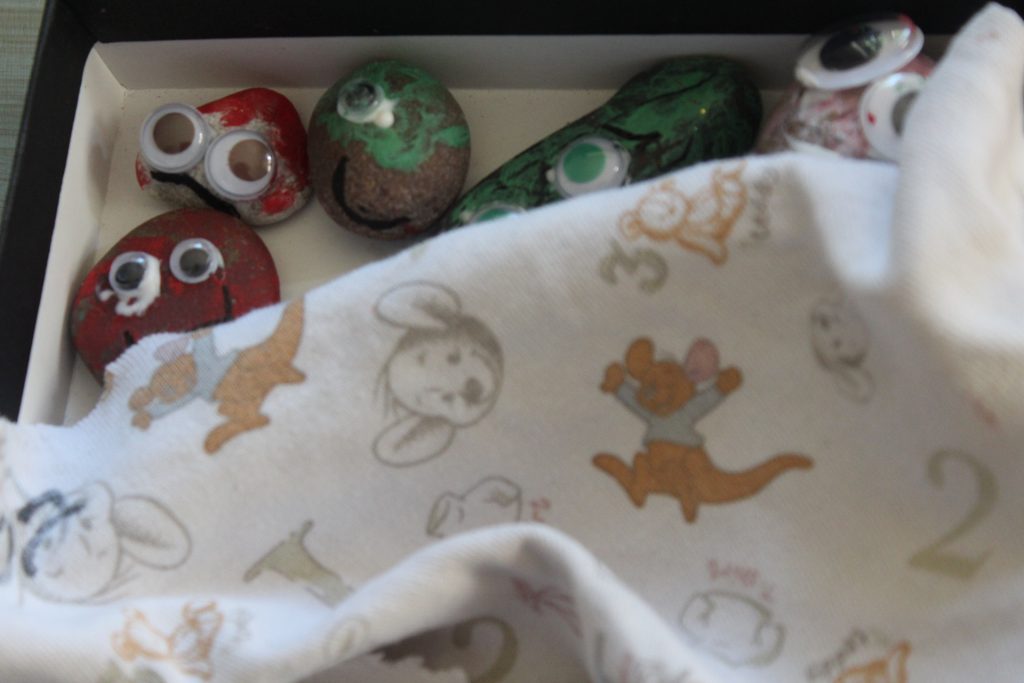
Choose different colours for your different pets and add googly eyes or paint on some eyes of your own. You could choose to create different rocks with different feelings here too. Ask your child do you think this pet is feeling happy or sad… angry or scared? And draw on the different feeling expressions (see the feeling buddy lesson from last week for the feeling buddy expressions)

Step 4:

Name your pets! This can be a really fun game as your child comes up with different names and personalities and stories about their pets…what they like, what they are afraid of ,etc… A child can process so much of their own experiences, through stories they create around toys, pets and games which plays a crucial part in early development.

Step 5:

Create a home for your pets. This could be a shoe box or a basket, a nest or a doll house… Get creative and talk to/ask your child about all of the important care that pets need such as shelter, food, water, love, etc.

Kamali had so much fun creating a bed for her pets, feeding them and looking after them 🙂

Science and Nature: Ocean Themed Sensory Bin

Watering Whole @Home Curriculum Week 5


I don’t know about you…but I really have been missing being able to visit the beach lately! There are so many benefits to playing in the sand and exploring the beach! This week we are going to bring the ocean to our home with this wonderful ocean themed sensory bin activity.

Sensory bins are a wonderful way to invite children to explore, discover, imagine, create, and learn whilst playing and engaging their senses.


Benefits include: Learning all about the different creatures in the ocean, fine motor skills as they manipulate and explore different kinds of objects and language skills as they expand their vocabulary during play. 

You will need:
A tub/container
Plastic fish and ocean creatures
Seashells
Sand
Water (with a few drops of blue food colouring)
Small sieves, spades etc to play with


Pour the sand on one side of the sensory container and then very slowly pour the water on the other side. Add your sea creatures, sea shells etc and invite your child to explore.


Science and Process based Art

Watering Whole @Home Curriculum Week 4


Colour mixing. Now that we have learnt about our 3 primary colours….let’s do some experimenting together!


Set up a space for your child to explore the 3 primary colours only. Have blue, red and yellow paints.A blank sheet of paperAnd different painting tools such as brushes, sponges, sticks, feathers etc
You can start by pointing to and talking about the different colours together. Then allow the children to explore on their own and find out all of the new colours they can make. Talk to them about what you see and ask questions too…”What colour are you using now? What happened when those colours mixed? I see you are making a yellow circle…etc”
 

Note… you may find it starts off as a beautiful picture of vibrant colours mixing together….once over mixed it will look more like a big muddy puddle 🙂 That is okay. This activity is about allowing the child to explore colours and colour mixing in their own unique and playful ways! The product is not as important as the process in this activity.