Category Archives: Gross Motor and Fine Motor

Gross Motor and Fine Motor Maths Fun:

Maths Concepts: Counting, number recognition, sorting, colour recognition, one-to-one correspondence and number formation.
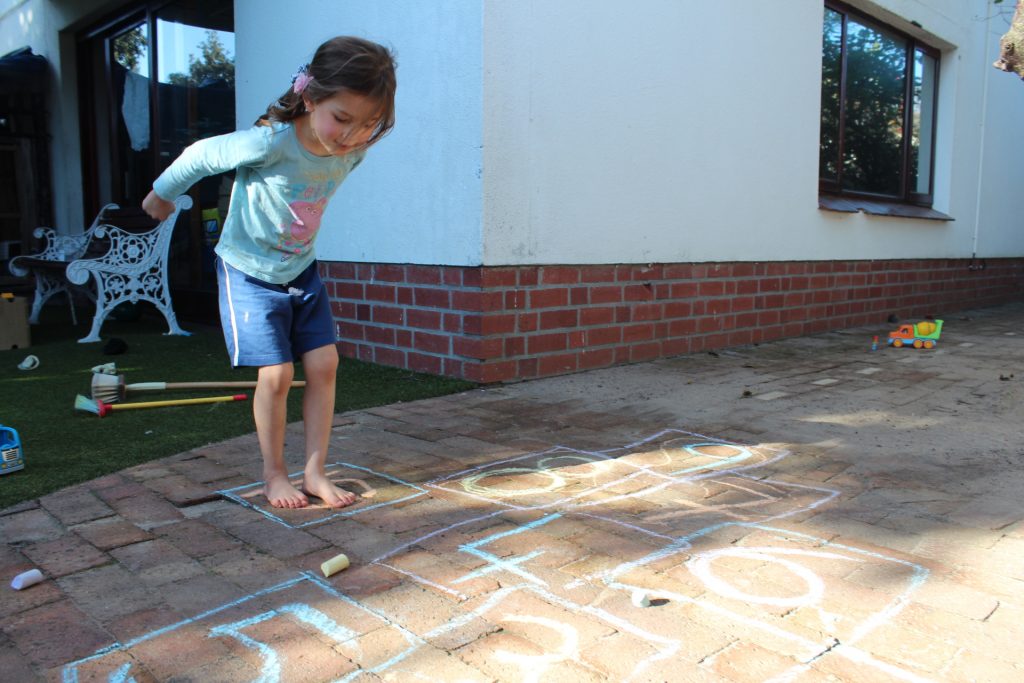
Activities that allow a child to learn with the whole body are essential in preschool! Here’s a wonderful gross motor game that will help with counting, number identification, and can be turned into a sorting game and also work on fine-motor skills and number formation.

All children are different, but your child should start to be able to identify the symbols of most numbers from 1-10 between the ages of 3 and 4 years and will often identify their own age number even earlier than this.

Directions:

Step 1 – Draw big numbers along your driveway with chalk.
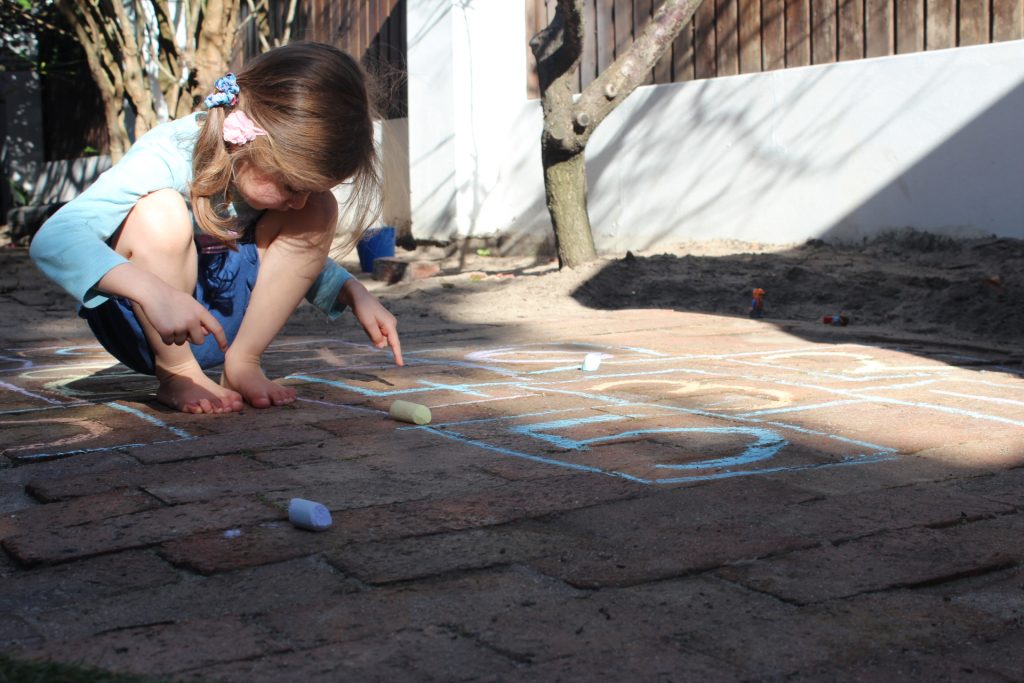
Step 2 – Invite your child to play the number game either by jumping on the number you call out, or if they are not so familiar with numbers you can ask them to jump on any number and then you can call out, “You jumped on number 8”. Kamali enjoyed counting as she jumped from 1 to 2 to 3 etc and then played the game backwards from 10 to 9 to 8 etc (see video below)

Step 3 – Once you’ve had fun number jumping you can turn it into a sorting and colour recognition game by getting your child to find 3 red things to put on 3, 2 blue things to put on blue, etc. This activity is important in helping with the understanding that a specific number is a symbol and that symbol stands for a set of specific items. Here your child will also be working on one-to-one correspondence as they count each object to make up the correct number for each symbol.
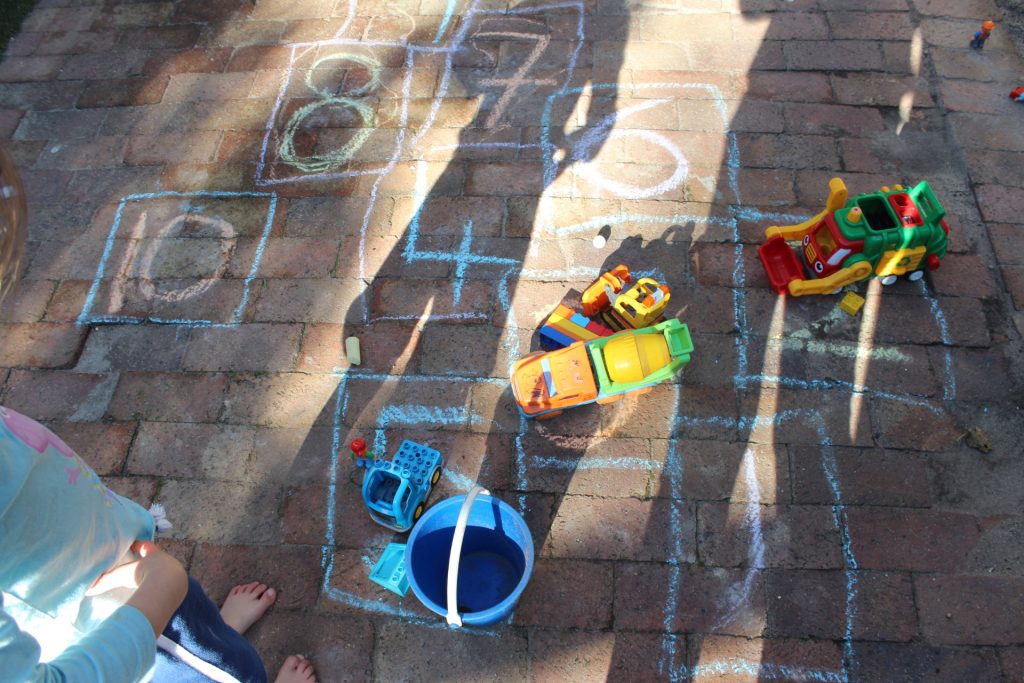
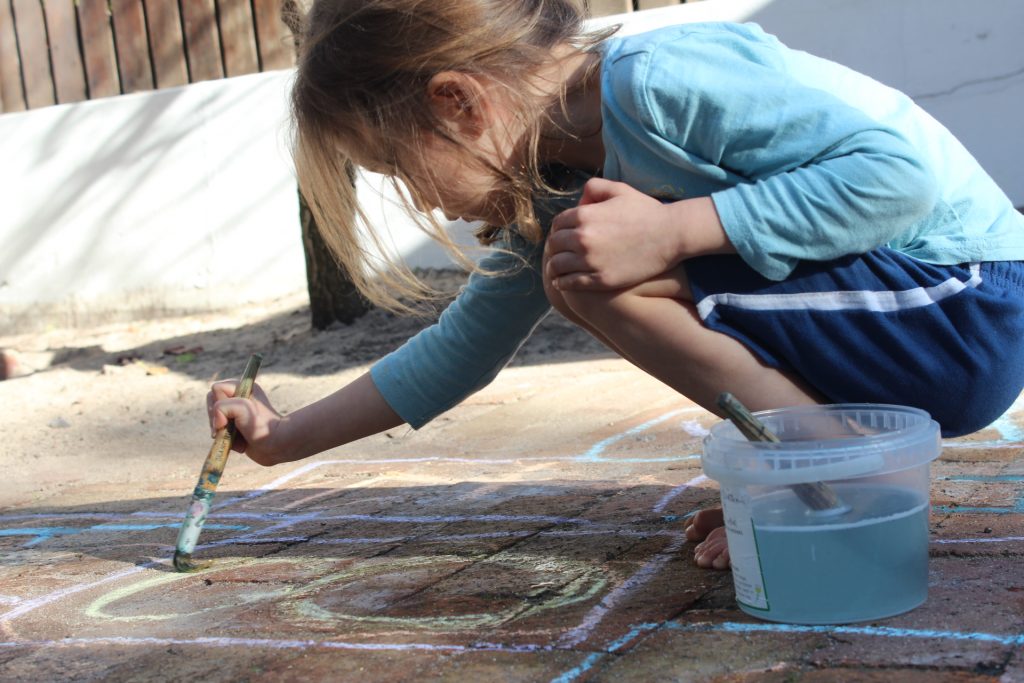
Step 4 – These numbers are also perfect to work on some fine-motor and number formation skills. Give your child some water and a thick paintbrush or sponge and invite them to play the “number disappearing game” by painting over the numbers with water to make them disappear.
Fine Motor and Gross Motor with Teacher Julia: Week 1 – Winter Fun

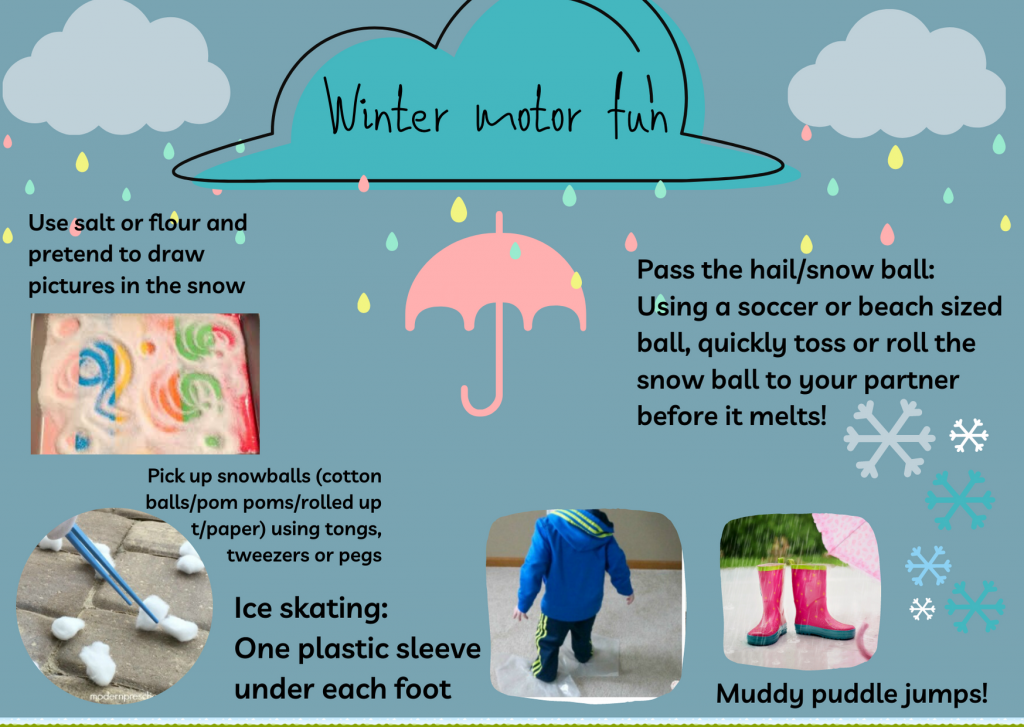
Next week we will be exploring writing foundations and the importance of focusing on the body first! … but whilst Winter is in full swing here are some wonderful Winter themed motor activities from Teacher Julia….

“Our job as parents to get our kids moving can be a challenge! Especially on rainy rainy days. I notice that my child struggles to fall asleep when she has had a day with little physical activity. Doing some physical activities each day will go a long way in keeping them warm, fit, healthy and tired out for bed time 😉 “

Fine Motor and Gross Motor with Teacher Julia: Week 2

Pre-writing Focus

This week we are enjoying some more winter themed fun and will also be exploring writing foundations and the importance of focusing on the body first!

We are so excited to share with you some wonderful guidance from Physiotherapist Julia Lee-Sylvester this week who is devoted to paediatrics as a special interest and passion.

“All learning begins with the body. It has to. It’s our point of reference – our own personal, portable true north, so to speak. And for children, it’s even more so because the body is the brain’s first teacher. And the lesson plan is movement.” – A Moving Child is a Learning Child (Gill Connell and Cheryl McCarthy)

Watering Whole understands the importance of free play and exploration as well as gross motor and fine motor work for each child’s physical development.

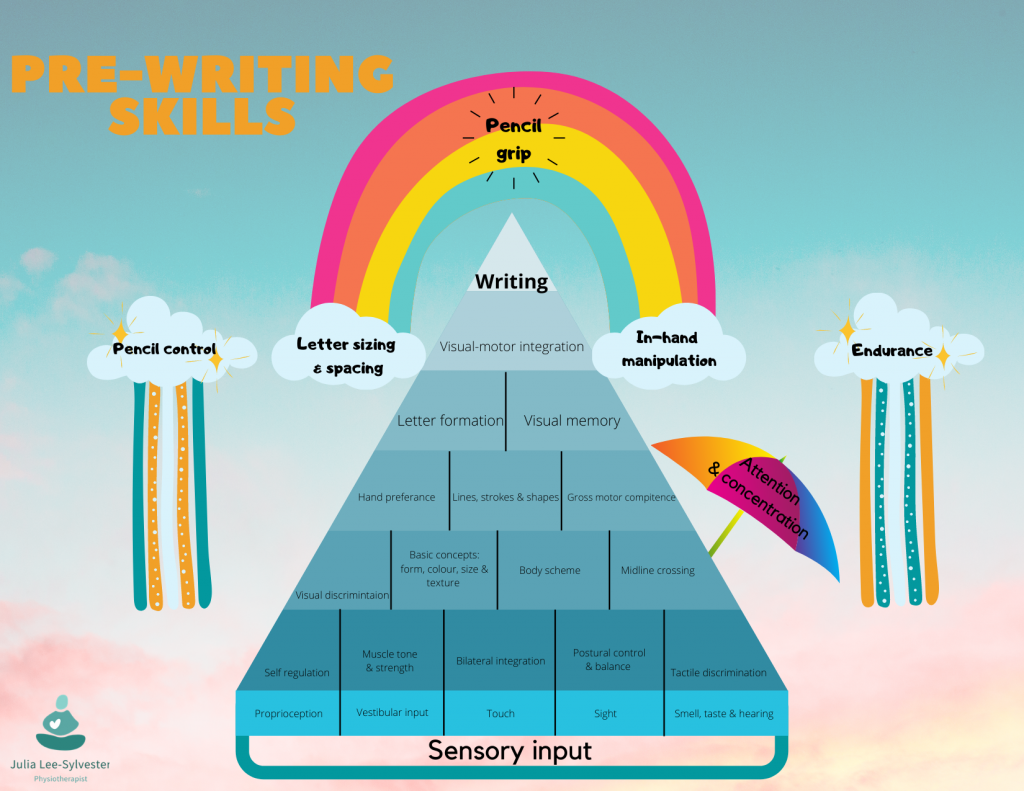
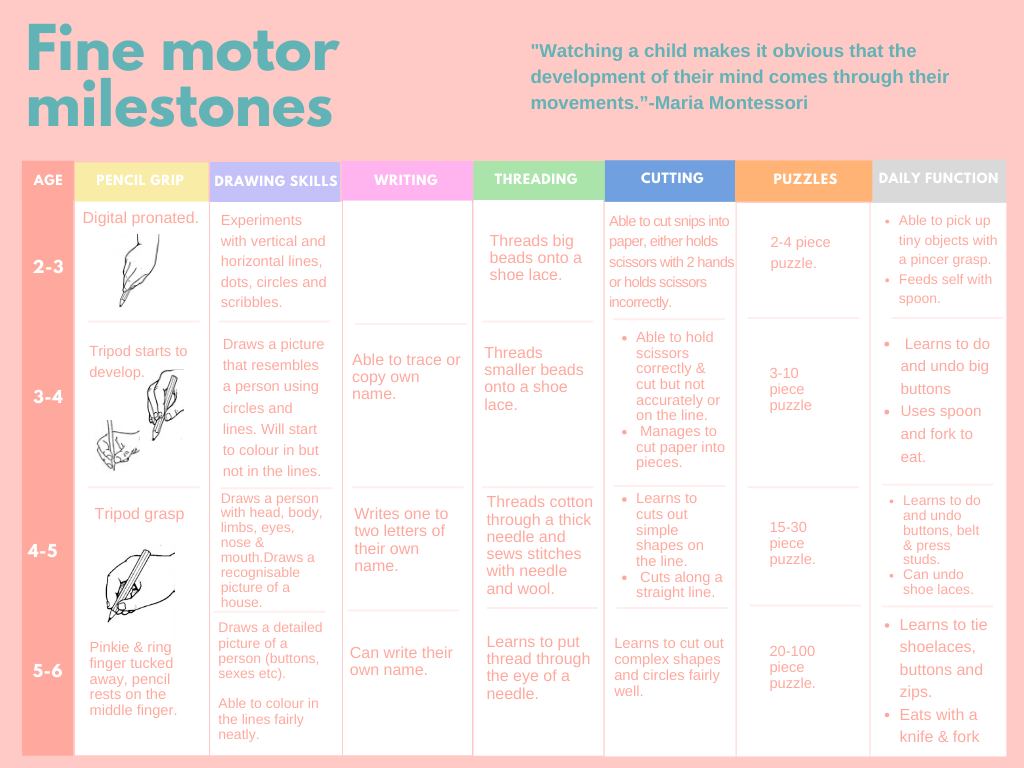
Did you know that before a child can learn to successfully write first they must acquire a number of pre-writing skills?

These pre-writng-skills have been so beautifully outlined in these wonderful graphics below created by Julia:

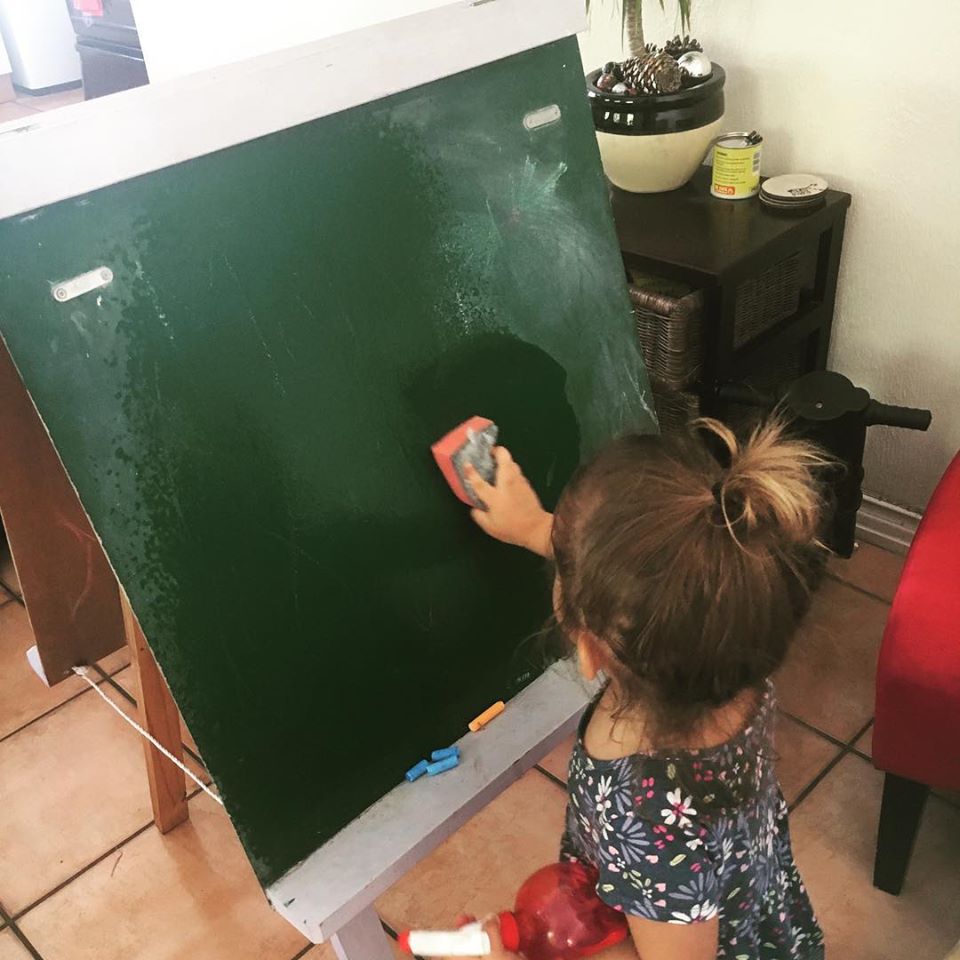
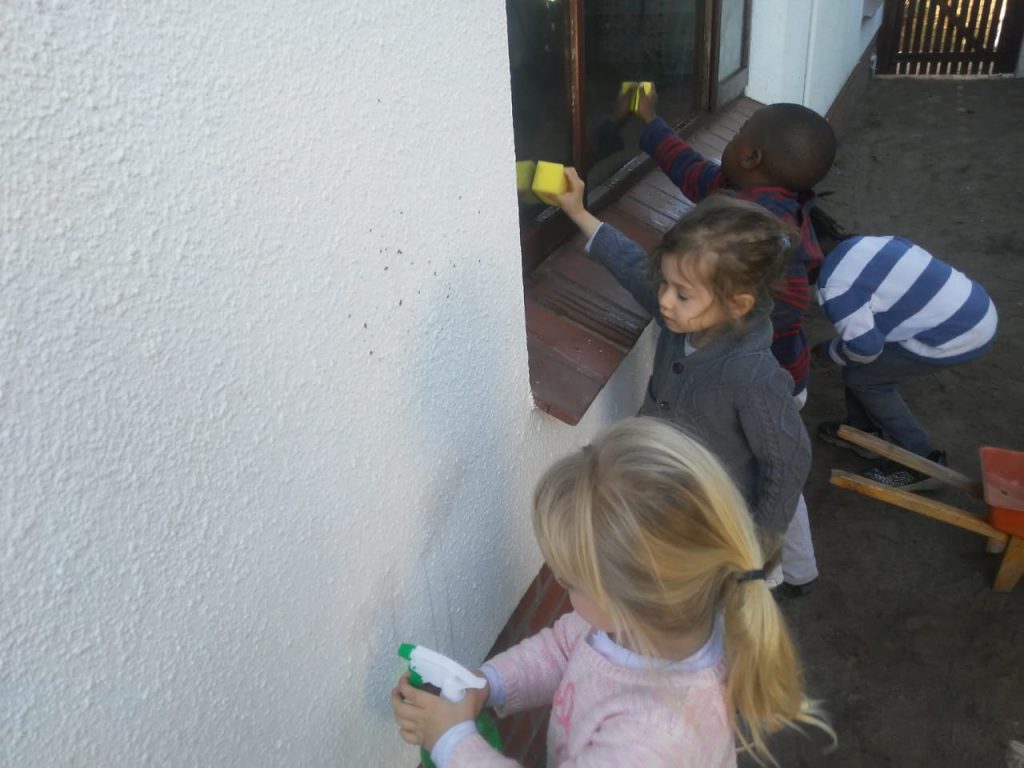
Little ones often find it easier and more fun to write, draw or paint on a vertical surface. Before they decide to draw on your precious walls, you can encourage activities like the one below or even drawing with washable markers on the sliding door.

I love this activity for toddlers but it even has benefits for school going children!
✔️ Writing on a vertical surface is great for wrist, elbow and shoulder strength, midline crossing, visual attention, hand-eye coordination and postural control.
✔️ Spray bottle: hand and finger strengthening and visual attention.
✔️ Cleaning vertical surface with scrunched up newspaper, sponge or cloth: hand, forearm and shoulder strengthening, proprioceptive input into the shoulder joint, midline crossing and hand-eye coordination.


These abilities are all needed later for fine motor skills like pencil grip, scissor cutting, sitting upright at a desk and even ball skills ⚽️ . .

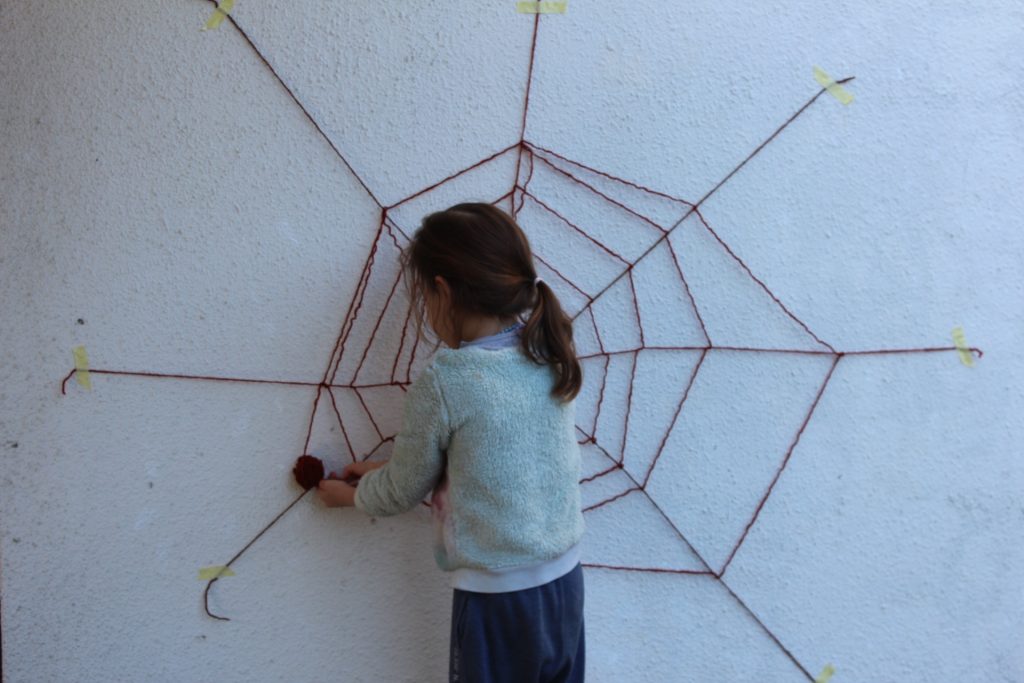
Fine motor – Making a spiderweb and fingerplay “Incy Wincy Spider”

As part of the Warldorf curriculum children as young as 4 start to learn finger knitting. We have just started trying out some finger knitting with Kamali and it has been rather a lot of fun.


Finger knitting is wonderful fine motor work …it builds dexterity and strength in those finger muscles, important for writing skills, and also encourages perseverance and concentration.


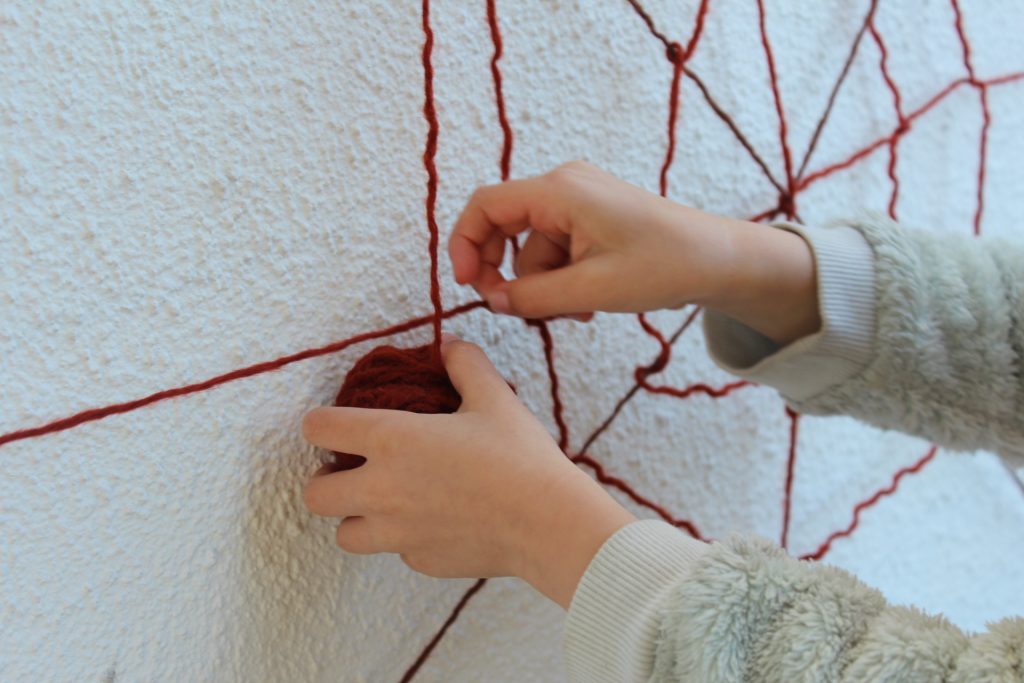
After reading the story about the very busy spider Kamali really wanted to make a spiderweb! What a wonderful idea for a fine motor activity for children 4 and older.


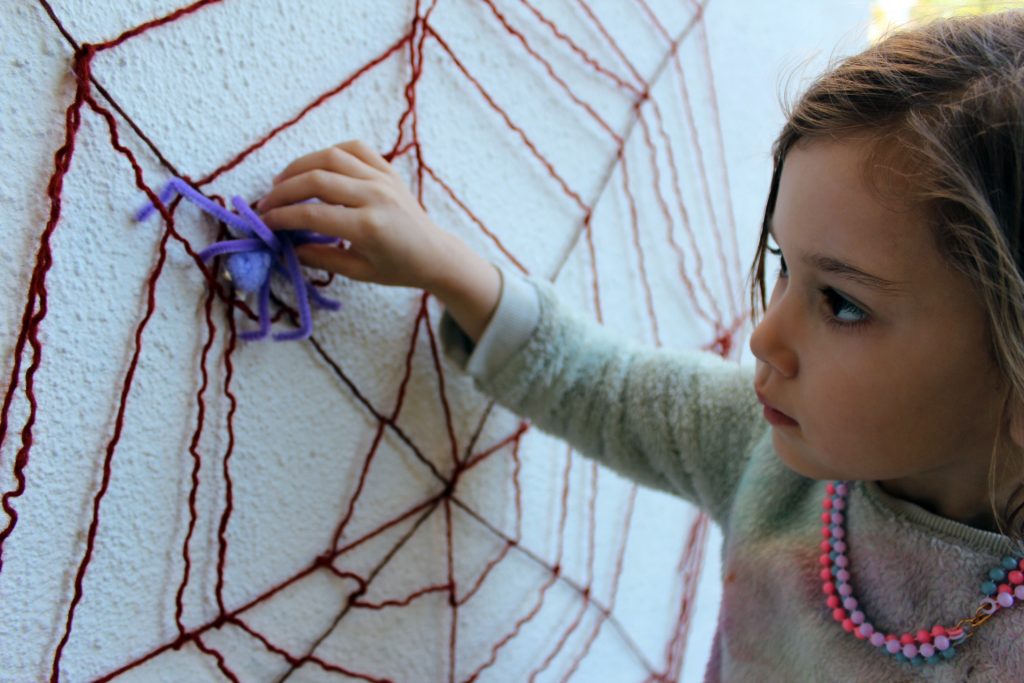
First create/stick up a kind of star shape in wool as the base of the web and then invite your child to spin the web by rolling the ball of wool over and under each line as shown in the video. Once Kamali got the hang of it she was on a roll!


Afterwards we created a spider by twirling some pipe cleaners around a piece of fluff!


For younger children singing “Incy wincy spider” and working on the finger actions is a wonderful way to build up those finger muscles this week.

Early Maths and fine motor work: Sorting Colours

Did you know….sorting is an important foundational maths skill? Whist sorting may seem a simple enough concept it can take a while for young children to fully grasp this skill.

For this activity you will need:

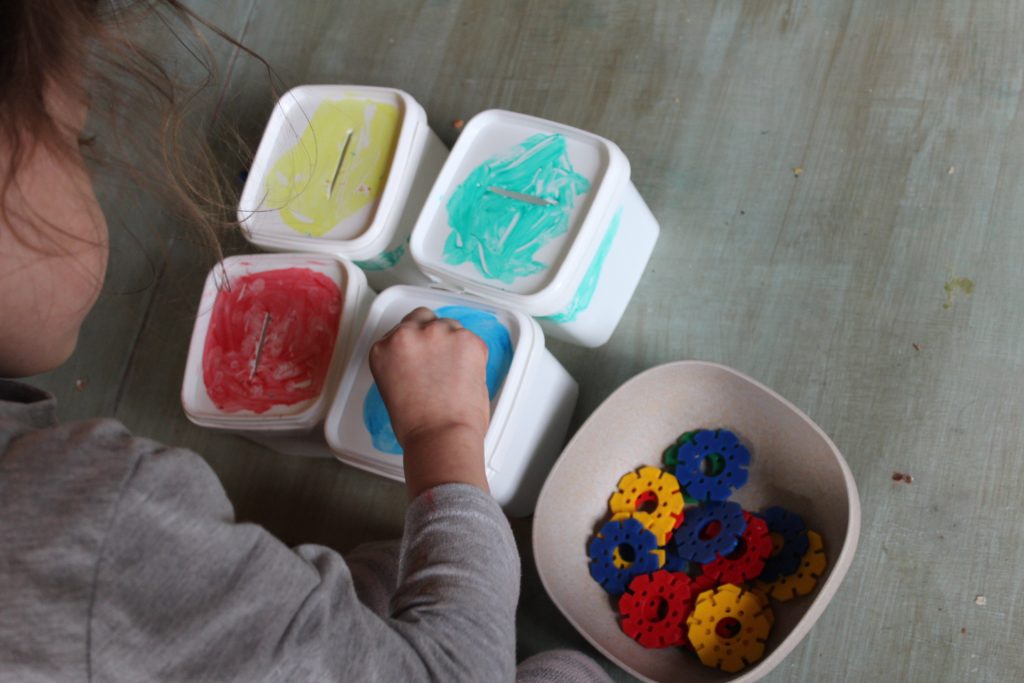
Coloured containers to sort into. We made slits in the lids so that we could add an extra fine-motor element here, but depending on what kind of colour objects you are sorting, you may prefer open containers.

Use any small coloured objects such as pompoms, buttons, crayons, lego, etc for your child to sort.

You can also use tongs or tweezers to sort with, which adds another wonderful fine-motor element.

After sorting the colours into the boxes, Kamali decided to make rows and counted them to see which colour had the most – developing one-to-one correspondence and quantity comparisons. She has also started to actively explore the concept of addition as seen in the video below.

video

Then she piled them into their coloured piles on top of the lids, slotted them back into their boxes and then played a trick by sorting the colours into different colour boxes and asking us to guess which colour was inside…..needless to say this activity has many ways to explore and develop early maths skills!

If your child is under 3 you can use bigger containers such as buckets and larger objects to sort such as balls or bean bags.

Gross Motor Fun: Colour finding scavenger hunt

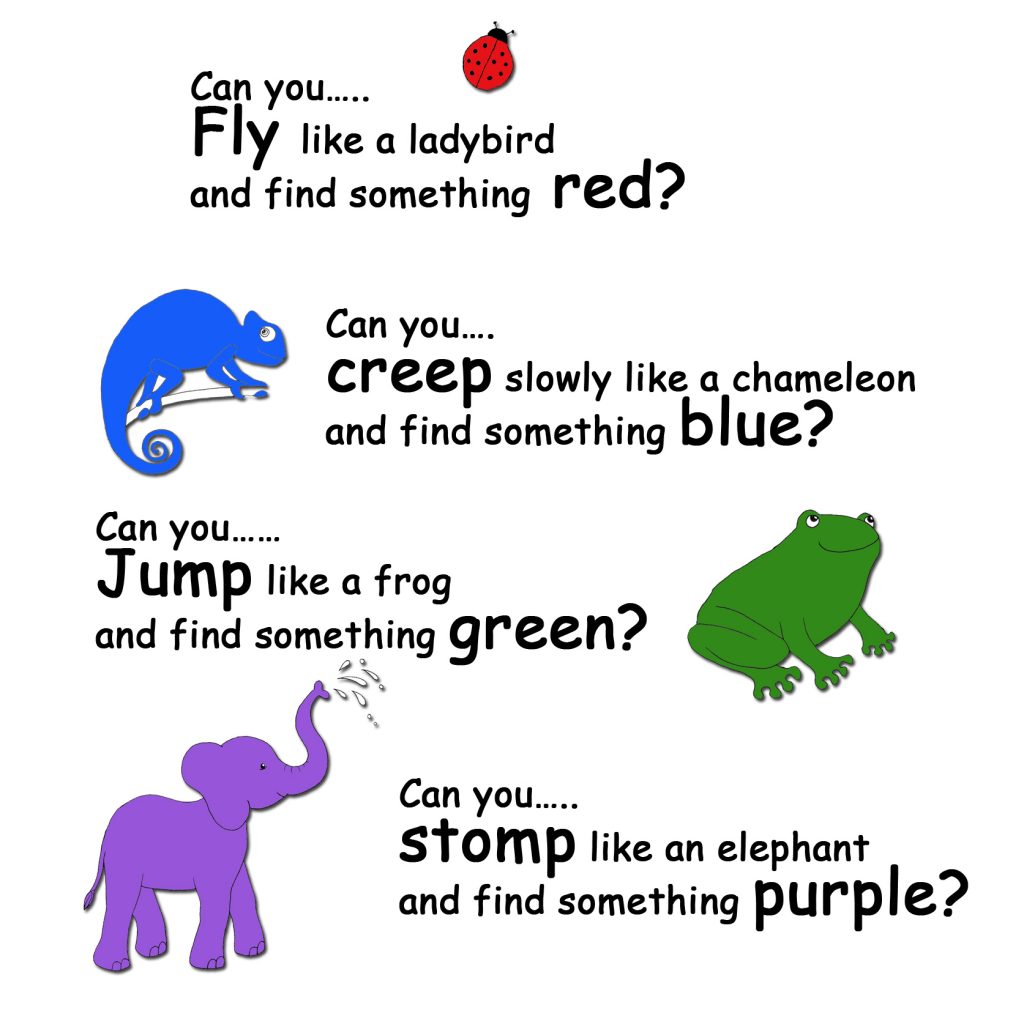
Let’s go on a colour finding scavenger hunt recapping some of the colours we have explored this term whilst working on some gross-motor skills too:

Put a big bucket or basket in the middle of the room and invite your child to go on a colour scavenger hunt with you!

Benefits include: colour recognition, and putting colours into real life context, developing visual discrimination skills, gross motor skills, following directions, building balance, co-ordination and muscle strength.

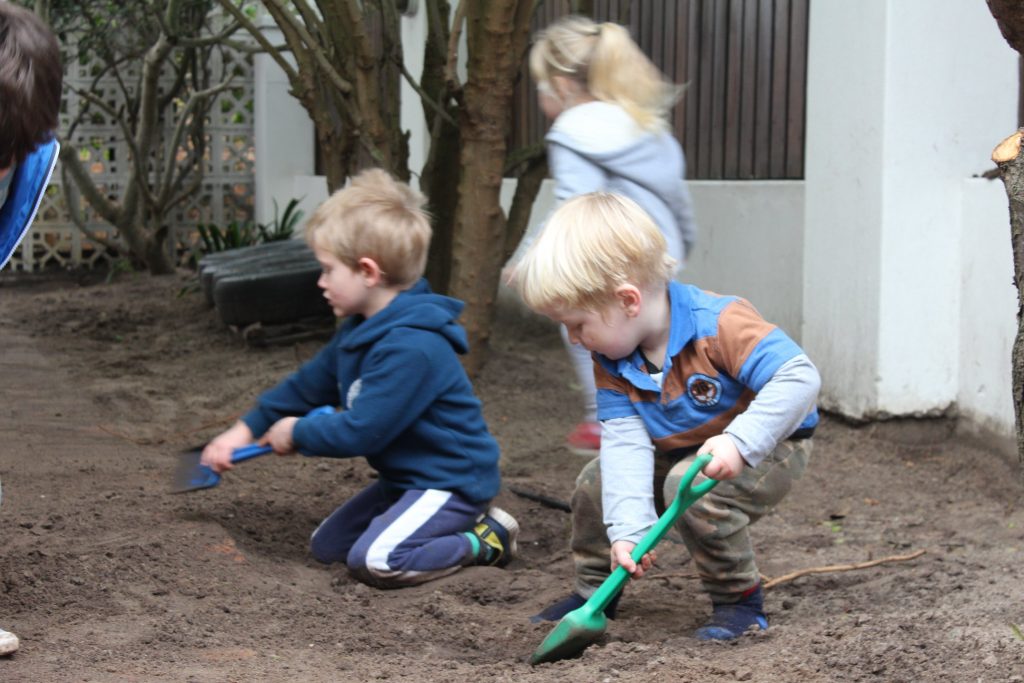
Gross Motor – Digging Work

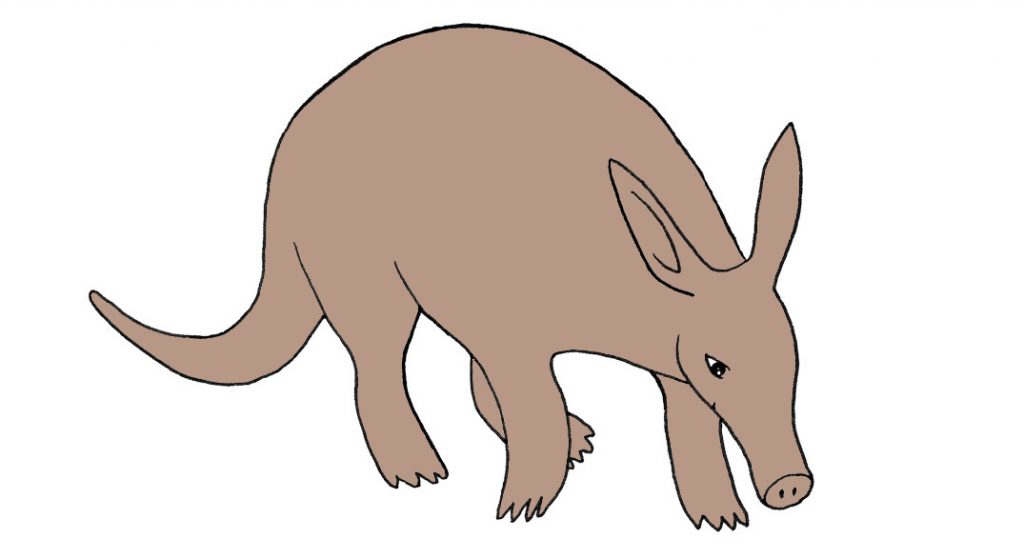
Did you know that African Anteaters are thought to be one of the world’s most prolific diggers with their strong limbs and claws and shovel-like feet helping them to be able to shift 60cm of soil in just 15 seconds!


By far digging, building and working in the dirt have been some of the most loved free play activities here at the Watering Whole. These types of activities are so wonderful for proprioceptive input and building those muscles! The proprioceptive system is located in our muscles and joints and plays a big role in self-regulation, co-ordination, posture and body awareness.


Do you have somewhere in your garden or home that lends itself to digging? Maybe you can plant a garden together? Or create a vege patch? Our children often dig in imaginary play and mix mud cement or build dirt roads.


This week we encourage you to find a space to do some digging together!

Gross Motor Fun with Birds:

Each week we start off our Intellidance classes with a BrainDance. Developed by Anne Green Gilbert, BrainDance is comprised of eight developmental movement patterns that warm up the body and integrate the brain namely:


Breath: Breath not only provides our brain and body with the oxygen it needs to fully function, but can also ease feelings of stress and anxiety.


Tactile: Touch develops body awareness and sensory integration.


Core-Distal: Body extension and contraction strengthens children’s connection with core muscles for proper body alignment.


Head-Tail: Moving the head and pelvis develops awareness of the relationship to each other and increases spinal mobility.


•Upper/Lower: Young children need to organize upper and lower body independently before they can synchronize them together.


Body Side: Moving body sides balances the body so that both right and left sides have equal strength and mobility.


Cross Lateral: Cross-body movements help the left and right hemispheres of your child’s brain connect and co-ordinate which is important for developing full cognitive function.


Vestibular: The vestibular system helps humans analyze the relationship between body parts and their movements in relation to each other, as well as the relationship between the body and the general space. This is important for developing body awareness and balance responses as well as processing sensory input.

This week we will be doing a bird themed BrainDance with Teaching Inger…..

BIRD THEMED BRAIN DANCE

video

Let’s get out our binoculars and explore all of the birds around us….

Breath – Can you hear that?….Let’s breathe in and hoot like an owl three times.
Tactile – I see a guinea fowl, with its beautiful spotted feathers….Can you pat and brush your feathers all over your body?
Core Distal – Can we make our bodies small like a tiny egg…oh look, the baby birds are hatching. Can you crack out of your egg and become a big baby bird?
Head-tail – Slowly turn your head from side to side like an owl, what about pecking your head up and down like a chicken? Can you wiggle your tail feathers?
Upper – Move your wings like an eagle flying.
Lower – Run around like an ostrich.
Body-Side – Let’s try balancing on one leg like a pink flamingo, now the other… Now waddle like a duck from side to side.
Cross lateral – Can you make some chicken wings with me? One wing at a time ….Show me your pointy elbow, lets tap tap tap our elbow wing, show me your other pointy elbow let’s tap tap tap the other side.
Vestibular – Can we whoosh our upper body flying and soaring up and down and side to side? Can you spin around like a bird feather twirling in the sky?

Bird Seed Fine Motor Fun

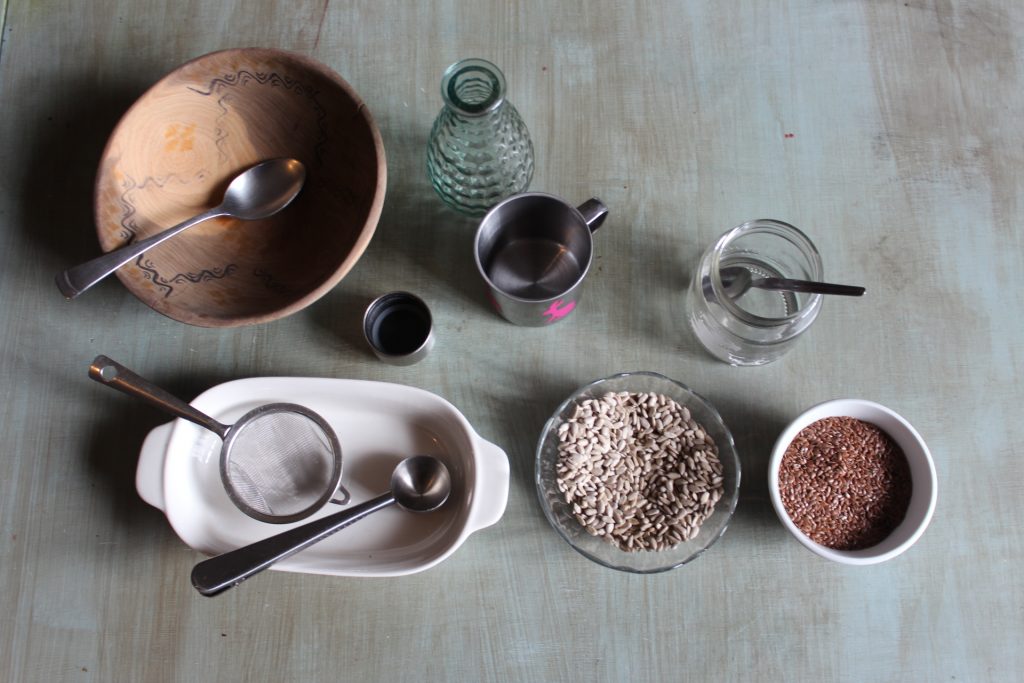
Set-up a space with measuring cups, spoons, small bowls, funnels, etc…


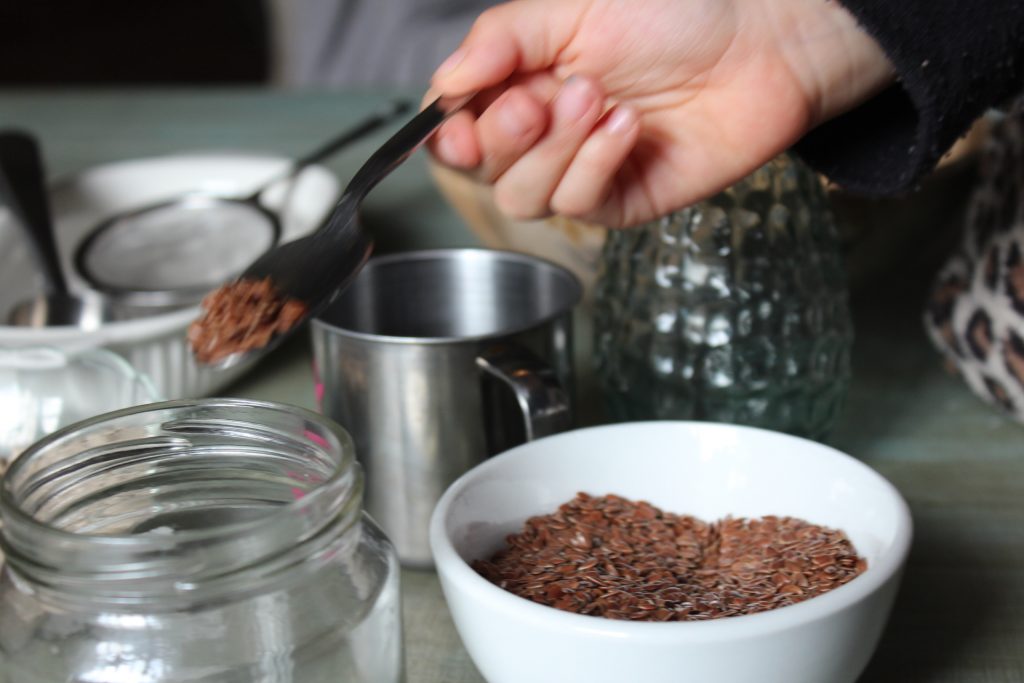
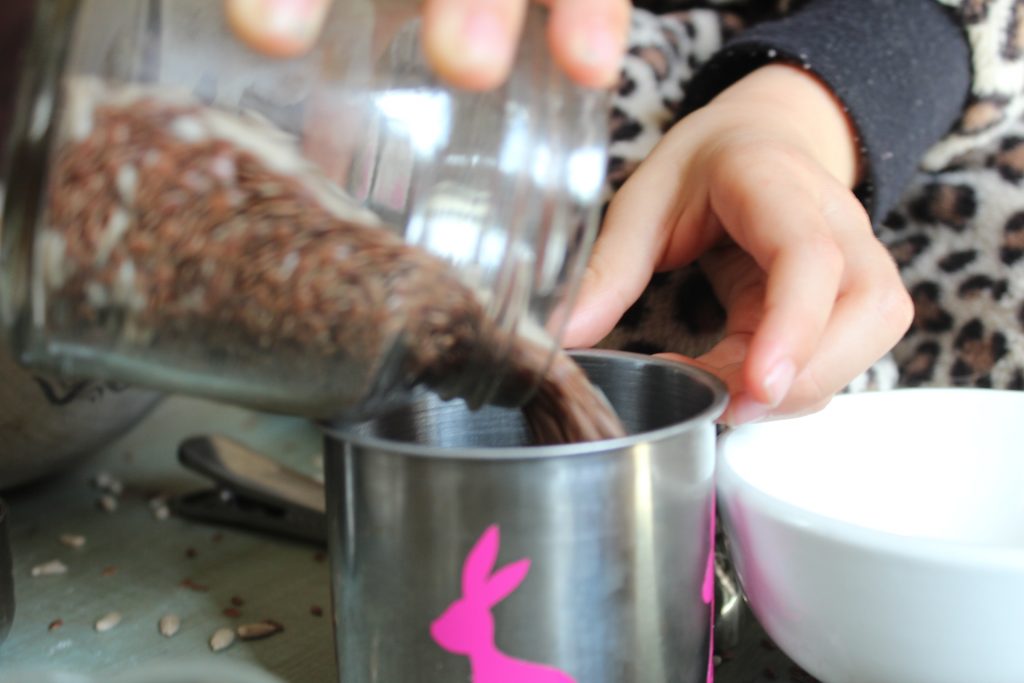
Invite your child to pour, measure, spoon sunflower/bird seeds for some wonderful fine-motor, sensory exploration and play.

These can even be put outside to feed the birds if you have a garden!

Transferring activities form part of Montessori practical life exercises. Benefits include: developing fine motor control particularly spooning and pouring, increased concentration skills and hand-eye coordination.